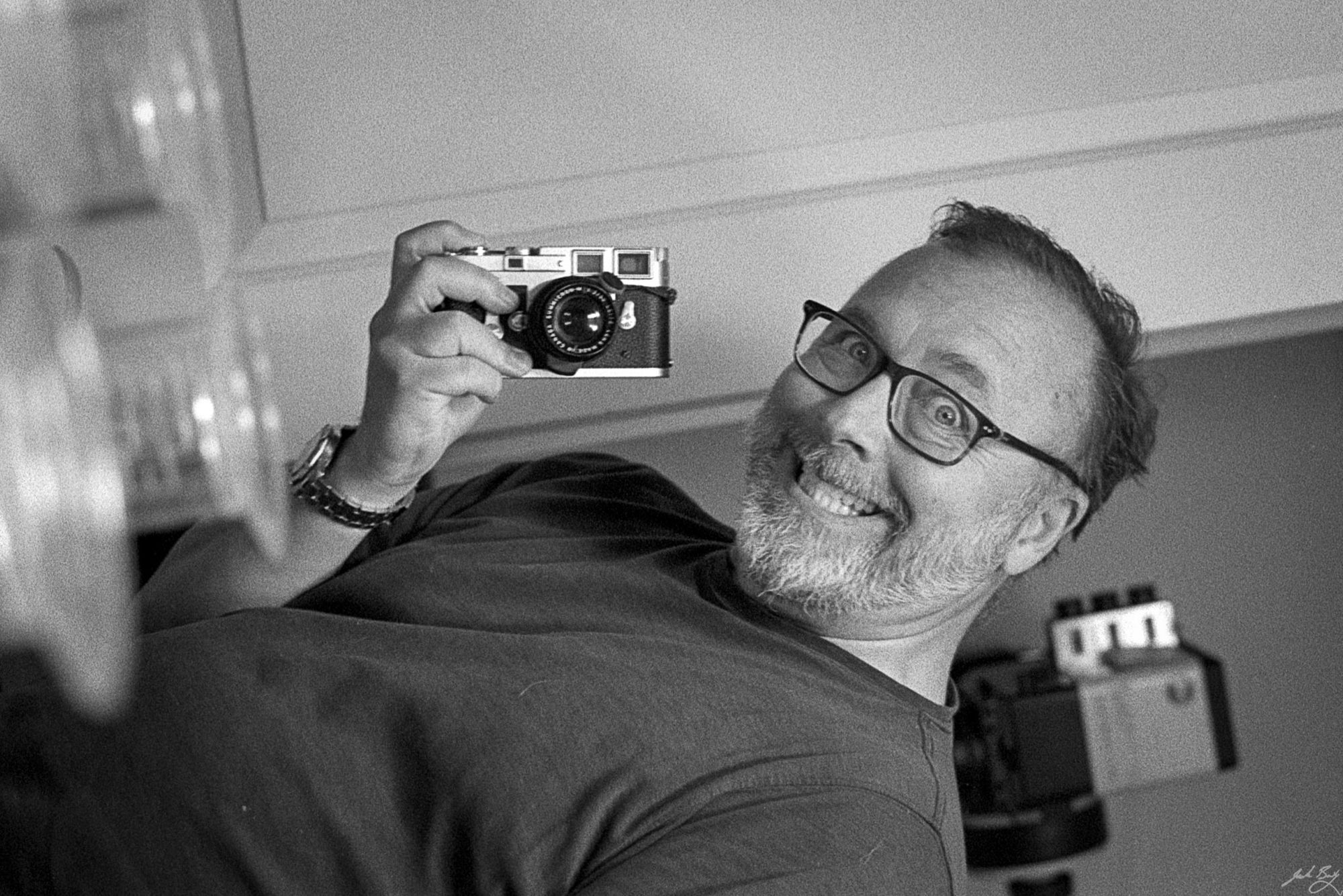
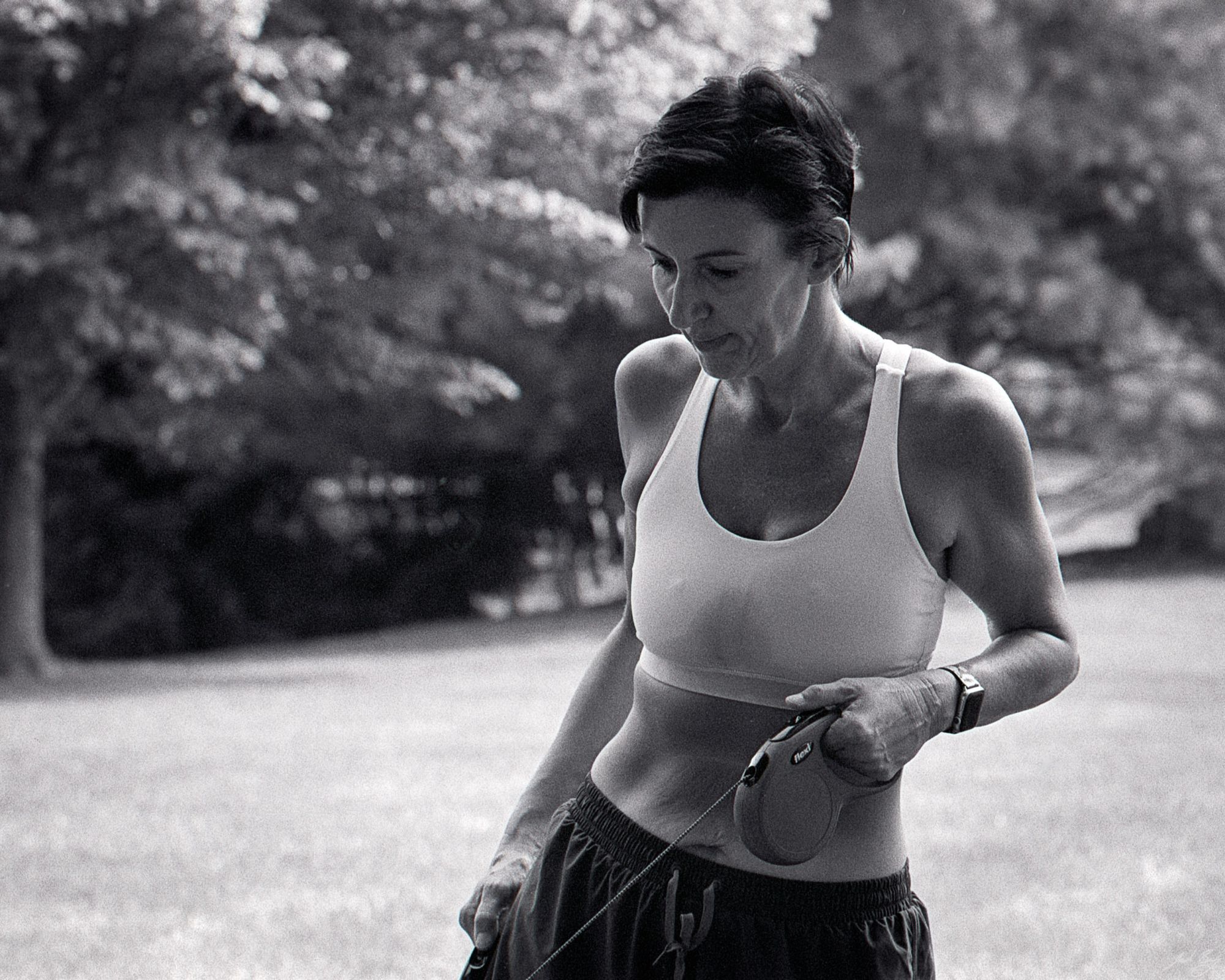
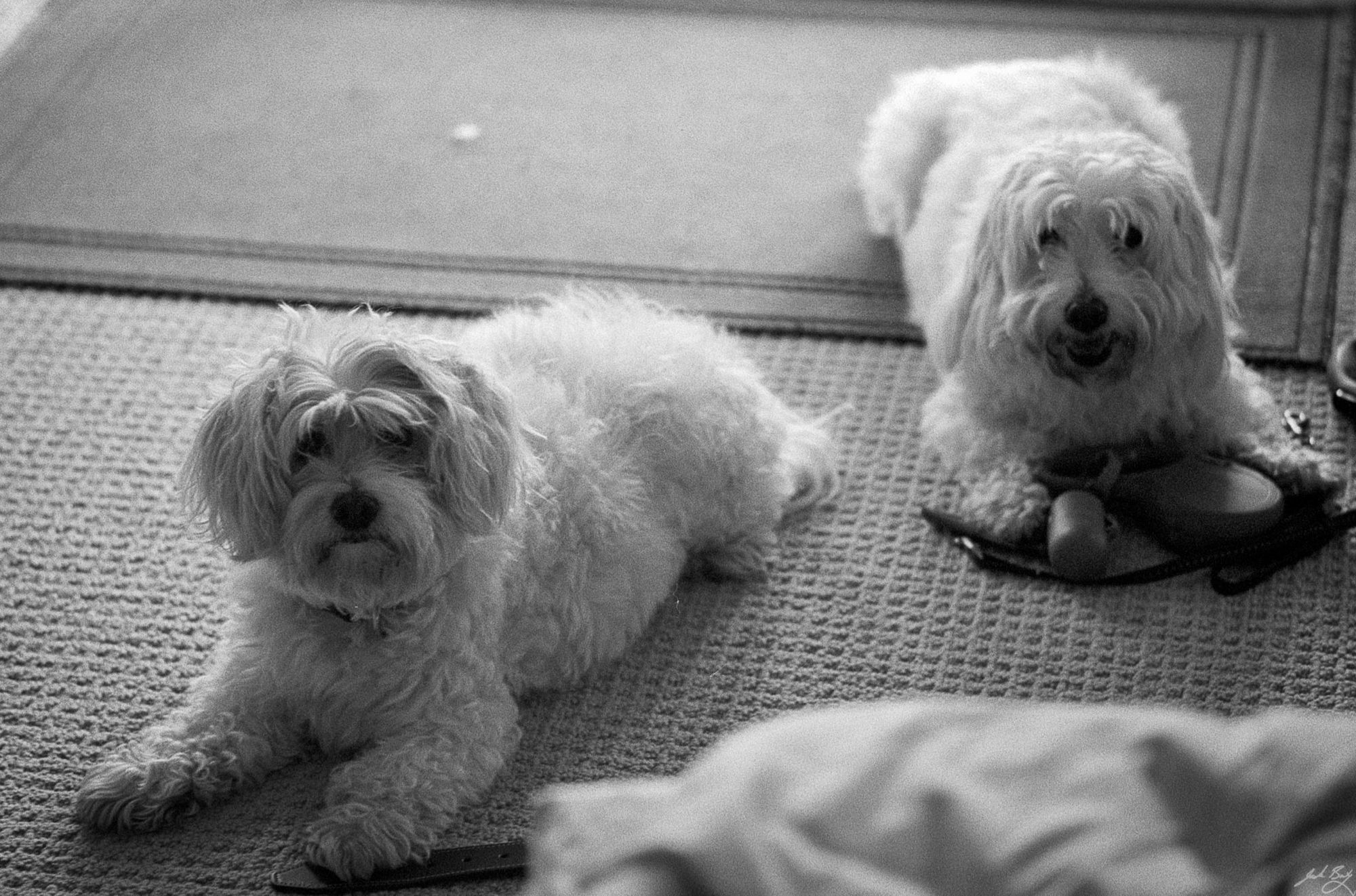
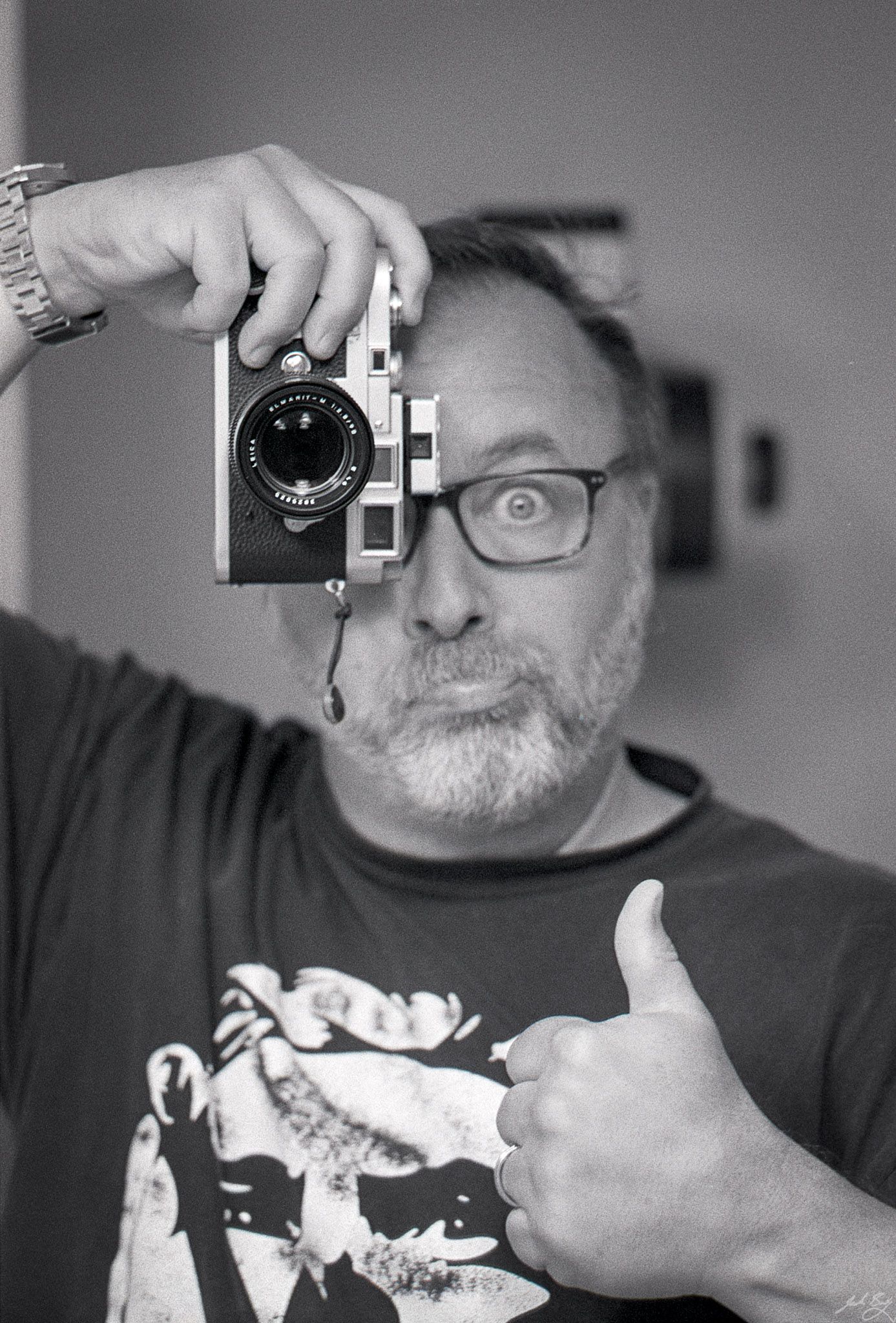
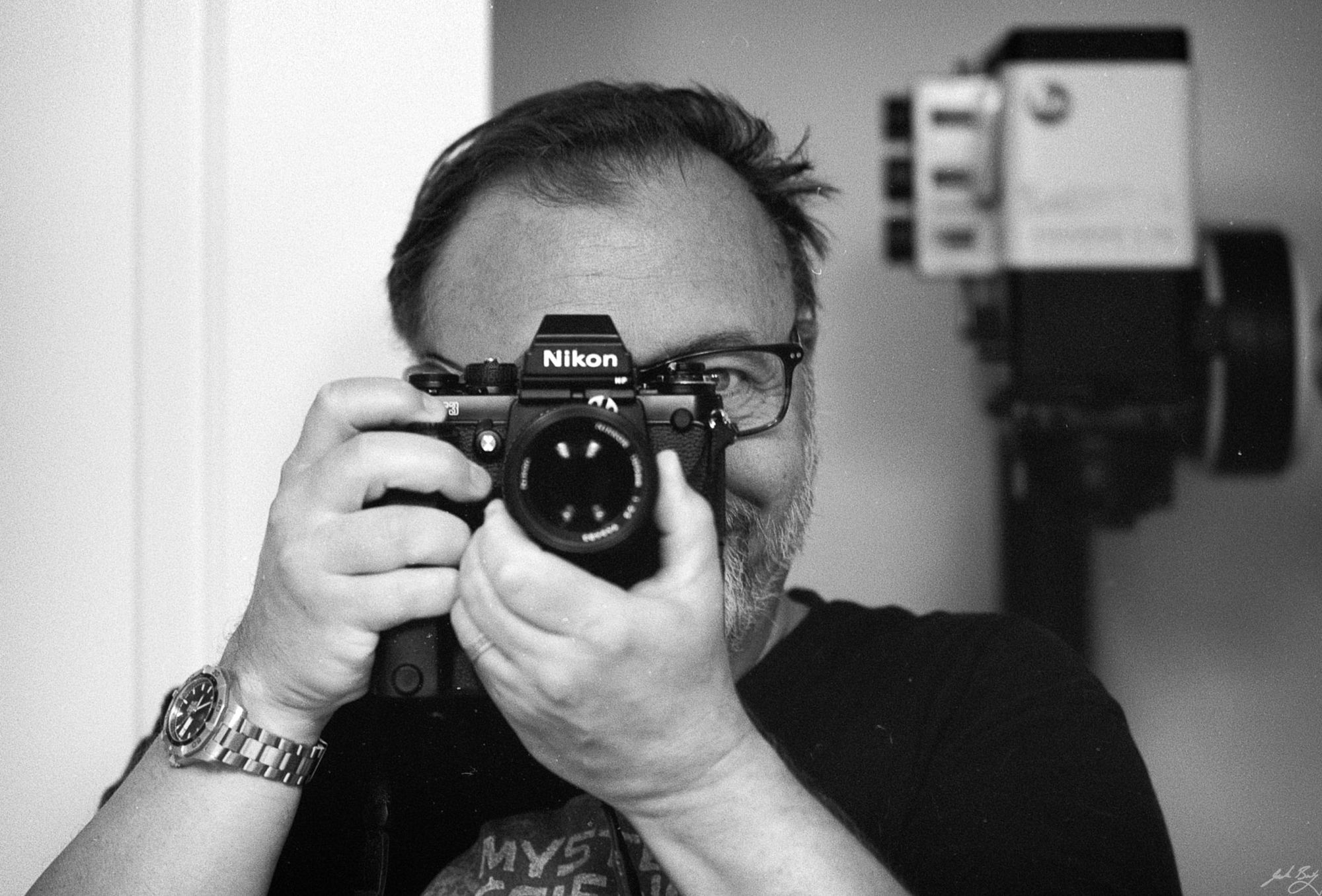
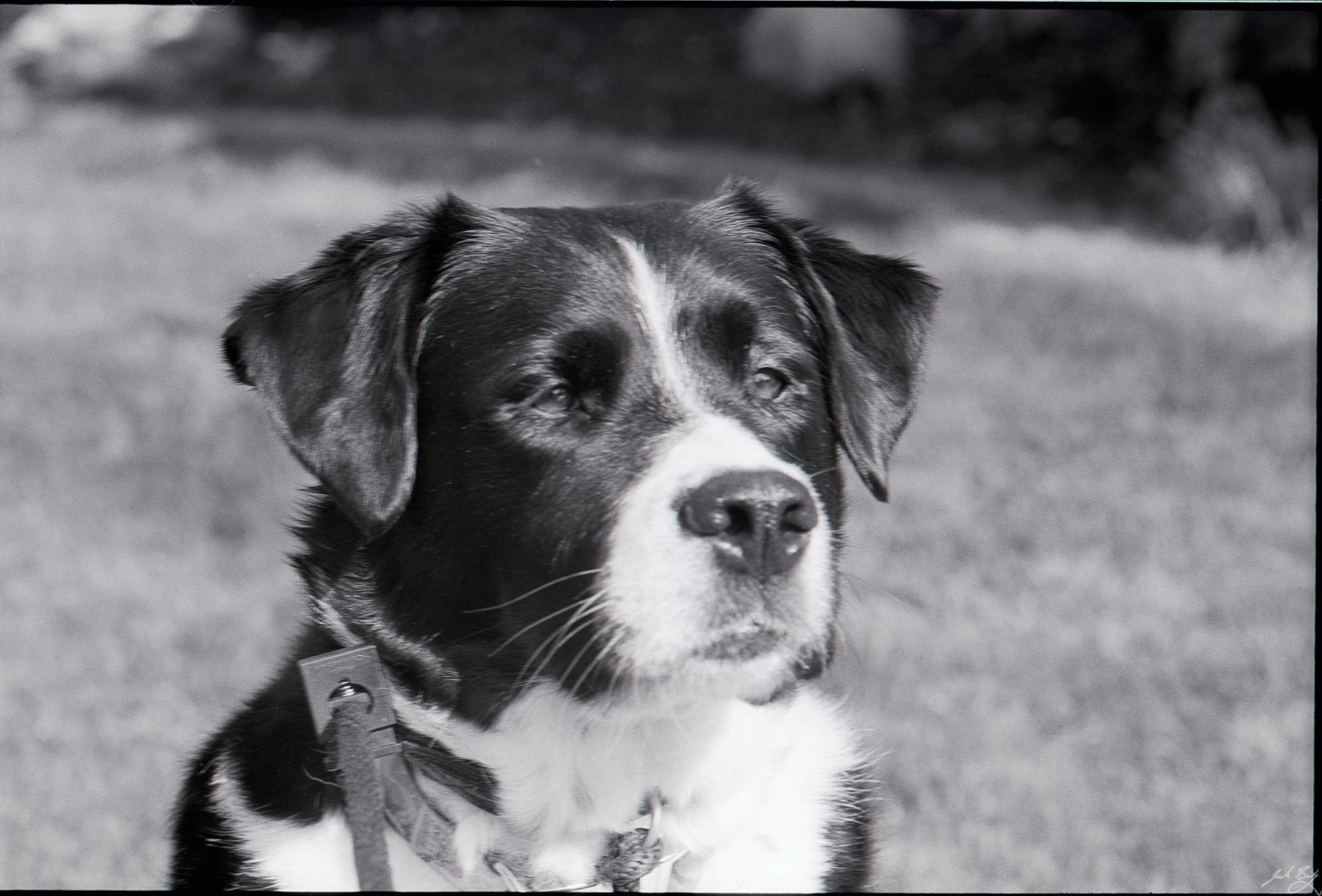
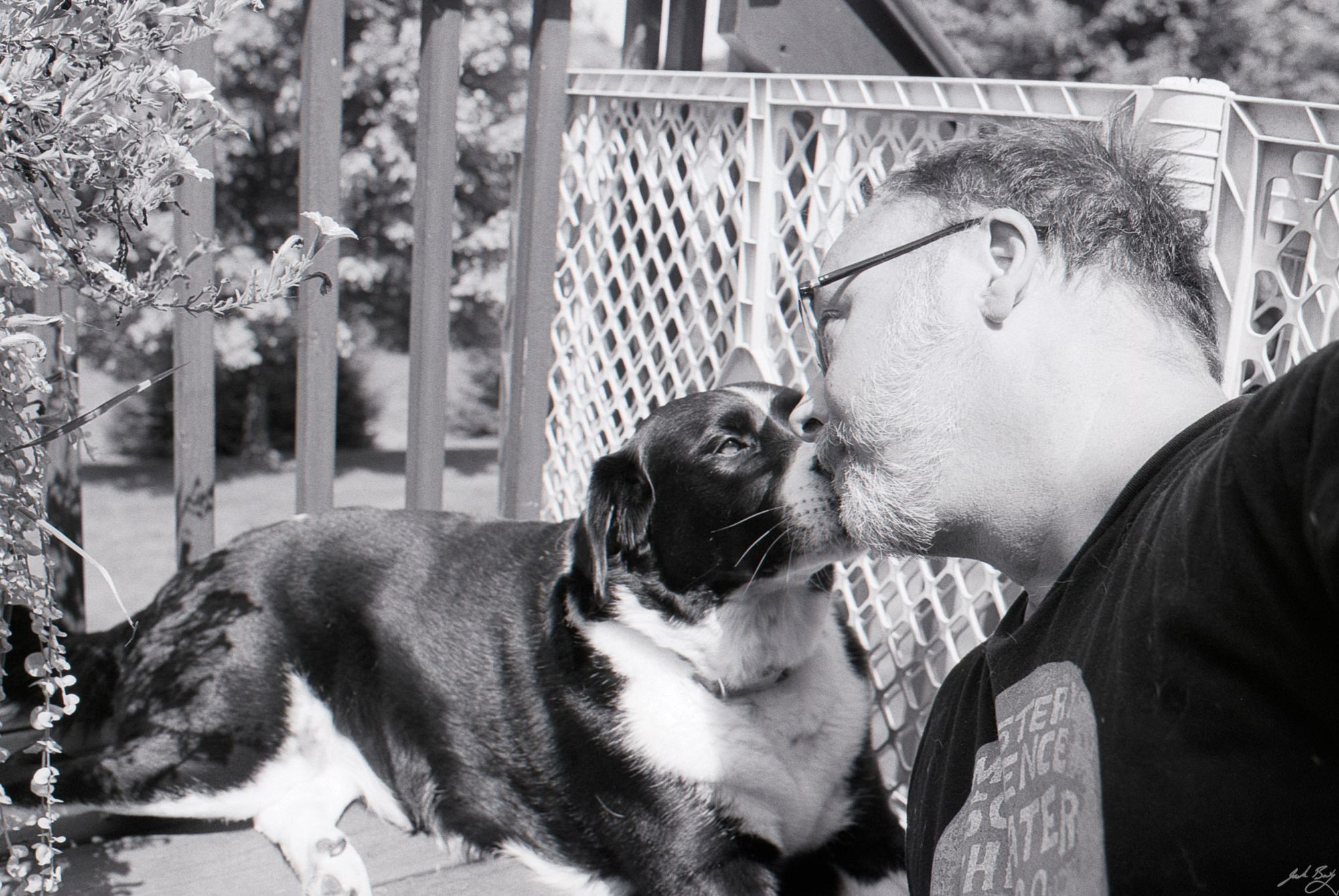
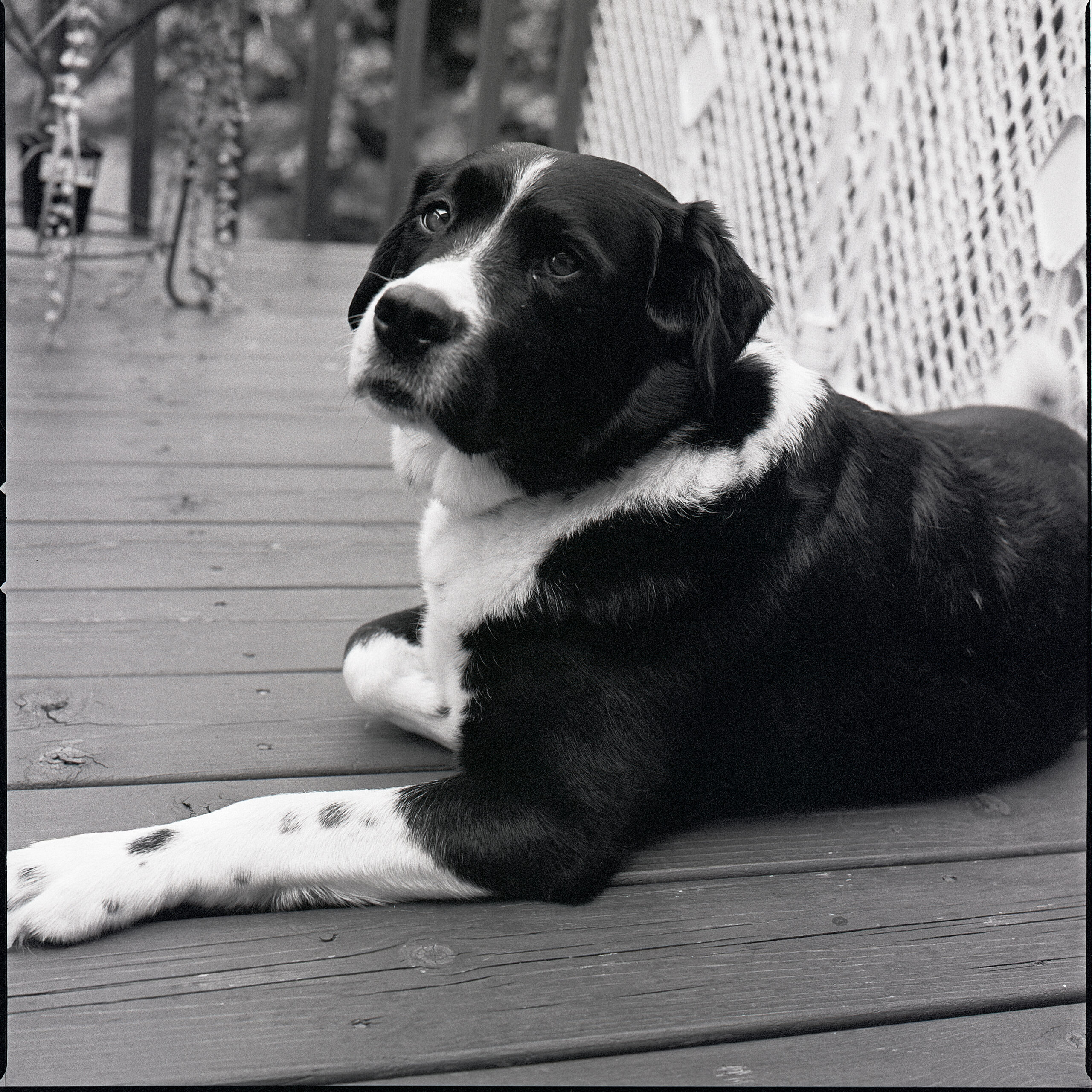
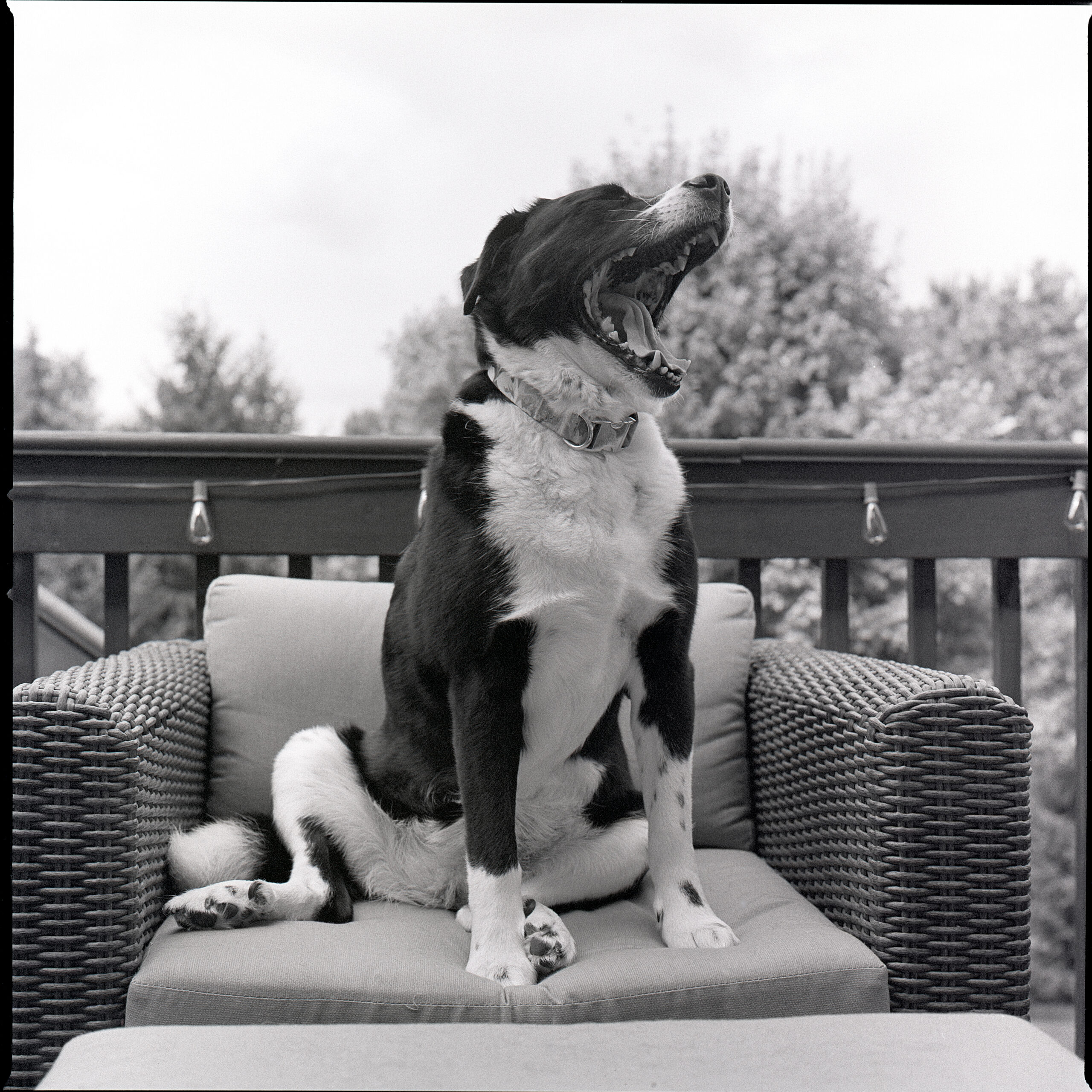
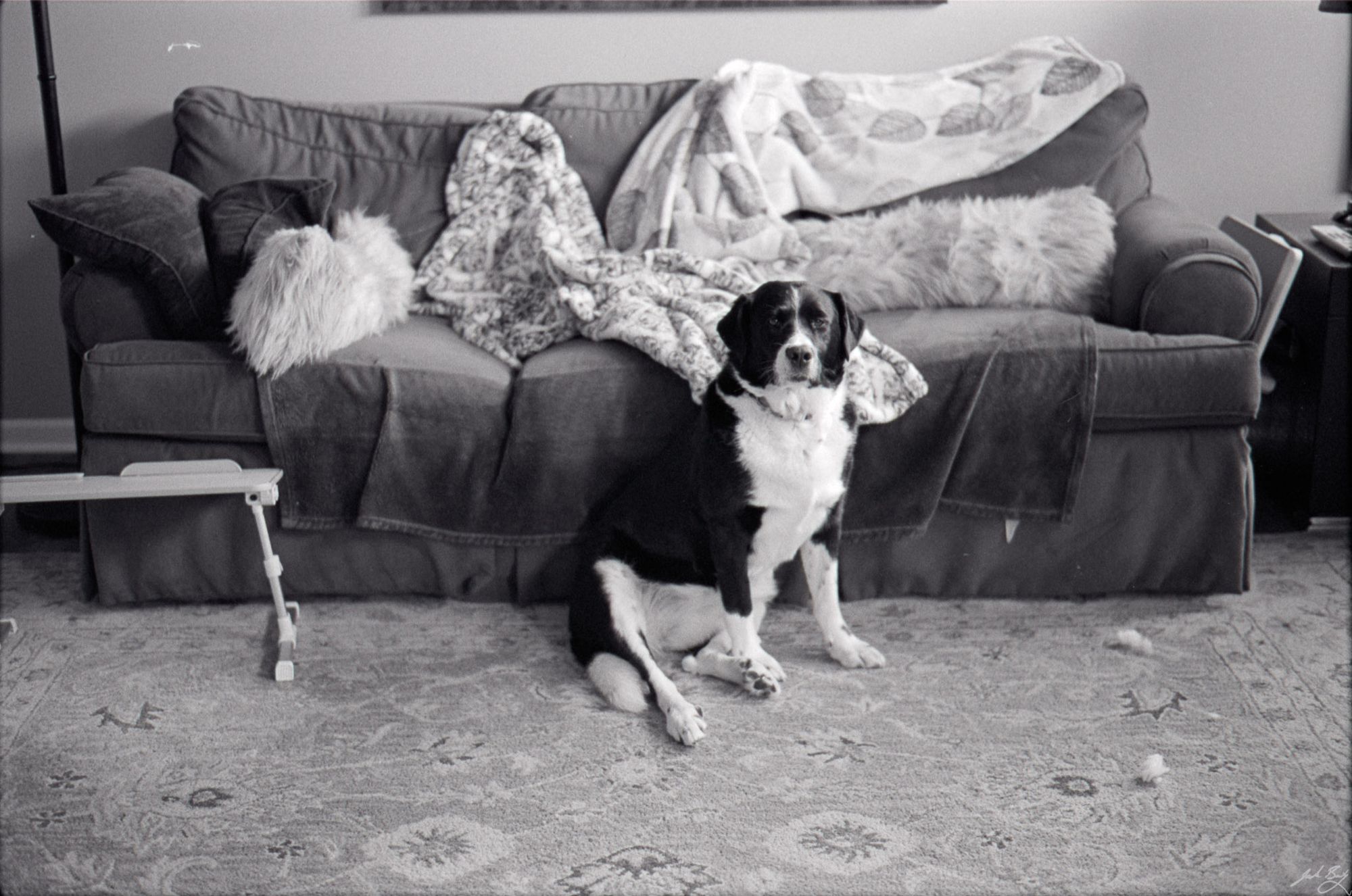
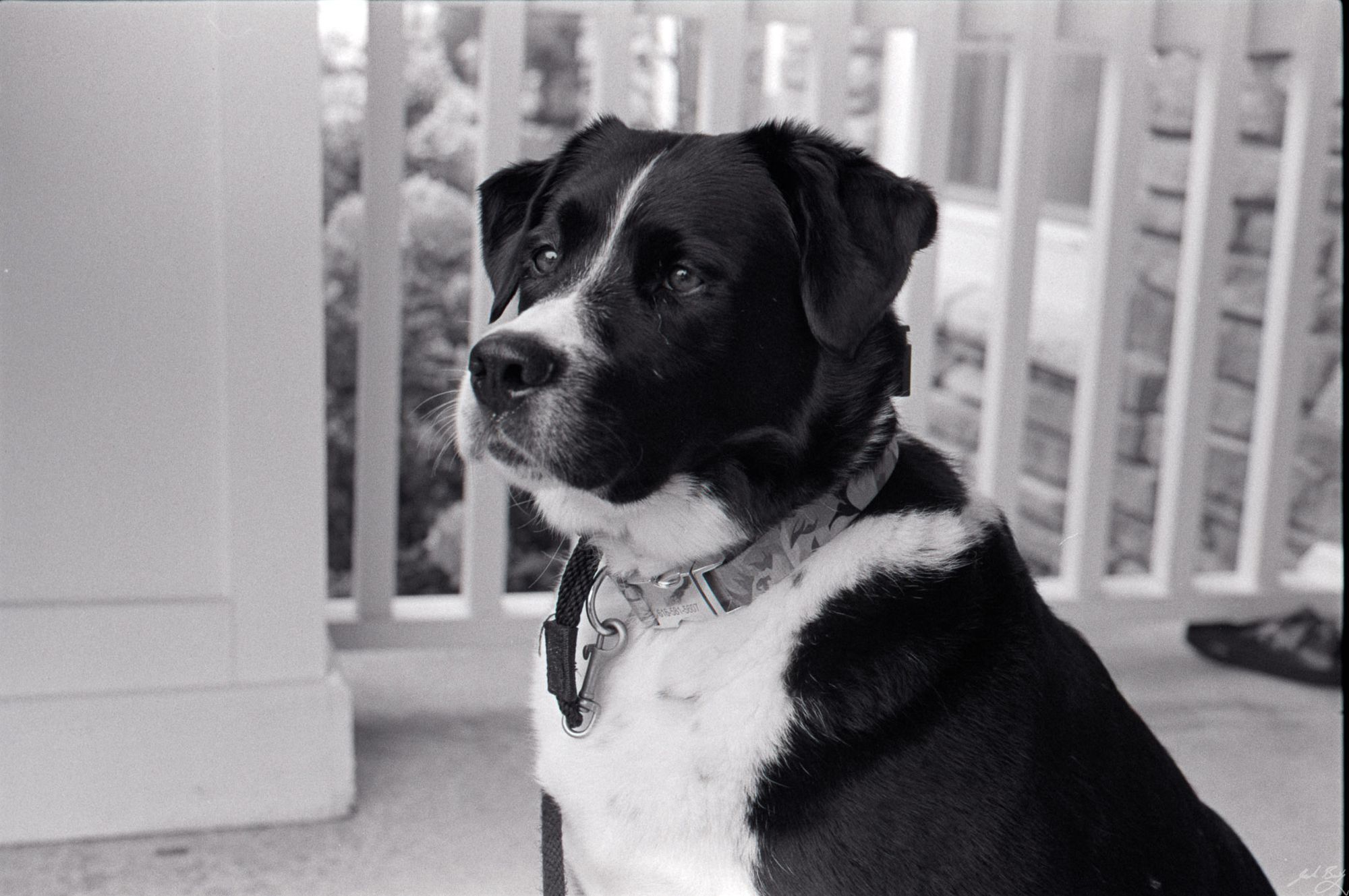
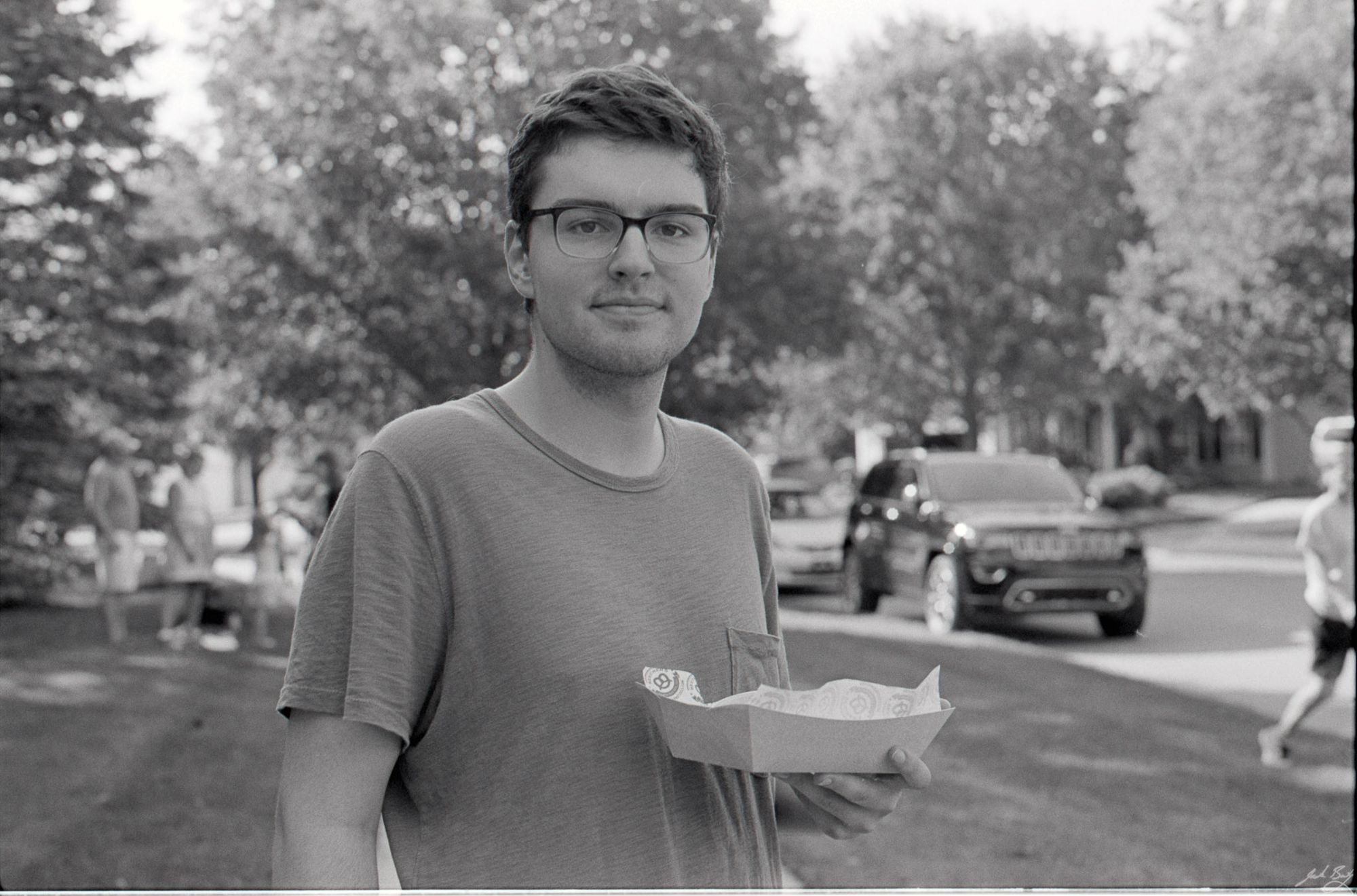
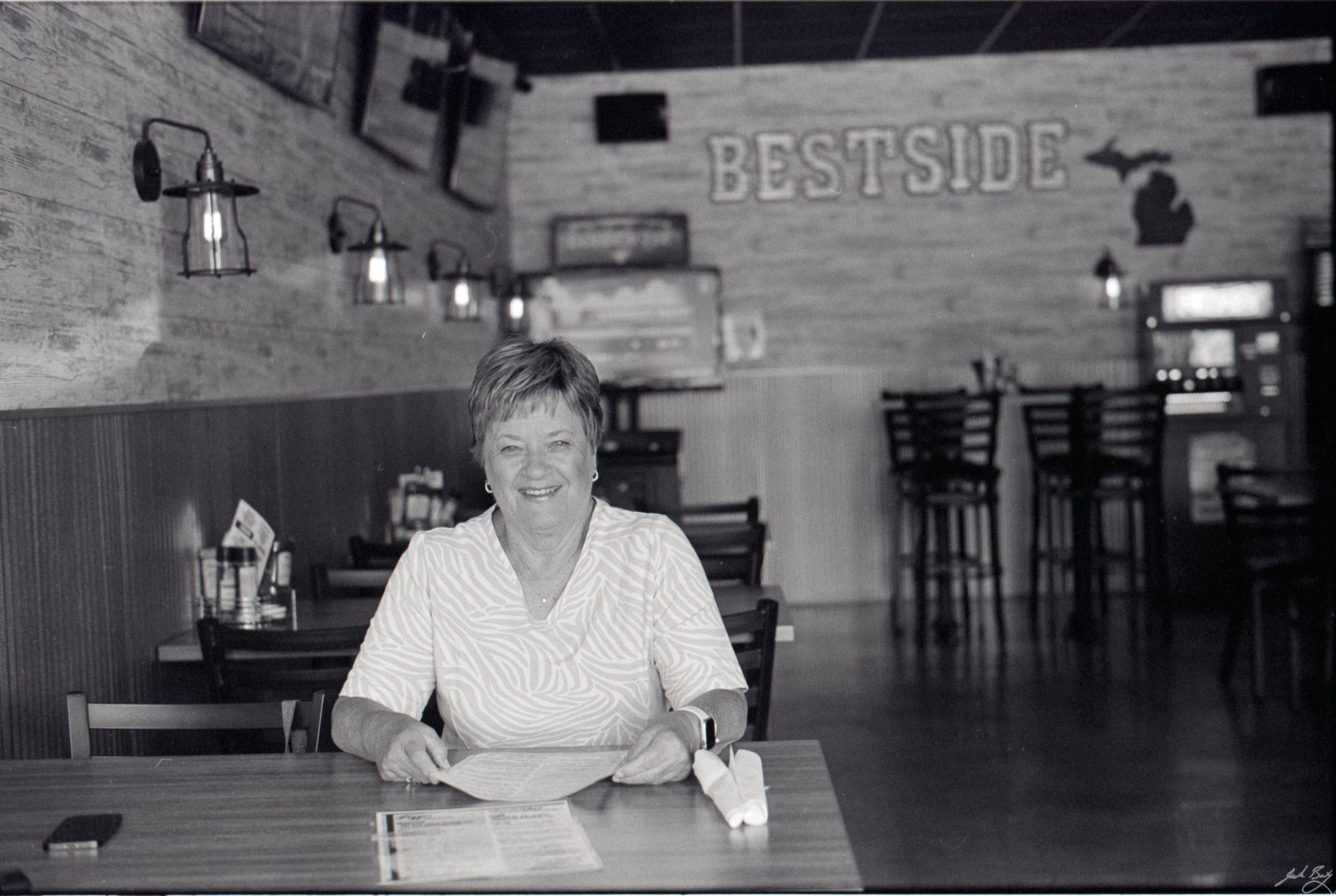
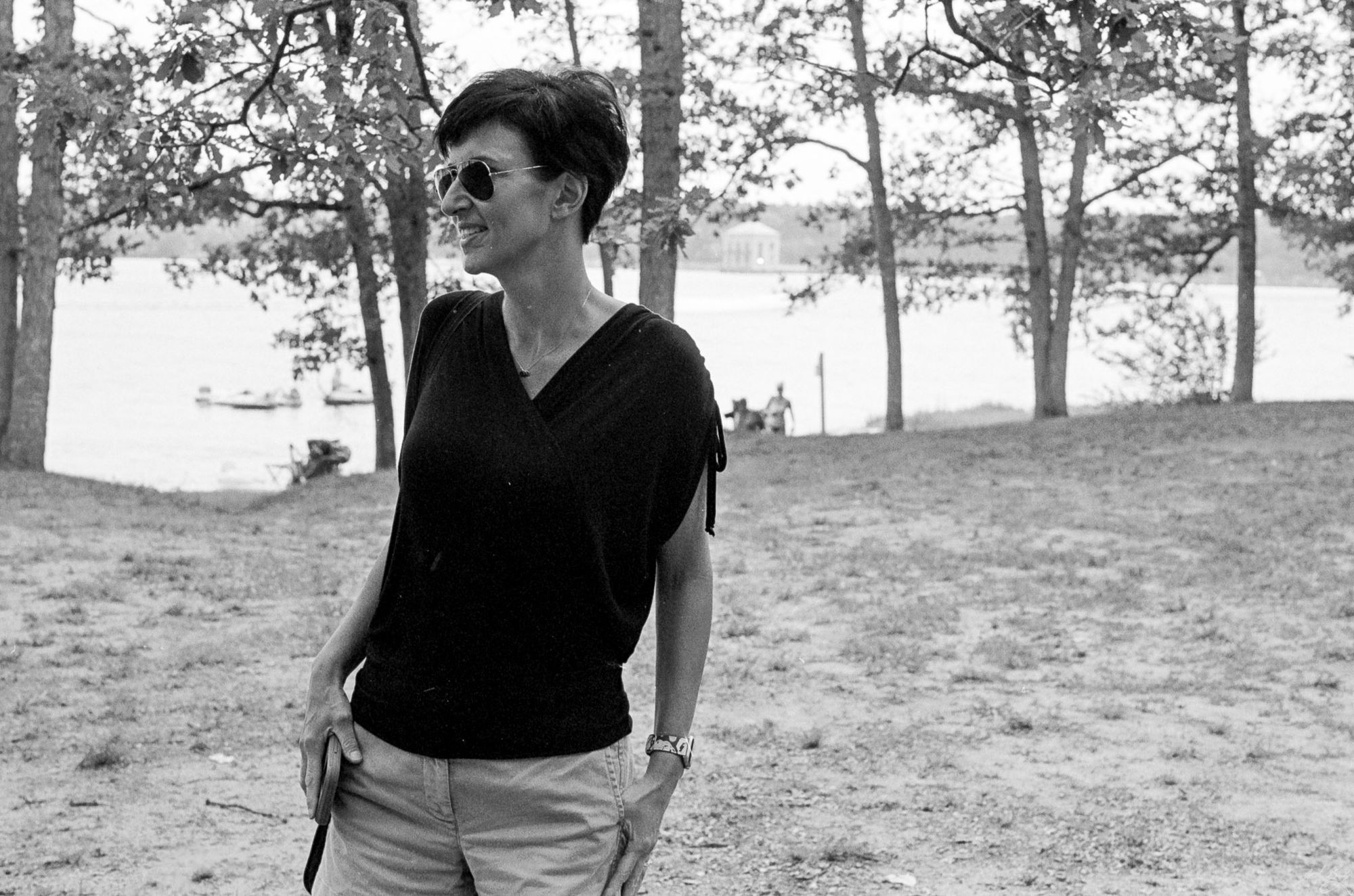
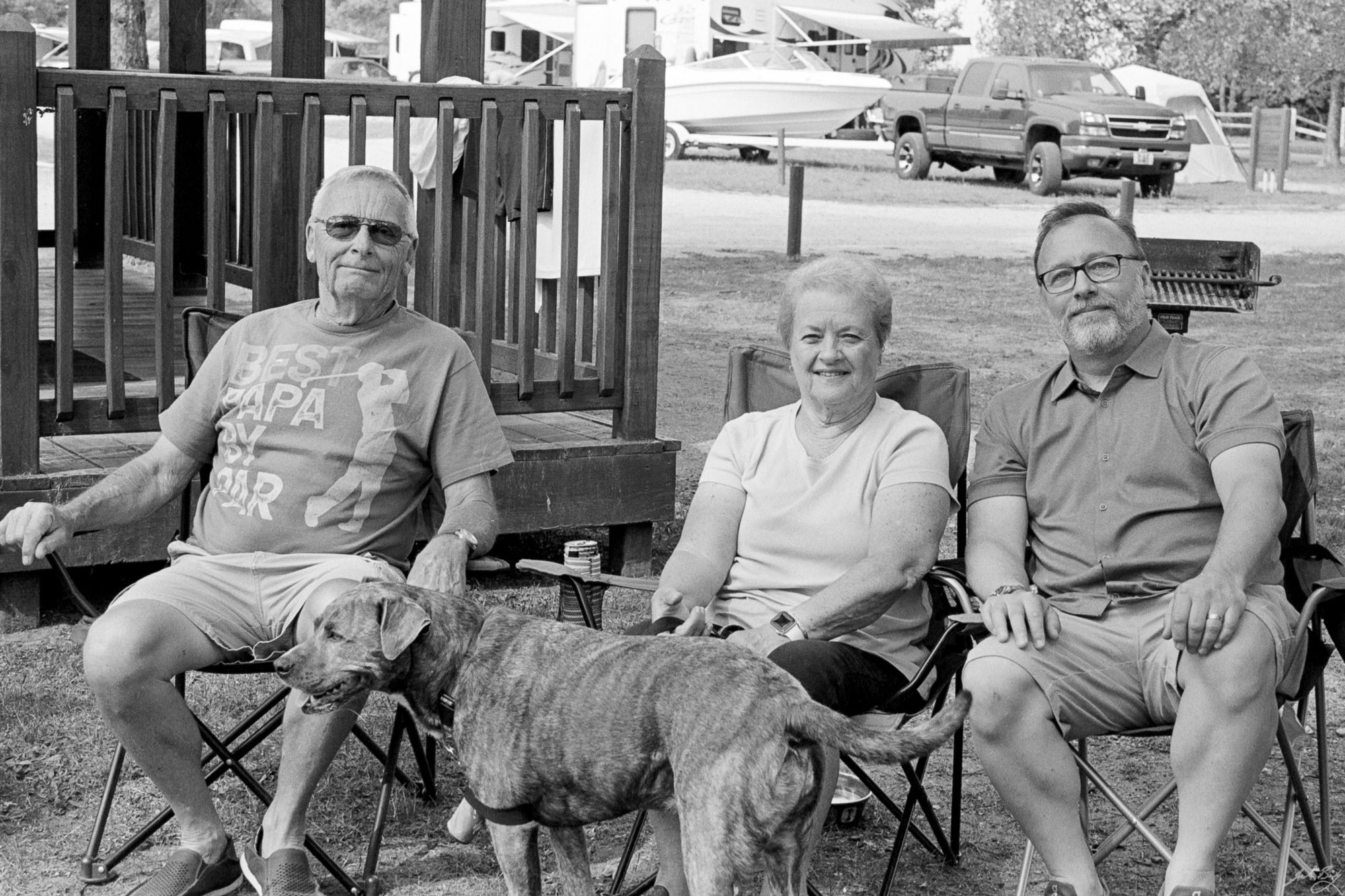
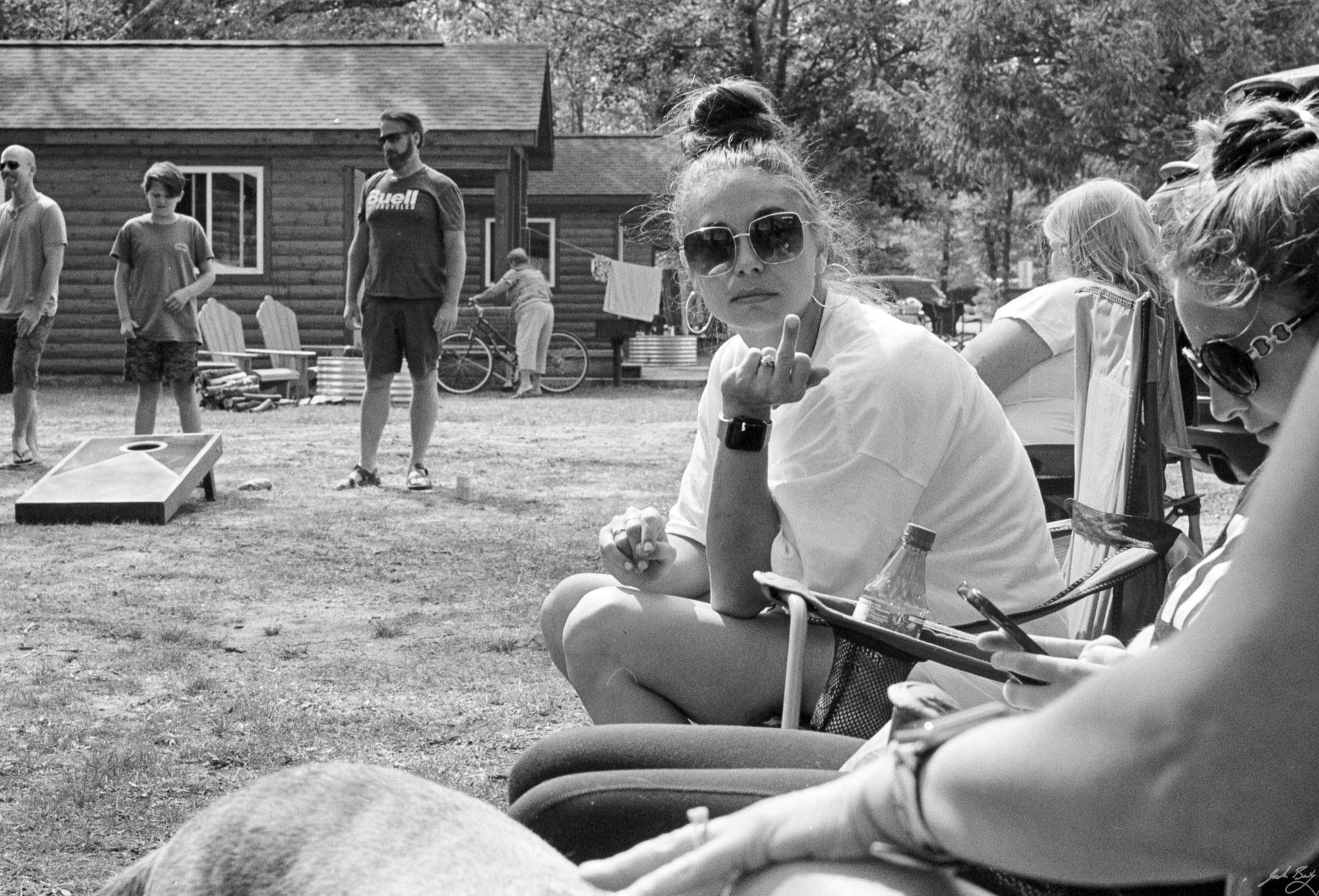
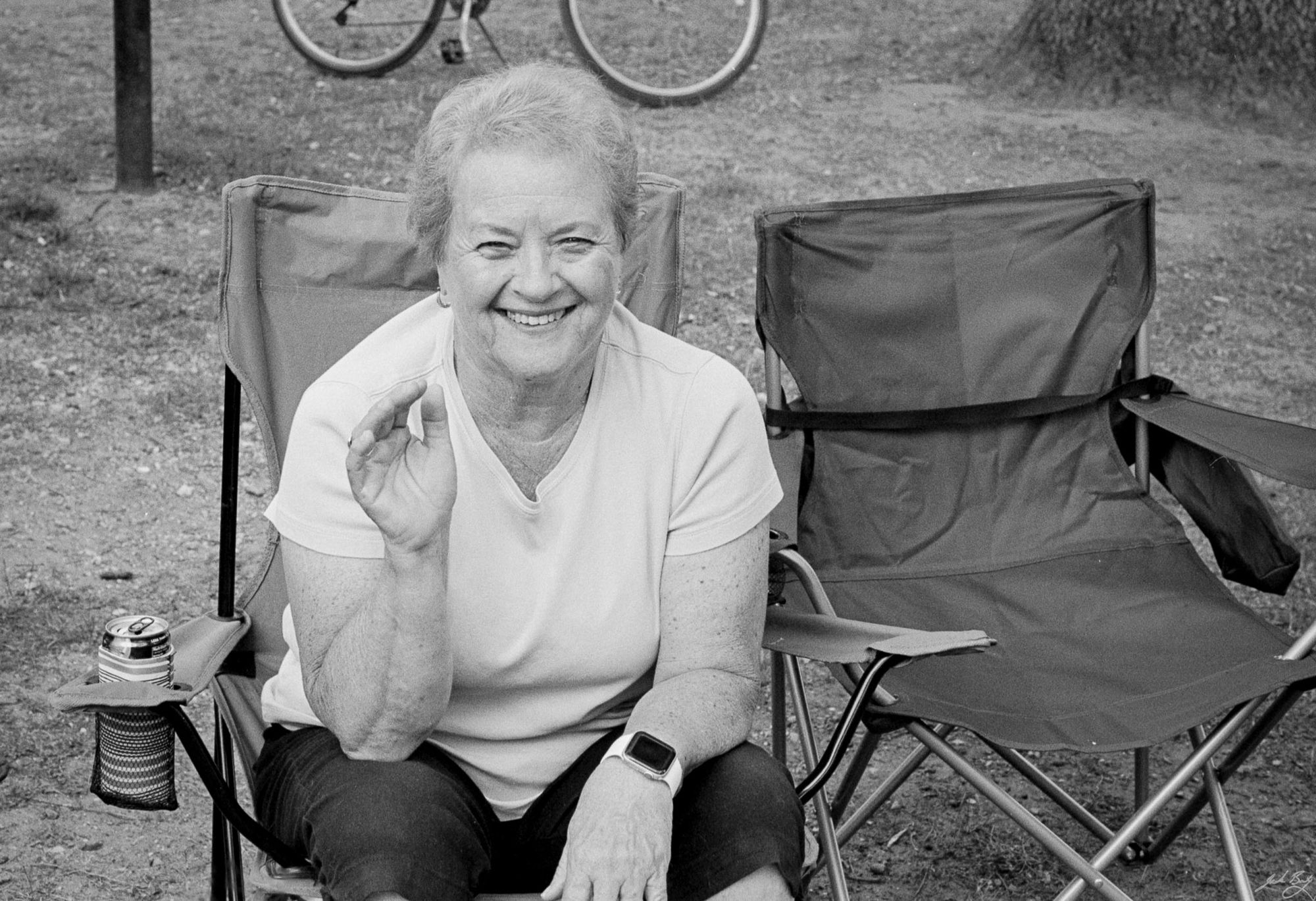
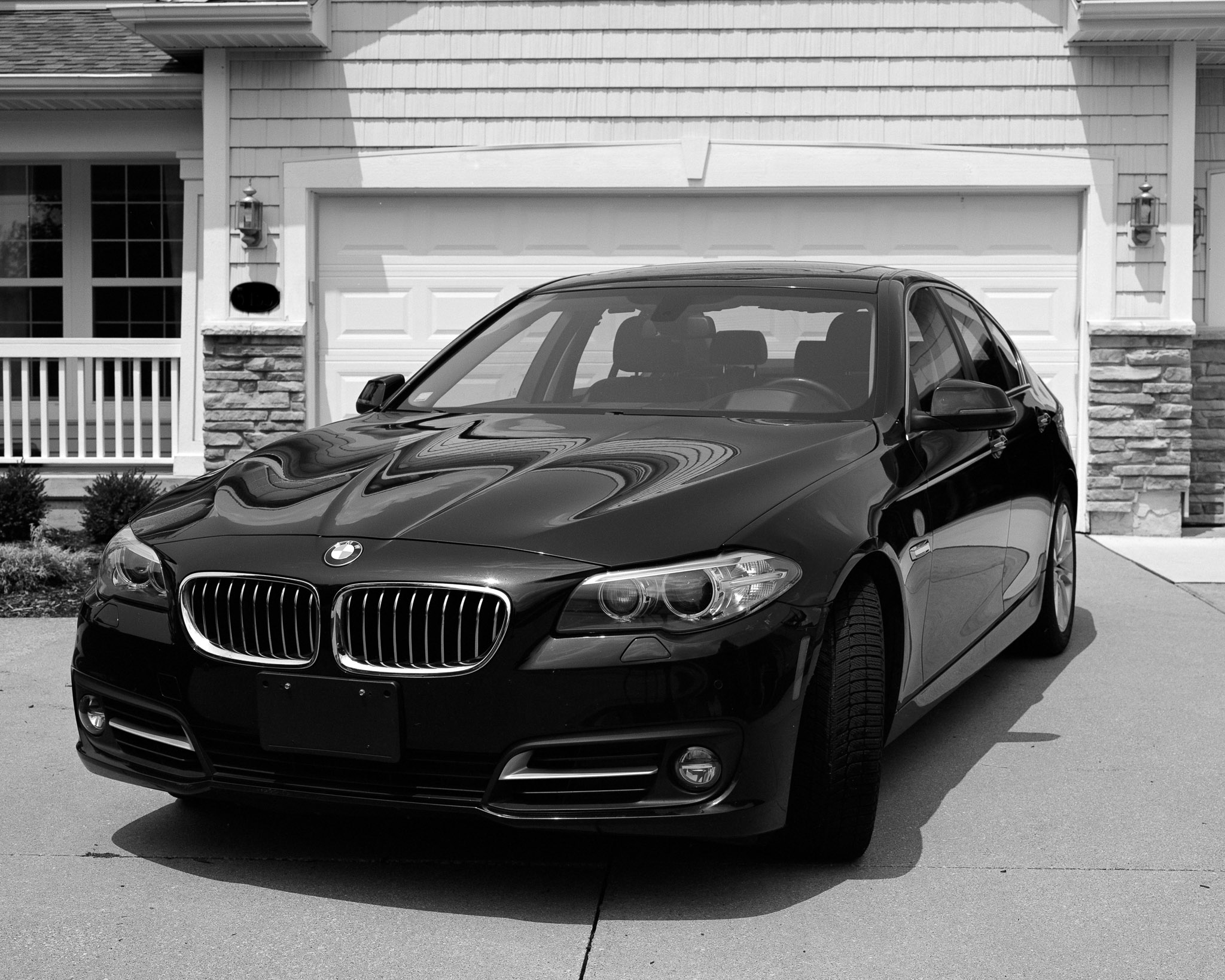
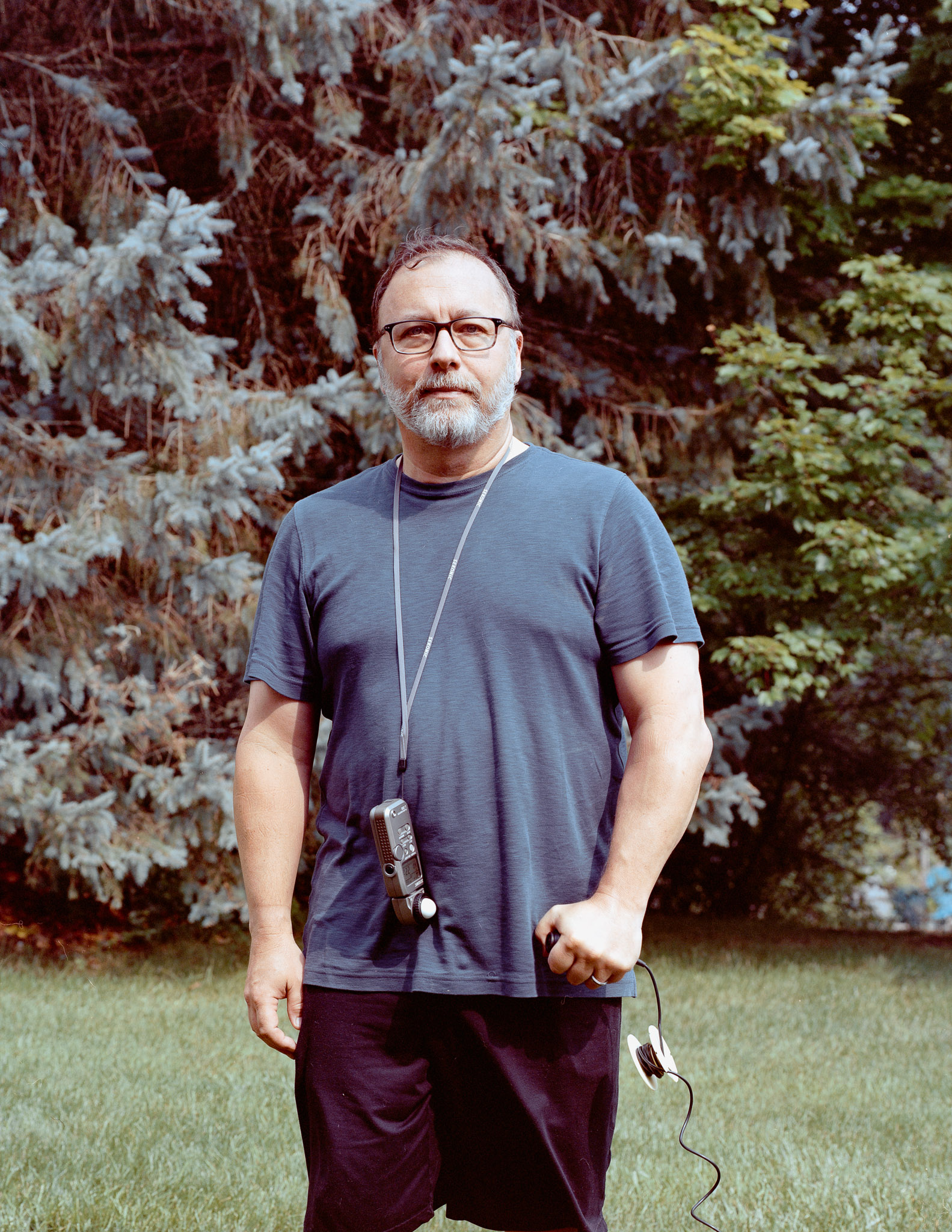
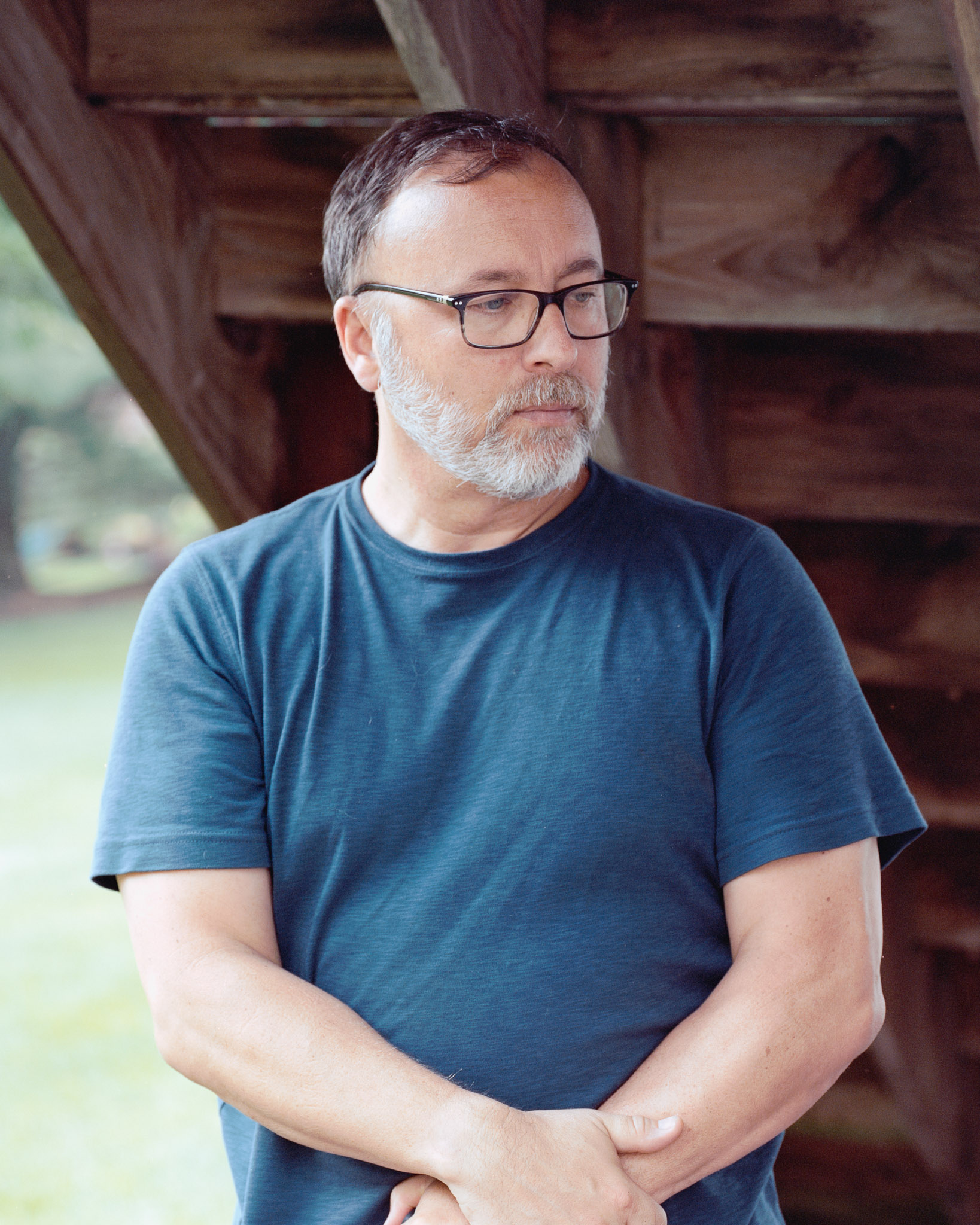
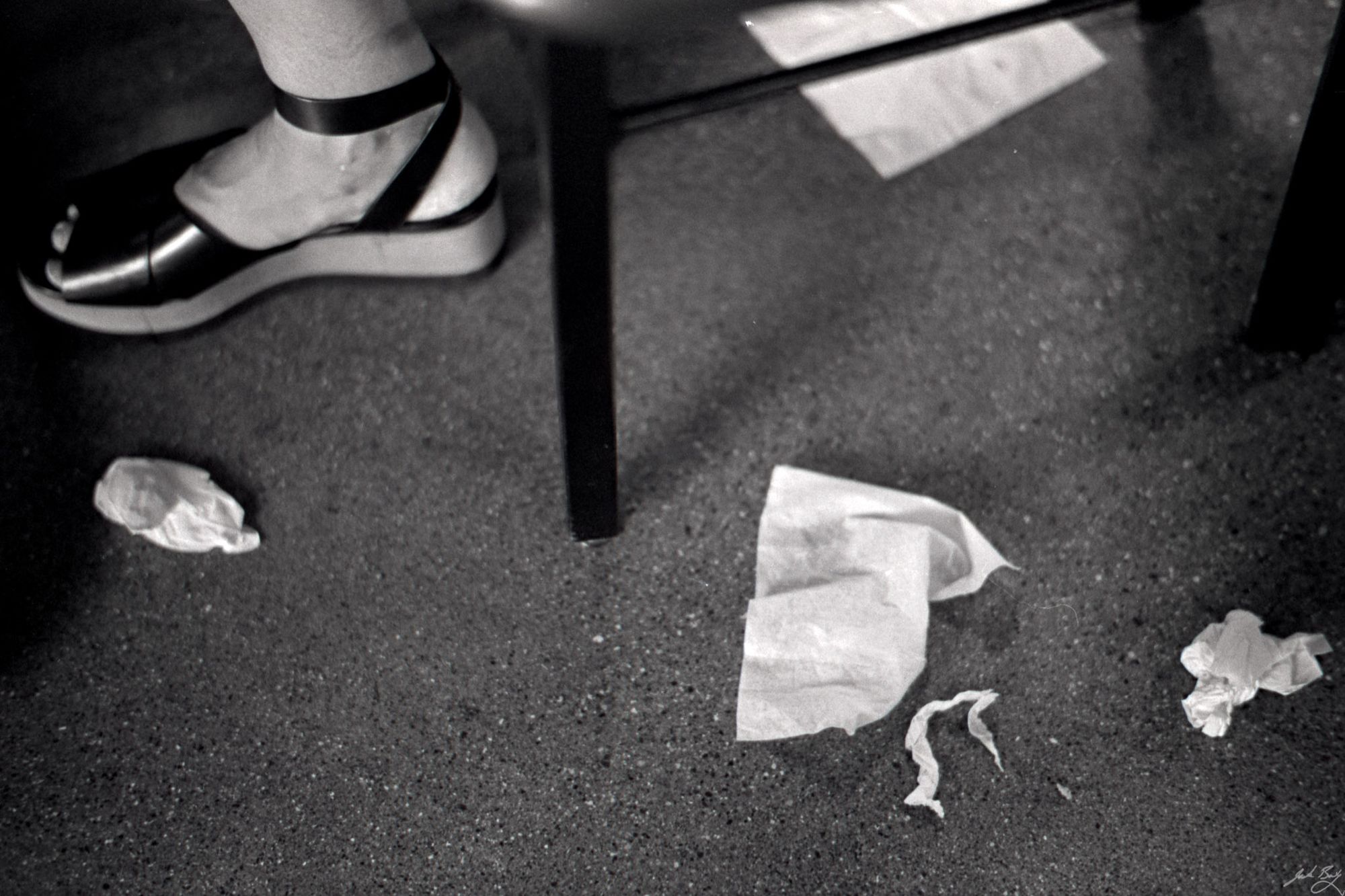
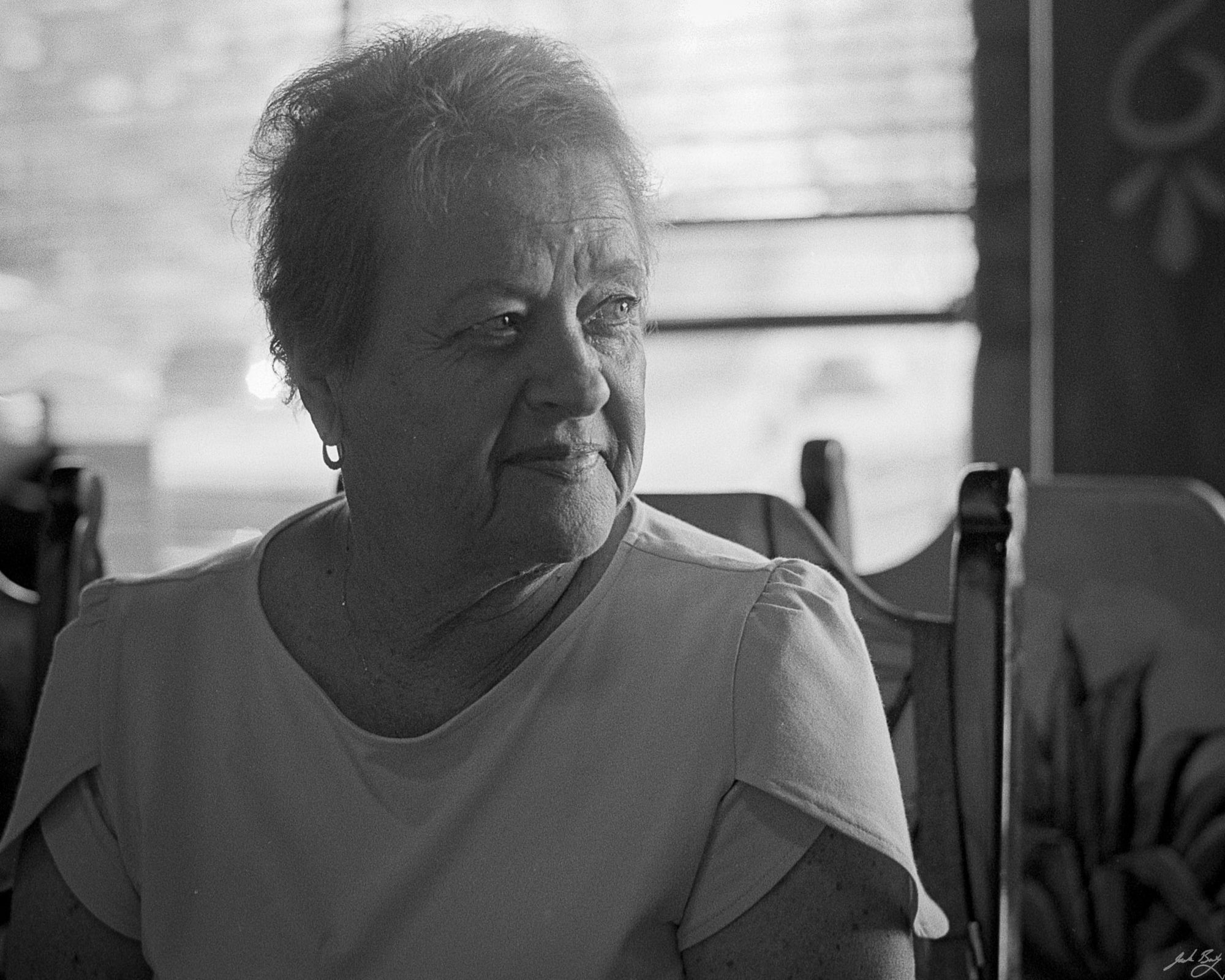
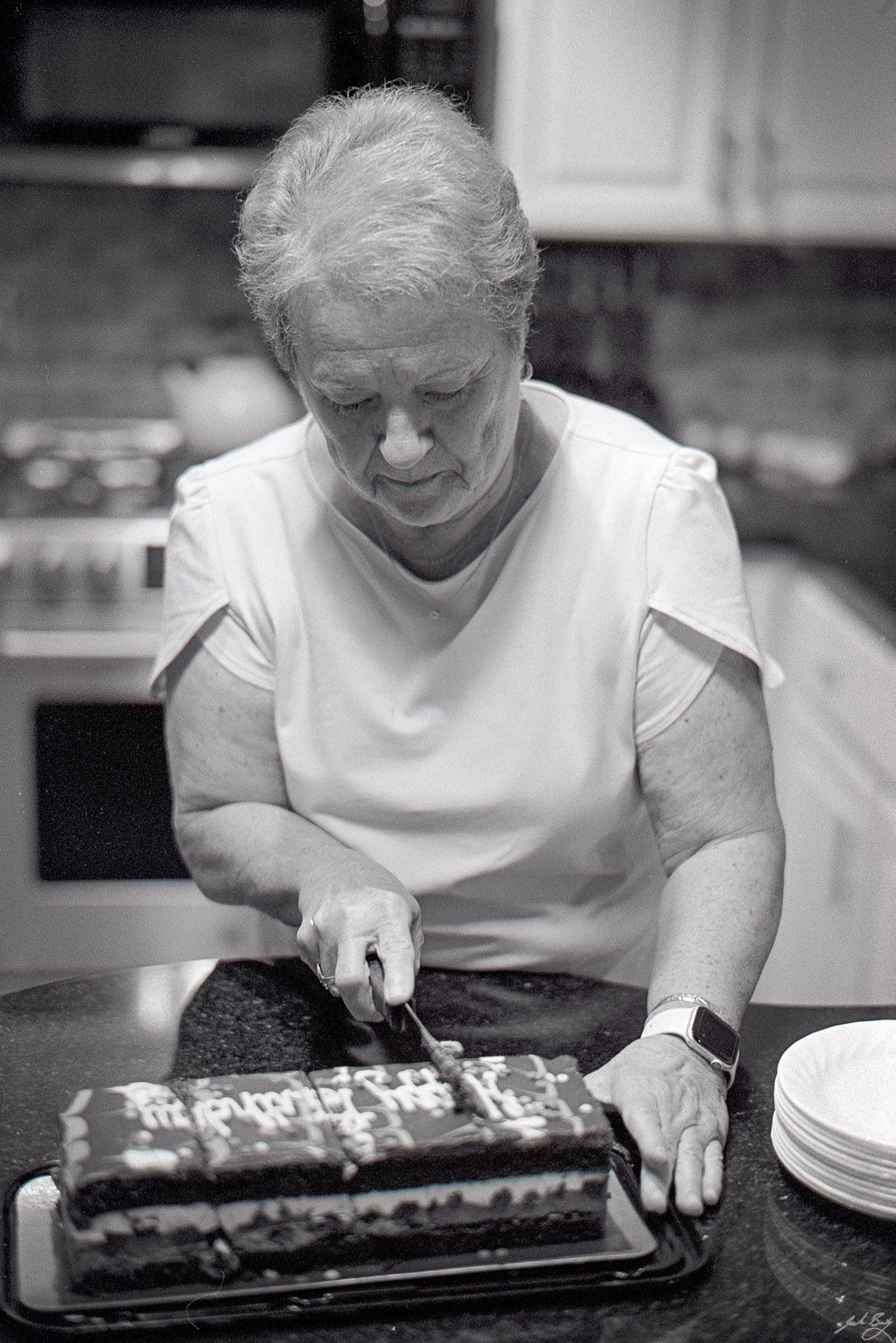
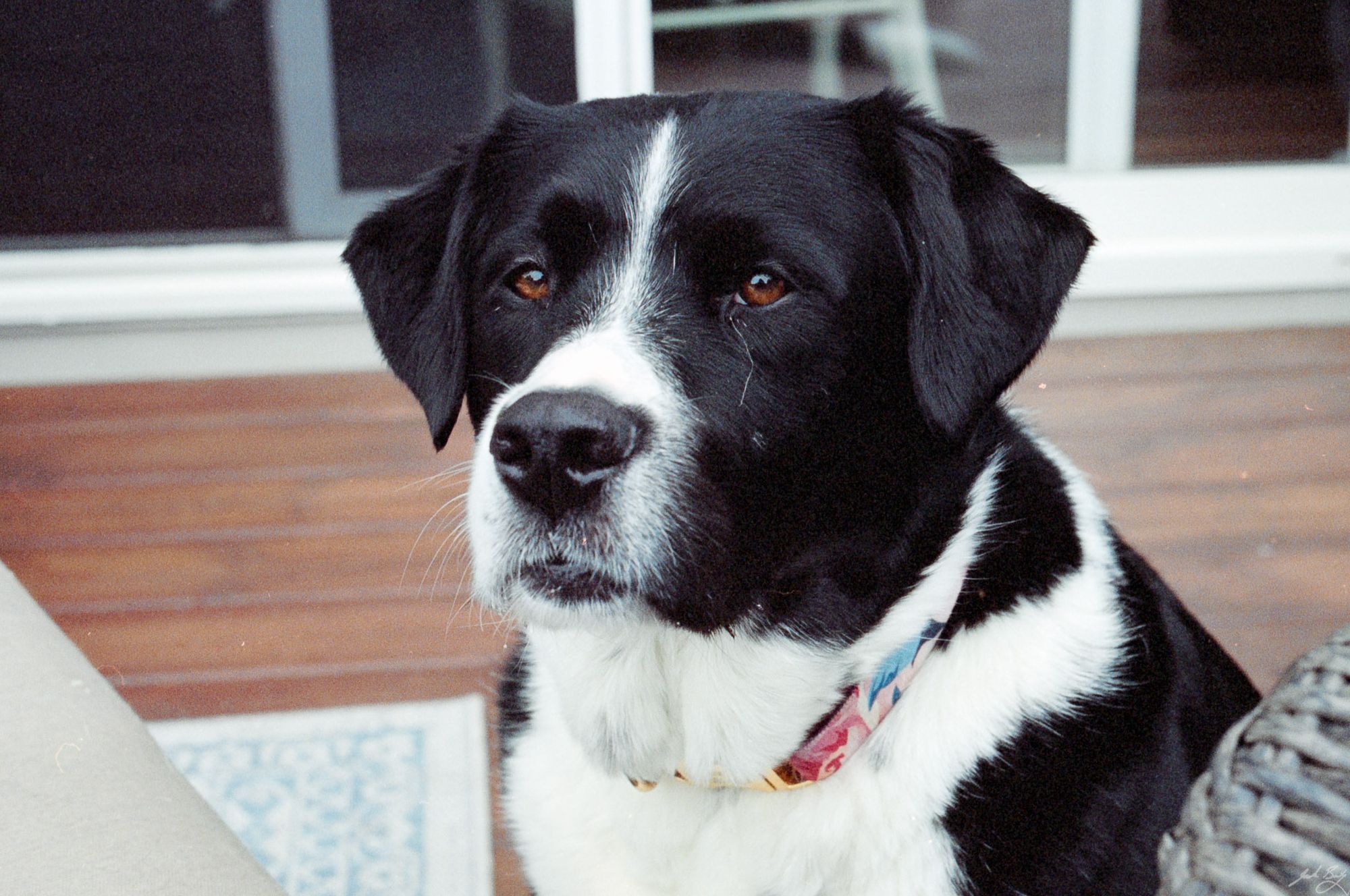
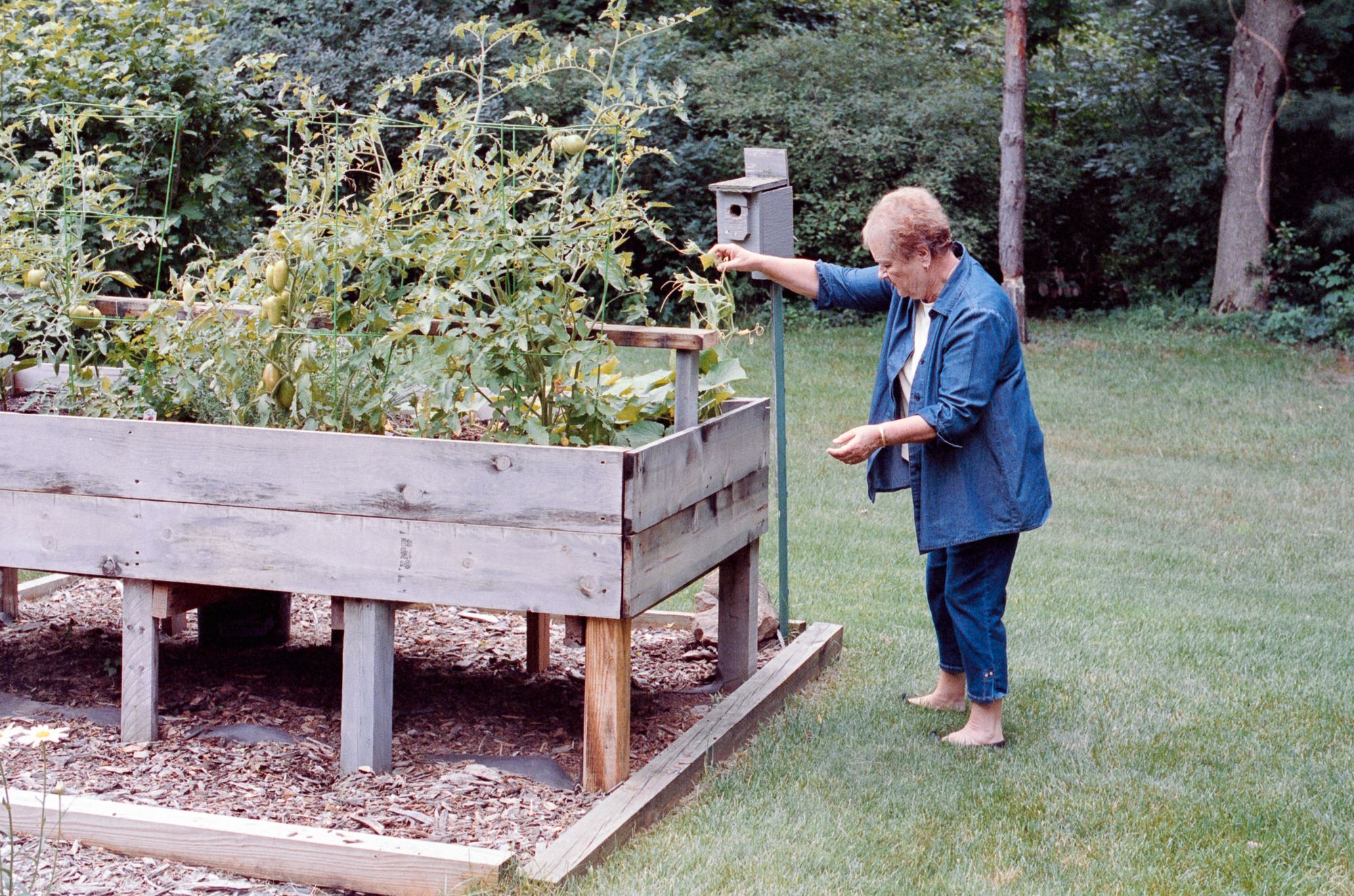
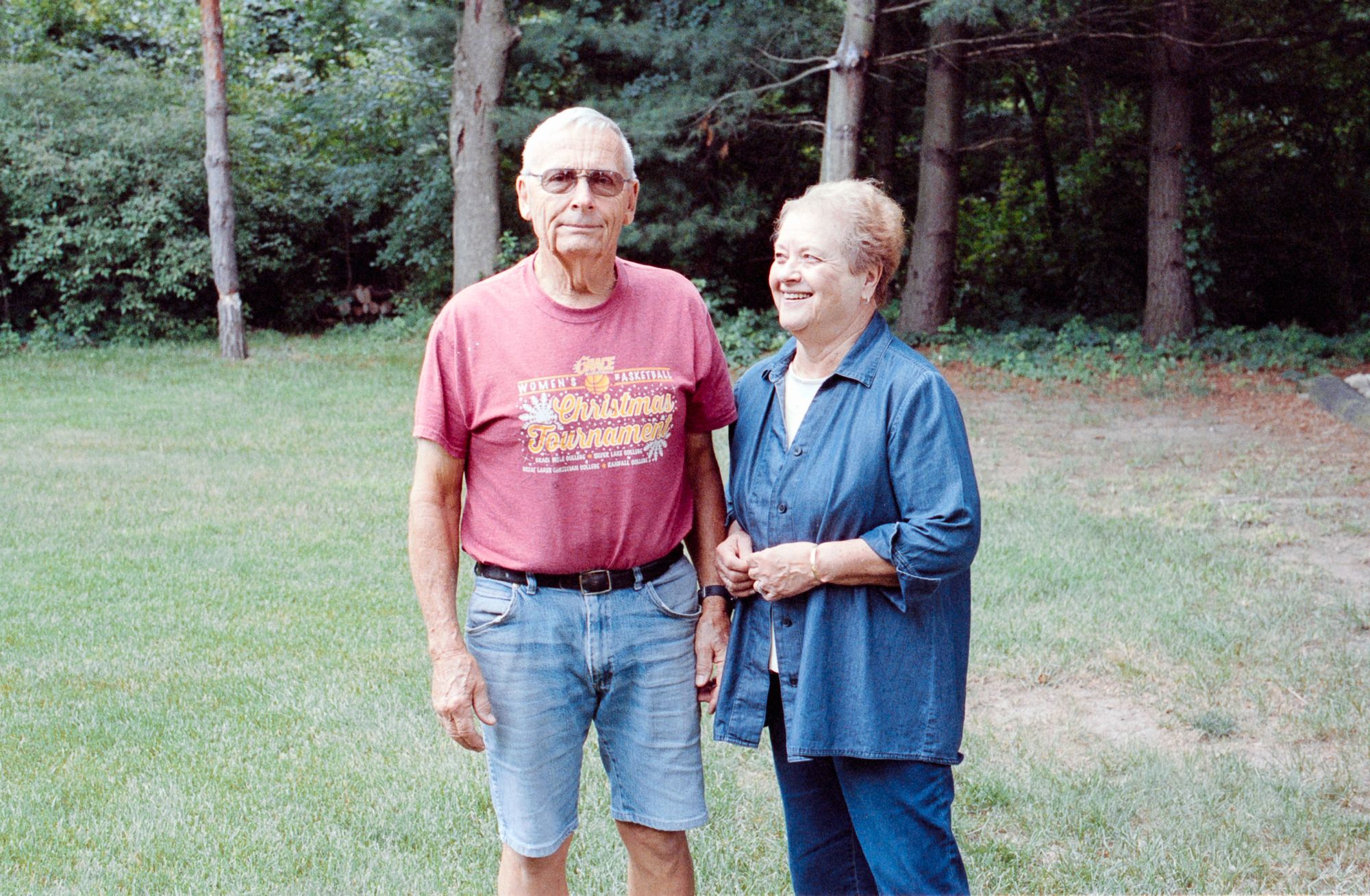
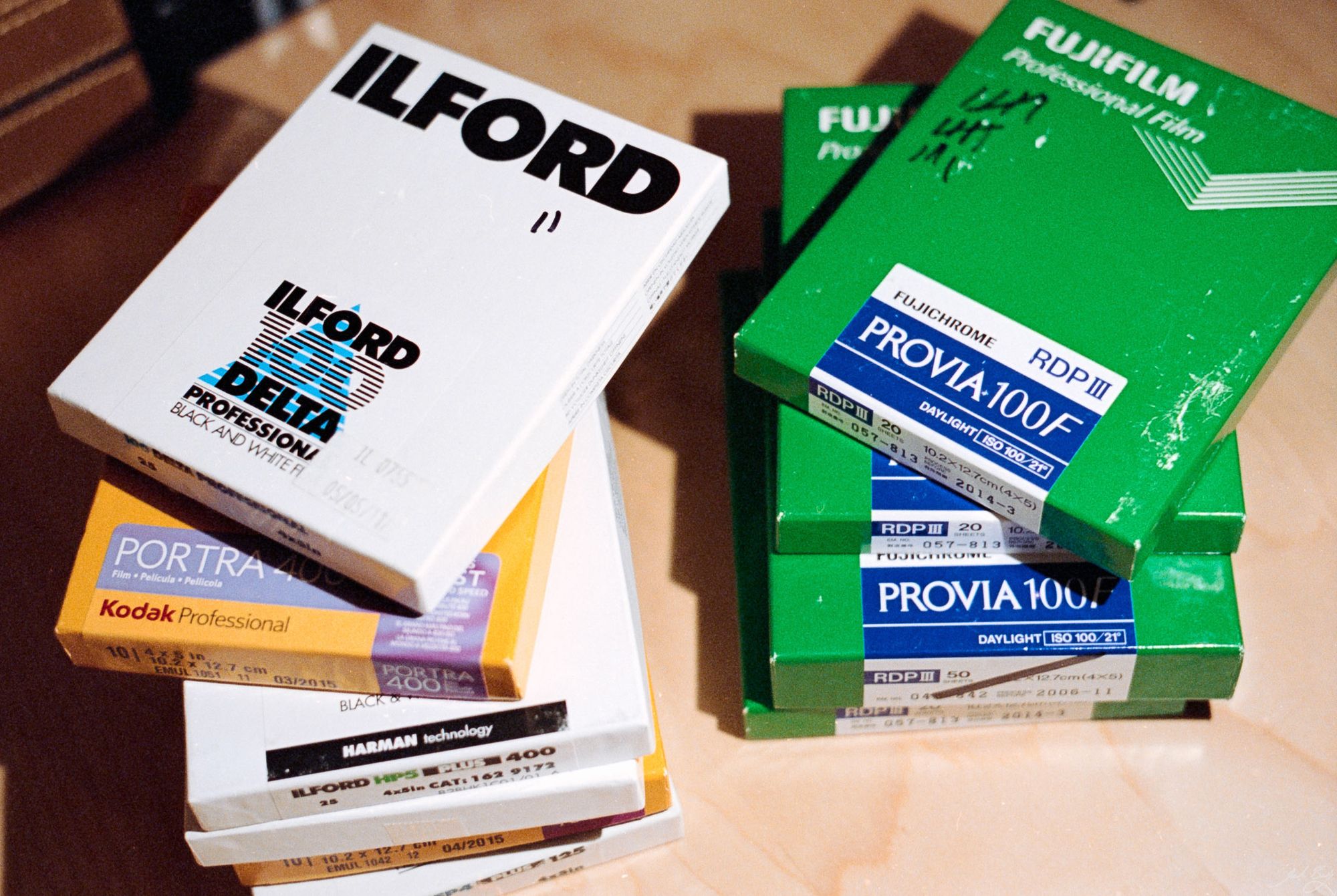
From Roll 2021-026 (Leica M3/HP5 Plus)

The Leica M3 is The One, when it comes to the Leica M line. I love it so. The higher-magnification viewfinder makes it easier to focus longer lenses, so I sometimes mount the Elmarit 90mm and it’s a fine combination. A few here are using the 90mm. The others are using the Summicron-M 50mm (v4). P

The roll of HP5 Plus was processed in HC-110 (Dilution B) and scanned with SilverFast on the V750.

Permalink #

Having a camera vs a computer with me

A friend of mine mocked me for carrying a camera around my neck and I said, “I like to always have a camera with me.” and he held up his phone and said, “I always have a camera with me, too, see?” and I asked, “Does it take film?” and he laughed and said, “No, of course not.” and I said, “Then you don’t have a camera with you. You have a computer that can record images.” and I’m kind of a dick I guess.

Permalink #

The "charm" of vintage lenses

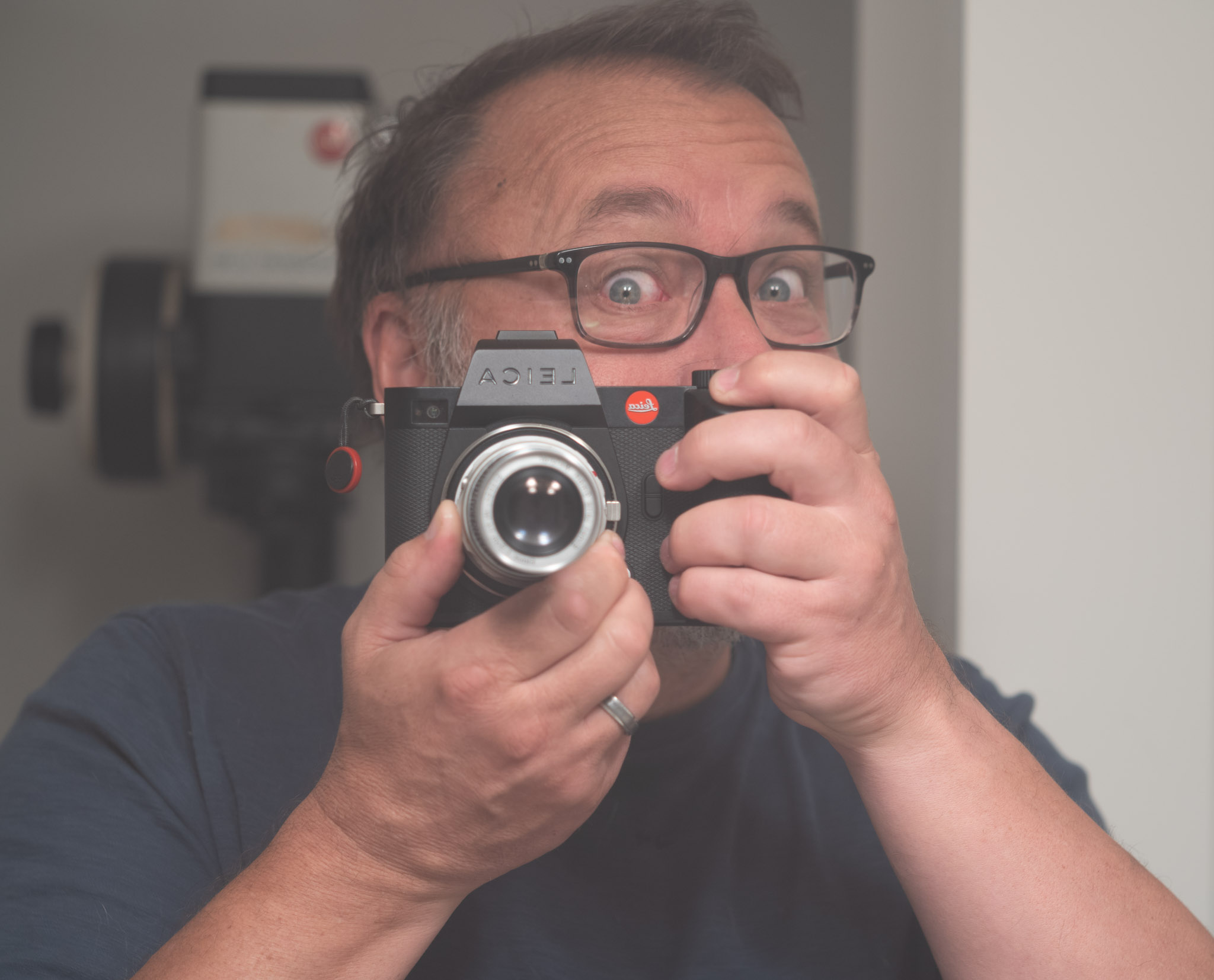
My Leica Elmar 9cm collapsible lens was made in 1957, making it nearly 70 years old, and it shows. The front element is hazy, causing images to be very low-contrast. Here’s an example (mounted on the SL2-S)…
Hazy self-portrait with Leica 9cm f/4 collapsible

It’s like a real-world Instagram filter and I don’t care for it. If it were in better condition, I might like the overall softer look for portraits.

I have a few other older lenses that I’ve almost accidentally collected over the years. There’s an Olympus OM 85mm f/2 which is wonderful and makes a good excuse for using my beat-up but adorable OM-1n. The Nikkor 105mm f/2.5 is legendary, (mostly because it was used by Steve McCurry to make the Afghan Girl photo), but I’m not blown away by it. I have a 1960s thread-mount Canon 50mm f/2.8 from 1958 and I like it for the IIIf but otherwise, it gets very little use.

Taking advantage of the “character” in old lenses is an attractive idea, but in practice, I gravitate toward “better” lenses. I made the photos of lenses in this post using the APO Summicron-SL 75mm and good lord what a lens. It’s hard to ignore the difference in technical quality and just let the old lenses charm me. Perhaps if I was going for a specific look for “my work” but mostly I’m just taking snapshots, so the charm of vintage lenses is often lost on me.

Leica Elmar 9cm f/4 collapsible ready for disassembly.

Still, I’m going to take the Elmar apart and clean that hazy front element and see where it gets me.

Permalink #

The story of Leica’s APO M-mount lenses – Macfilos


Jonathan Slack:

But this is not just about Chromatic aberration, as Peter Karbe explained to me, the lack of aberrations results in much more contrast at the point of focus than in an ordinary lens, and that this contrast falls off very quickly in front and behind the point of focus. This means that an f/2 lens can appear to have the same depth of field as an f/1.4 lens (or even less in the case of the 75 f/1.4 compared to the 75 f/2 M lens).

Leica APO lenses are so good it’s ridiculous. I have two of them for the SL (35mm and 75mm). They really do look special. One day I think I’d like the APO Summicron-M 35mm but I’d have to sell my car first.

(Photo is from the original Macfilos post)

Permalink #

Old film challenge: Use it.

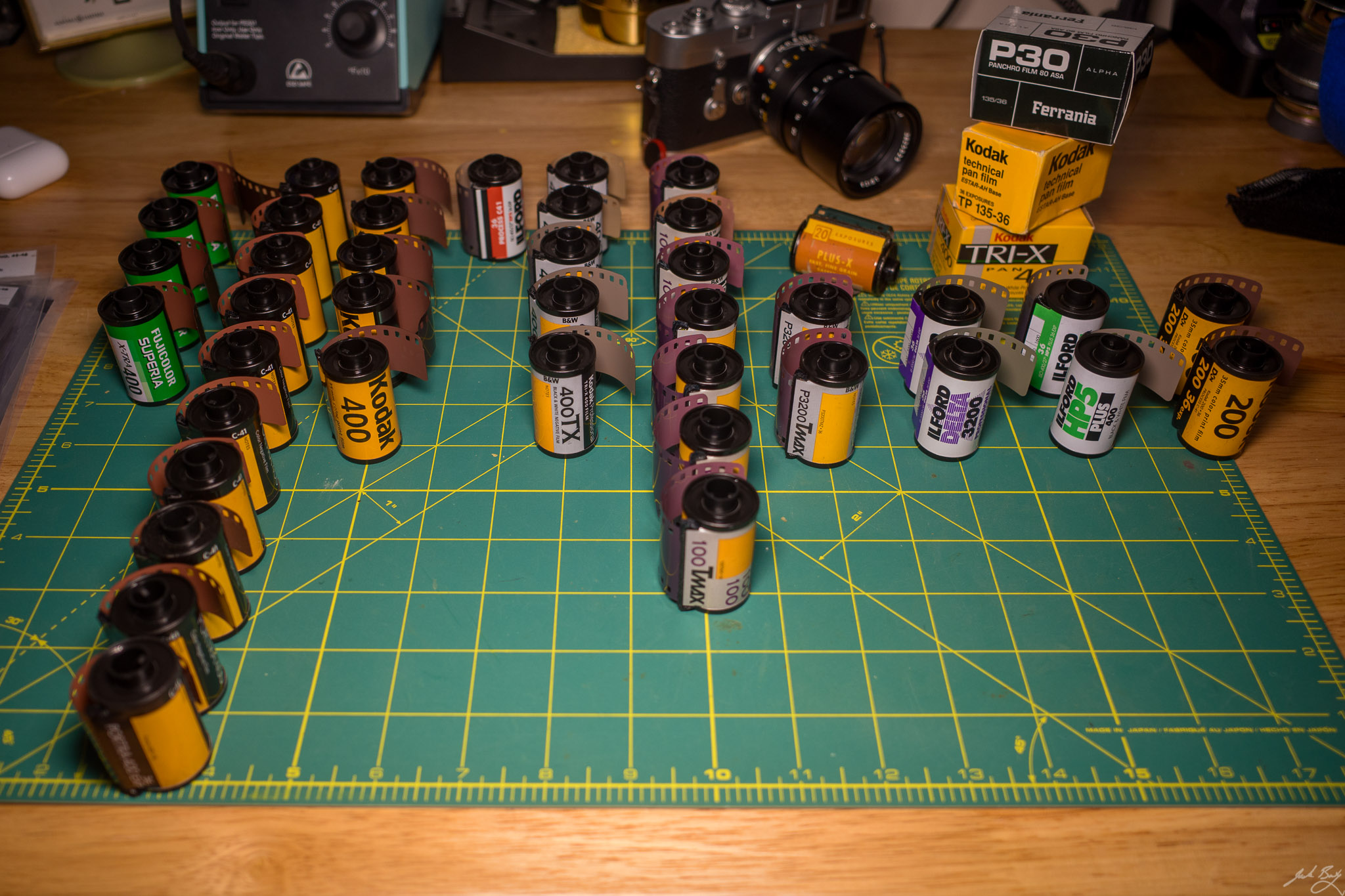
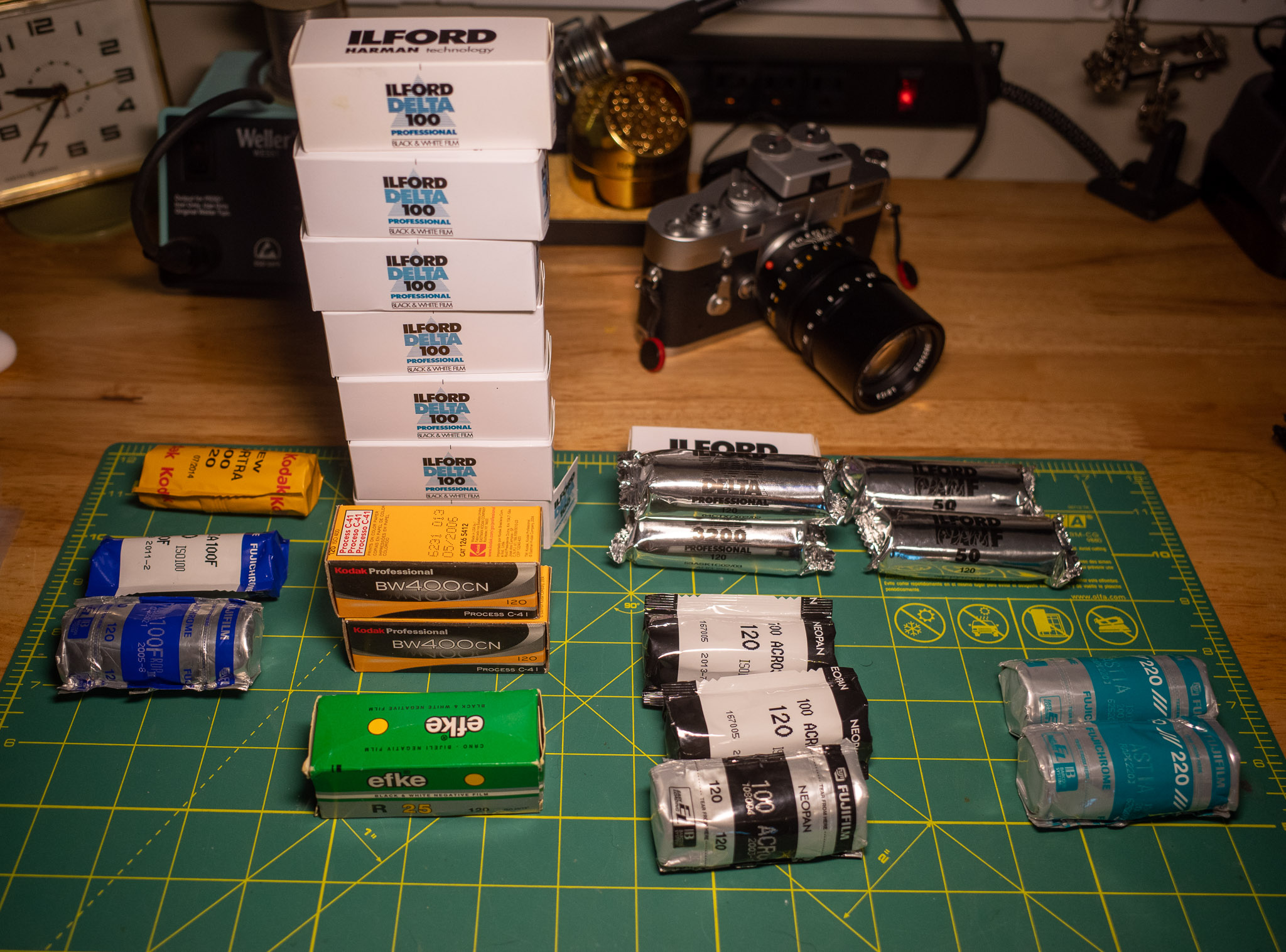
I was surprised to find that I had 55 rolls of various 35mm and 23 rolls of 120 negative film stocks just wasting away in my fridge. I mean, look at this treasure trove!
Rolls of 35mm film from my fridge

I’ve standardized on Ilford HP5 Plus for black and white film and Kodak Portra 400 for color. This doesn’t mean I won’t try something different occasionally, but those are my go-to films.

To make room, I’ve challenged myself to shoot all of this old stock before ordering any more new film.

Here’s the 35mm inventory:

  • Fujifilm Superia 400 Color: 4 rolls
  • Kodak Portra 400: 10 rolls
  • Kodak 400 (color): 5 rolls
  • Ilford XP2: 2 rolls (one is already in the Leica IIIf)
  • Kodak Tri-X 400: 5 rolls
  • Kodak TMAX 100: 7 rolls
  • Kodak TMAX P3200: 2 rolls
  • Ilford Delta 3200: 2 rolls
  • Kodak 200 (color): 2 rolls
  • Fujifilm Velvia 100f: 1 roll
  • Film Ferrania P30: 1 roll
  • Kodak Tri-X Pan: 1 roll
  • Kodak Technical Pan: 1 roll
  • Kodak Plus-X: 1 roll

I may not bother shooting the very old stuff. For example, the Tech Pan expired in 1991! The Plus-X and Tri-X Pan are probably not far off from that. Plus, they’re in unopened boxes, which are worth keeping intact just for nostalgia’s sake.

And here’s the 120:

Rolls of 120 film
Rolls of 120 film
  • Ilford Delta 100: 7 rolls
  • Kodak Portra 400: 1 roll
  • Fujifilm Provia 100f: 2 rolls
  • Kodak BW400CN: 2 rolls
  • Efke 25: 1 roll
  • Ilford Delta 3200: 3 rolls
  • Ilford Pan F 50: 2 rolls
  • Fujifilm Acros 100: 3 rolls

There are 2 rolls of Astia but they’re 220 and I don’t have a back that will hold 220, so that’s out.

I was excited to see the Acros in there. It’s a great film.

It also looks like I’ll need to buy some E-6 chemistry for the Velvia and Provia.

If I’m being honest with myself, I understand that this is about three years’ worth of film, given my normal pace. I’m hoping that this challenge will induce the feeling that I’ve got to hurry and “use it up”, and so will accelerate things a little.

Permalink #

From Roll 2021-025 (Nikon F3, TMAX 100)

I'm trying to use up the rolls of expired TMAX 100 that have been taking up room in my fridge for a few years. I pulled the Nikon F3 out of a drawer, loaded batteries in the motor drive, and shot a roll. As usual, it was mostly photos of Alice and I around the house.

The film was processed in HC-110 (Dilution B) for six minutes and scanned on the V750. The first couple were shot using the vaunted Nikkor 105mm f/2.5 AI-s lens, for what that’s worth. The others were taken with the Nikkor 28mm f2.8 AI-s.

My love for the Nikon F3 has waned since the initial love affair, but once in a while it’s fun to clamp on the big motor drive and burn through a roll.

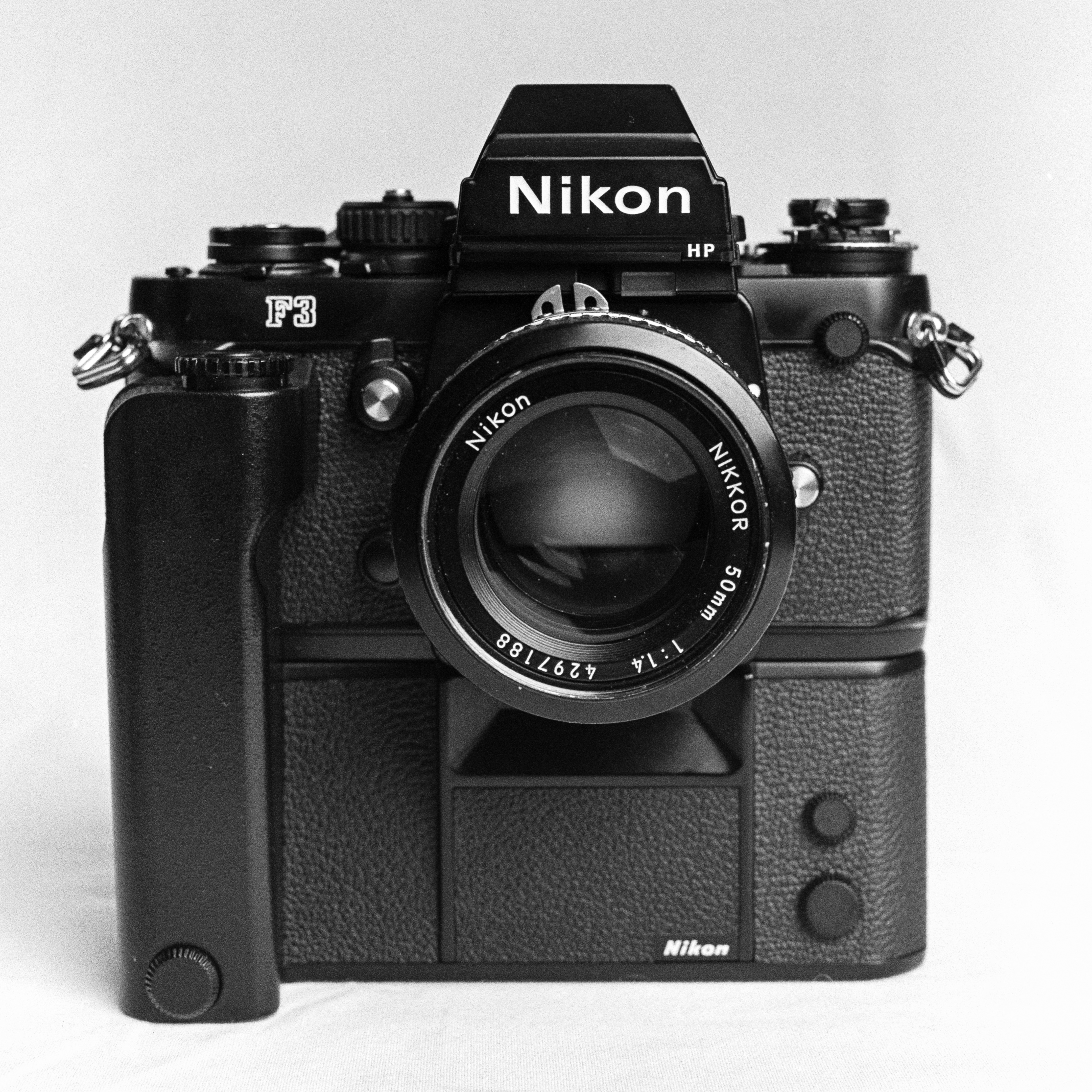
Here’s a photo of the F3 that I made with a Hasselblad.

Nikon F3HP with motor drive
Permalink #

From Roll 2021-024 (Hasselblad 500C/M)

I love the way the Zeiss lenses for Hasselblad render. The 80mm Planar has been my standard and favorite for years. I put a roll of Tri-X through it today, just for fun. Of course it was mostly shots of Alice, who poses patiently for me whenever I ask.

Alice (2021). Hasselblad 500C/M. Zeiss Planar 80mm f2.8. Tri-X
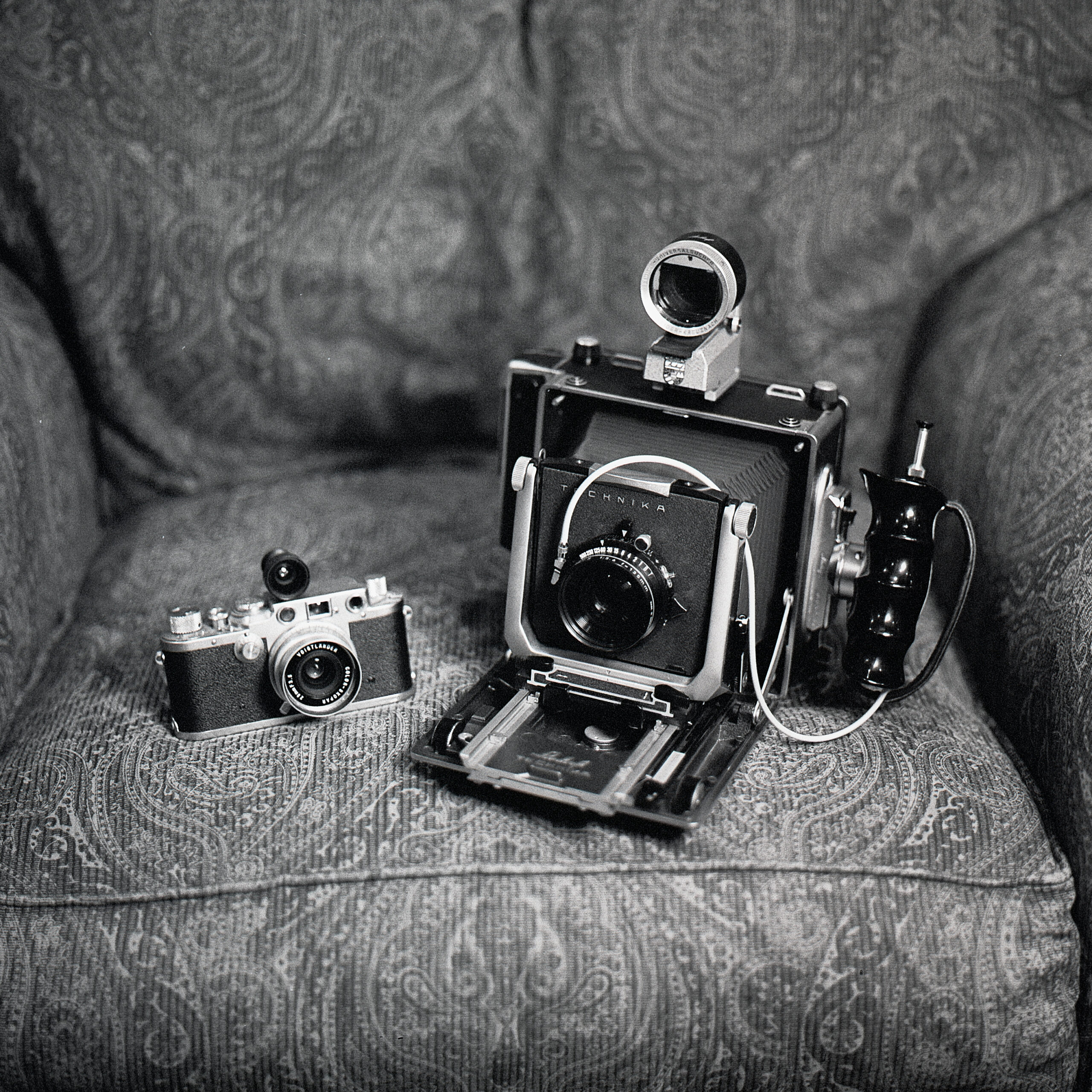
Big Linhof and the little Leica IIIf.
Action shot! Hasselblad 500C/M. Zeiss Planar 80mm f2.8. Tri-X.
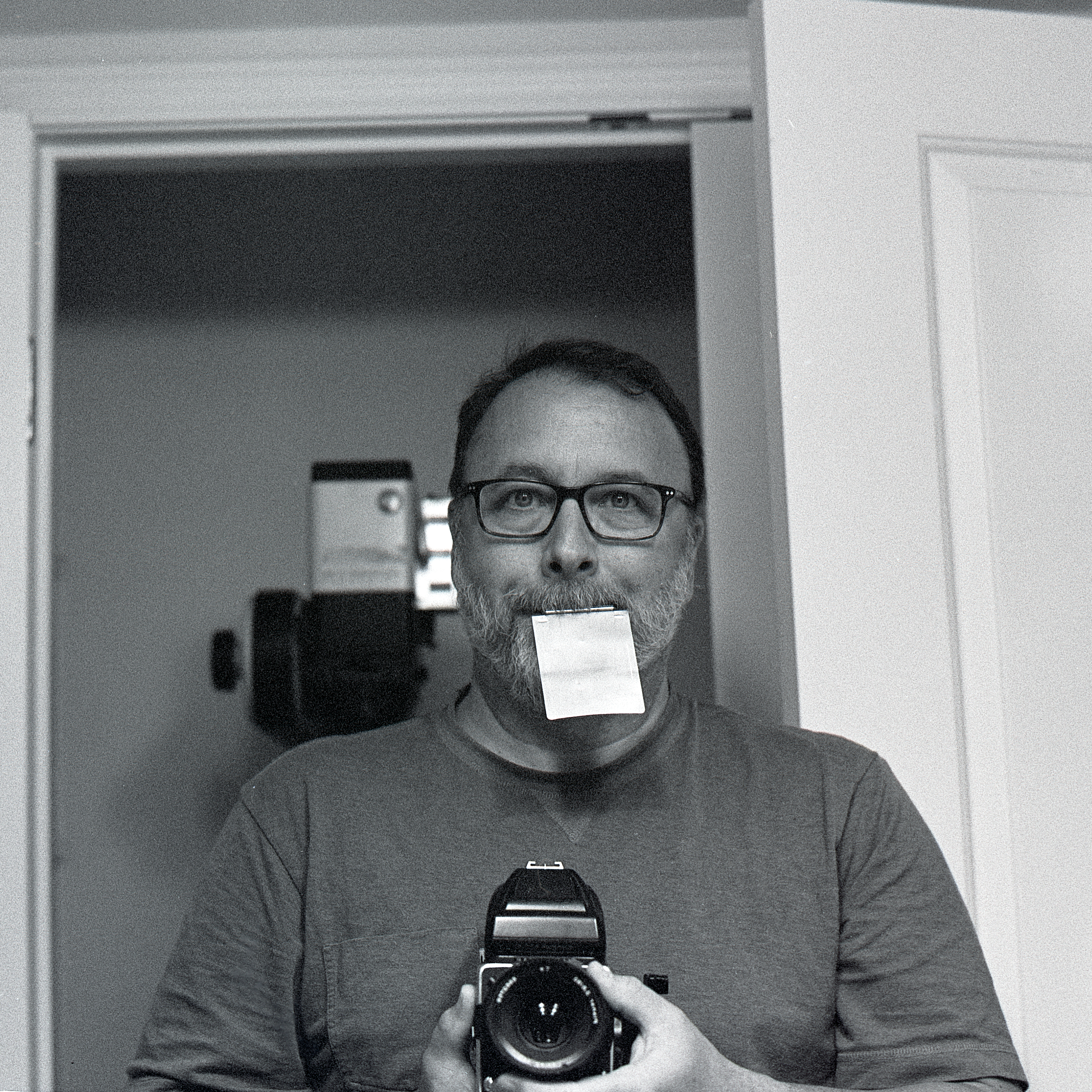
Self-portrait with the Hasselblad. Dark slide in mouth. Hasselblad 500C/M. Zeiss Planar 80mm f2.8. Tri-X
Permalink #

The Grafmatic back (and yet another 4×5 failure)

The gentleman who sold me the Linhof later sent me (at no charge!) a Grafmatic sheet film holder. The Grafmatic will hold up to 6 sheets of film at once and allows one to “rapidly” expose them. Here are some instructions.

I loaded four sheets and went out on the deck with Alice to practice. As you can see, it didn’t go all that well. Loading film into the septums was easy enough. And racking the guts of it in and out to “advance” to the next sheet is something I’ll get used to. My problem was that I never advanced past the last frame I shot and then opened the dark slide, exposing and completely wasting one sheet and fogging the next couple. Other than the frontmost sheet, which was totally ruined, this was the worst of them.

Alice with a light leak. Linhof Master Technika.

The other two were salvageable…

Alice with less of a light leak.

It’s as if she was sad for me, in advance. And then the last one, which wasn’t damaged at all…

On the plus side, this makes shooting a series of (handheld) photos with the Linhof pretty speedy. I was able to focus and frame accurately handheld, and that’s quite a feat.

Once I get this dialed in it should be great. I do love how large-format photos render.

Permalink #

Photo processing workflow updates

Take a look at this list from my notes about how I manage my photos:
  • 2019-01-01 I’ve decided I’ll be using Lightroom CC.
  • 2021-05-15 Don’t listen to 2019 me, I’m using Lightroom Classic
  • 2021-06-03 Don’t listen to May 2021 me, I’m using Capture One now.
  • 2021-08-12 Don’t listen to June 2021 me, I’m using Lightroom Classic again.
  • 2021-08-15 Don’t listen to last week’s me, I’m using Capture One.

Obviously, I struggle with which tool to use. I was certain I’d “permanently” settled on Lightroom Classic just a week ago. In my comparisons, Lightroom wins nearly every category. But there was this entry:

C1: I get better images, faster

I couldn’t get this advantage of Capture One out of my head. Somehow, with my digital files, Capture One’s defaults come really close to where I want to end up, whereas in Lightroom I always have work to do.

My head says, “Use Lightroom because it’s ‘standard’ and works with everything.” but my heart says, “You know you like using Capture One better, so do that!”

The the other thing that settled it for me this last time was the realization that I want my editor and my library to be decoupled. Lightroom really wants to be my library. In fact, I spent a good portion of last weekend importing 100,000 images into a single Lightroom Library. It’s an adequate library, but using it as my primary tool puts me in a situation I don’t want to be in: I’m relying on Lightroom (and Adobe) for everything. Much better to have a DAM tool that isn’t entirely dependent upon a specific photo/RAW editor.

This is where Photo Mechanic Plus comes in. I’ve been using Photo Mechanic for a decade or more, and there’s nothing better or faster for ingesting, culling, and applying keywords and metadata to photos. Now, with the new “Plus” version, it’s also a powerful DAM.

My process is currently as follows:

  • Ingest photos or scans using PM
  • Rename with PM (e.g. “YYYYMMDD-FILENAME.dng”)
  • Edit the RAW files in Capture One (using a temporary “session”)
  • Export a “burned” JPG from each edited RAW file in the same folder with the same name (but using .jpg rather than .dng or .tif)
  • Move files to wherever they belong (usually in “/Media/Photos/YYYY/MM-Month YYYY/”) using Capture One (so the edit settings travel with them)
  • Add exif data to any scanned film files using Exiftool or the MetaImage app
  • Add any metadata, keywords, etc. to every image (or at least most of them) using PM.
  • Add new photos to the main PM catalog
  • Upload or share using PM as desired

Once the initial edits are done and I have created permanent JPGs, everything lives in organized folders on my hard drives and are viewed, searched, managed, shared using Photo Mechanic. If I want to do followup edits later, I can always open the RAW files in Capture One or whatever other app I might want to use.

I miss things from Lightroom. For example, to convert scanned color negatives I use Negative Lab Pro, which only works in Lightroom. I miss some of the plugins and other tools, too. But I feel like this is better for my library and my photos for the long haul.

Permalink #

Glass: a social app for photographers

For example, currently, we don’t have likes. If and when we launch a feature in that vein, it’ll be private. We’ve intentionally avoided any public counts. We don’t want Glass ever to become a popularity contest. We’re not home for influencers. We are a home for photographers.

Tom Watson – On my Om

Wouldn’t it be nice to have a reasonable alternative to Instagram? I wish it could be Flickr, but I doubt that’ll ever happen.

Maybe Glass will have a shot. I’m number 482 on the waitlist so I’m about to find out.

UPDATE August 12, 2021: I’m in as @jbaty on Glass. I’ll play with it a bit and let you know what I think

UPDATE August 14, 2021: I like it. I don’t love it yet. It looks nice, but behaves in ways I don’t expect. It’s also froze on me a few times. I love the old-school Flickr feeling. I guess my problem is one that Glass can’t solve and that is I don’t like viewing photographs on a phone’s tiny screen.

Permalink #

Large Format: Challenges

There are too many things that can go wrong when shooting large format (4×5) film.

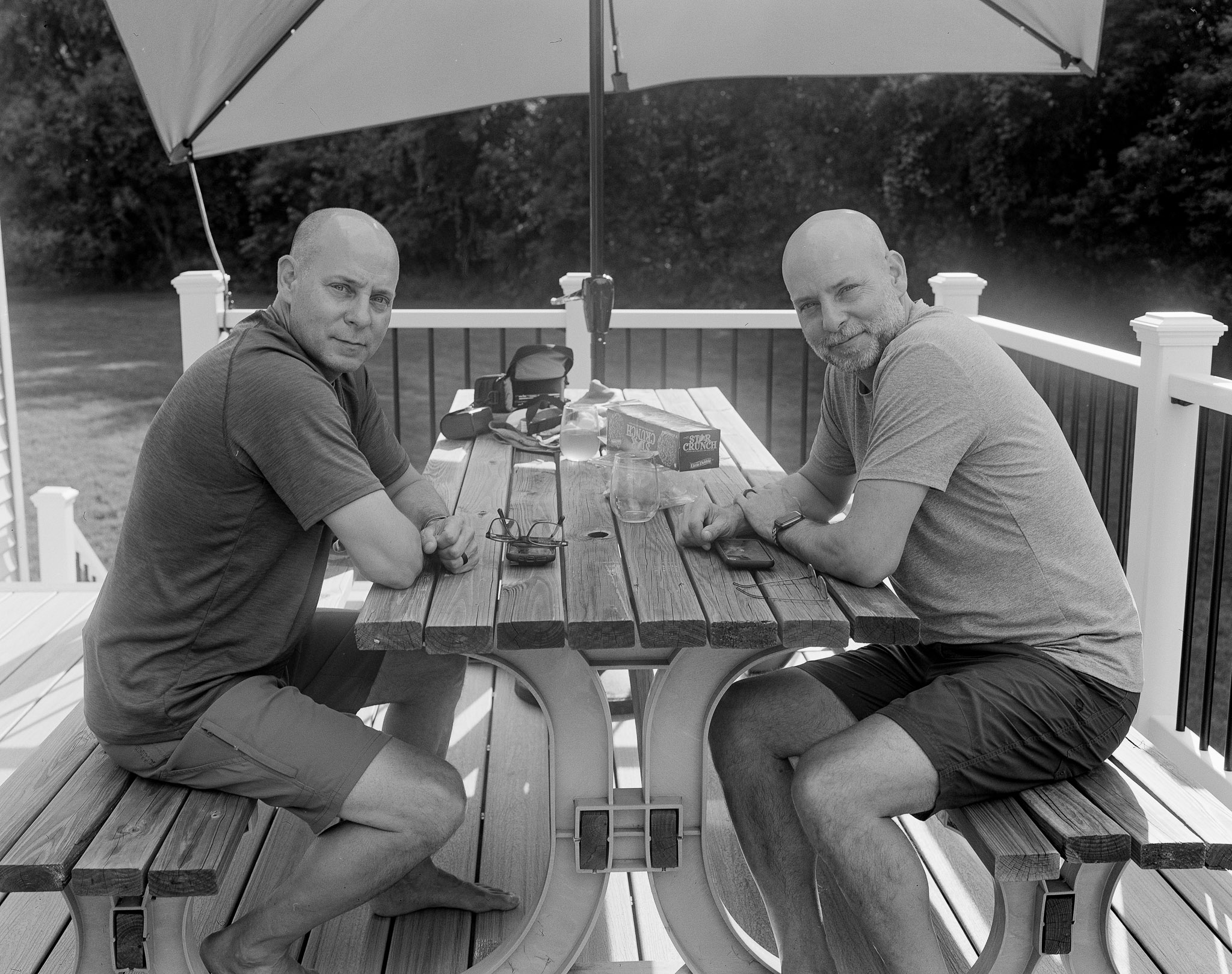
I made four exposures of my friends Steve and Bryan this afternoon. Two of the four were ruined right off the bat: The first, because I’d left the shutter open when pulling the dark slide. The second because I didn’t expose it at all and processed as though I had.

Large format is hard.

There are so many opportunities to fail that making a successful image is really quite rewarding. Today wasn’t a rewarding day. Both of the photos that weren’t completely ruined were spoiled in other ways.

The above image was taken while facing into the sun. That was dumb. I was so flustered after accidentally exposing the first negative that I basically ignored the actual subject of the shot.

And the following image shows some blooming/flair around the overexposed decking and table areas. I’m not sure why it’s so severe. The lens may have been dirty.

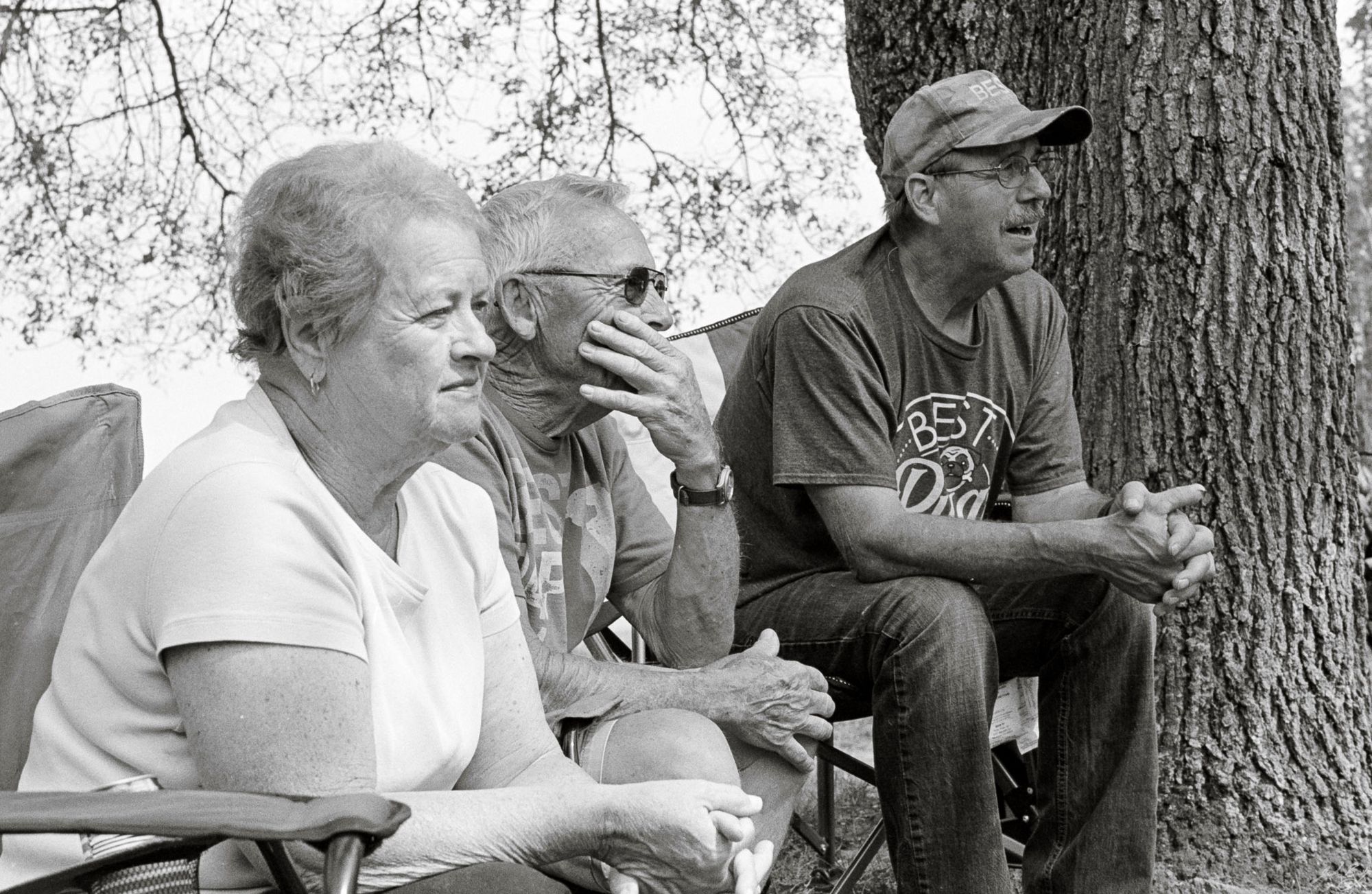
Bryan and Steve (Linhof Master Technika | Rodenstock APO-Sironar-S 135mm | HP5+ 400 Scanned with Epson V750 D-76 1+1)

Oh well, I’ll just need to keep practicing because when it works, it’s awesome.

Permalink #

The Linhof Master Technika

Anyone who’s dabbled in large format photography knows the name “Linhof”. It’s one of those companies with a long history and a reputation for building some of the best 4×5 field cameras available. I’ve always been curious about them. Are they really “the Leica of large format”?

My first 4×5 camera was a beat up Burke & James press camera. Then a beat up Crown Graphic. Then a Speed Graphic, and finally a Wista Field Camera. The first three were super cheap. The Wista was bit more serious, but it was such a beautiful wooden camera.

The problem I have with large format is that I hate tripods. I had the most fun shooting the Speed Graphic hand-held. This is not how large format is done today, though. Maybe back when Weegee was doing his thing, but now it’s for sharp and super-detailed landscape and architectural work, mostly. Maybe studio portraits. Nonsense, I want to do hand-held, informal, environmental portraits. My Speed Graphic has a light leak, though, so I haven’t been shooting much 4×5.

Then one afternoon I spotted a Linhof Master Technika kit in one of the forum classified sections. It was the camera, lenses, grip, viewfinder, cams, and film holders. The camera was recently CLA’d and had the bellows replaced with genuine Linhof replacement bellows. Basically, it was everything I’d need for handheld 4×5 work. Plus, it was the mythical Linhof.

I bought it. The gentleman who sold it to me included a stack of large format photograph books, negative sleeves, a cool Grafmatic film holder and a bunch of hand-written notes with details about many of the items. I couldn’t be happier with the purchase.

And the camera? It was made in 1972 but looks and feels almost new. The short version is that it’s as well-built and smooth as I’ve been told. Everything is solid and tight and moves like butter. Its build quality feels so far beyond that of my old Graphics that it’s hardly fair to compare them.

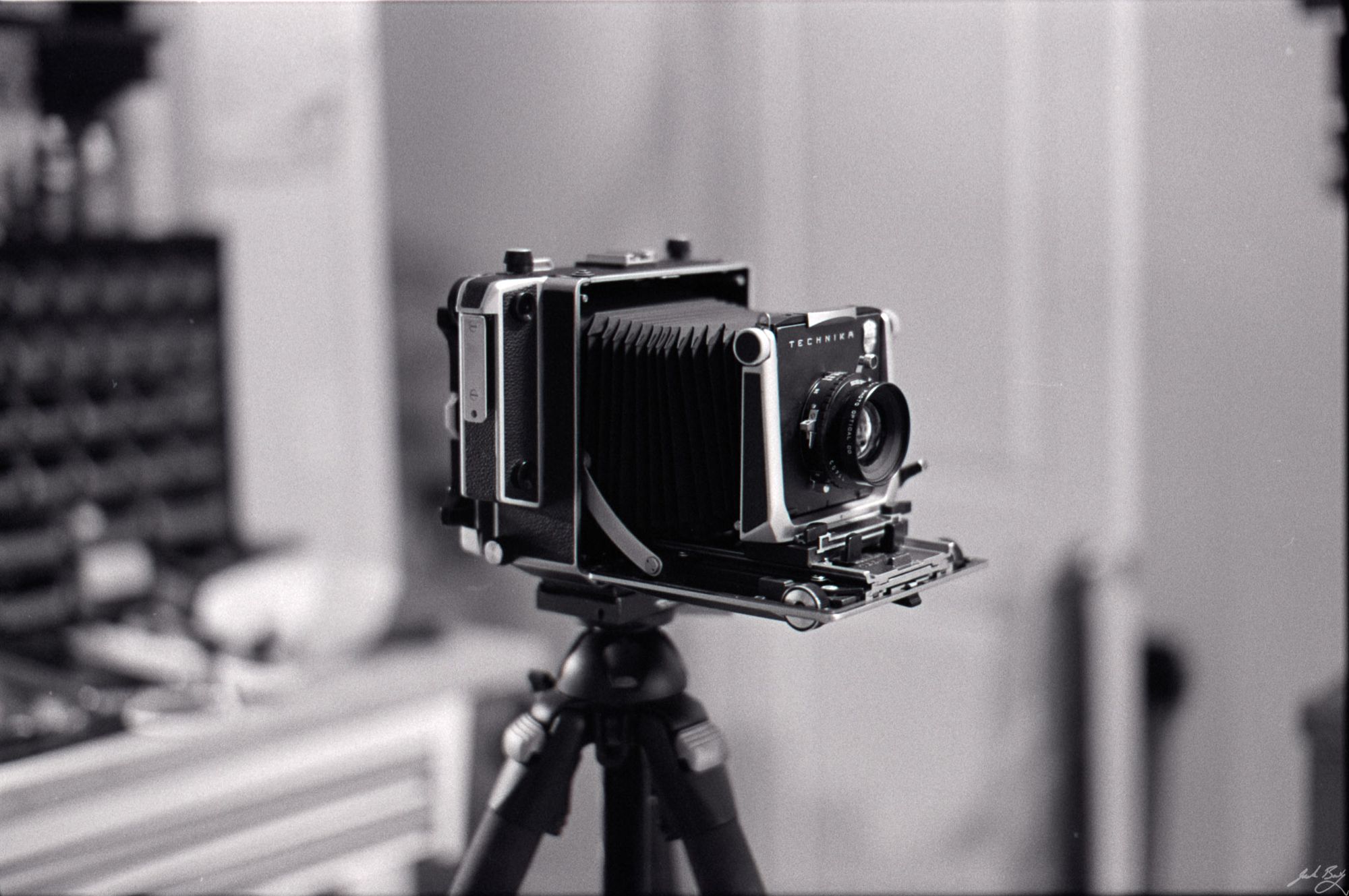
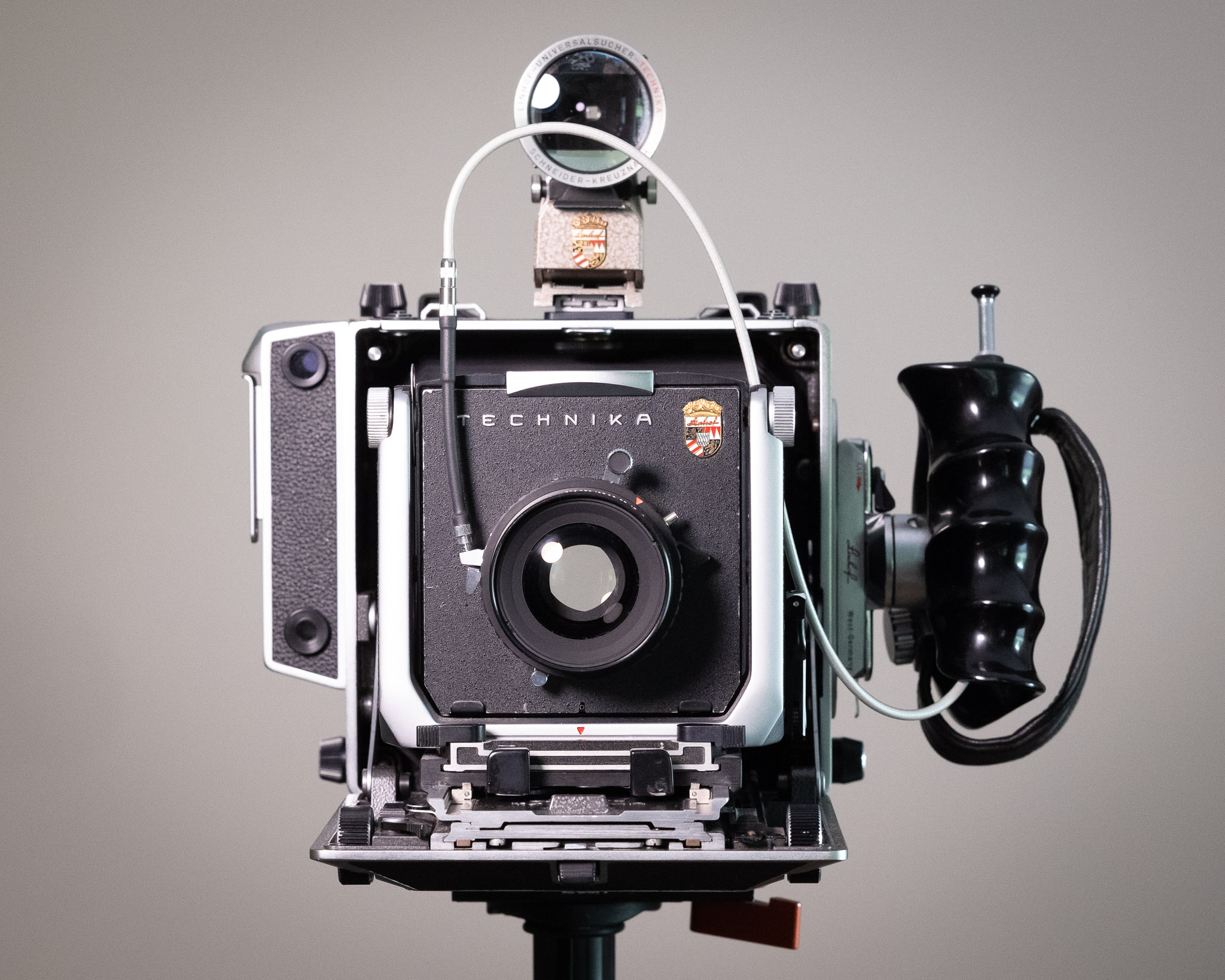
Linhof Master Technika

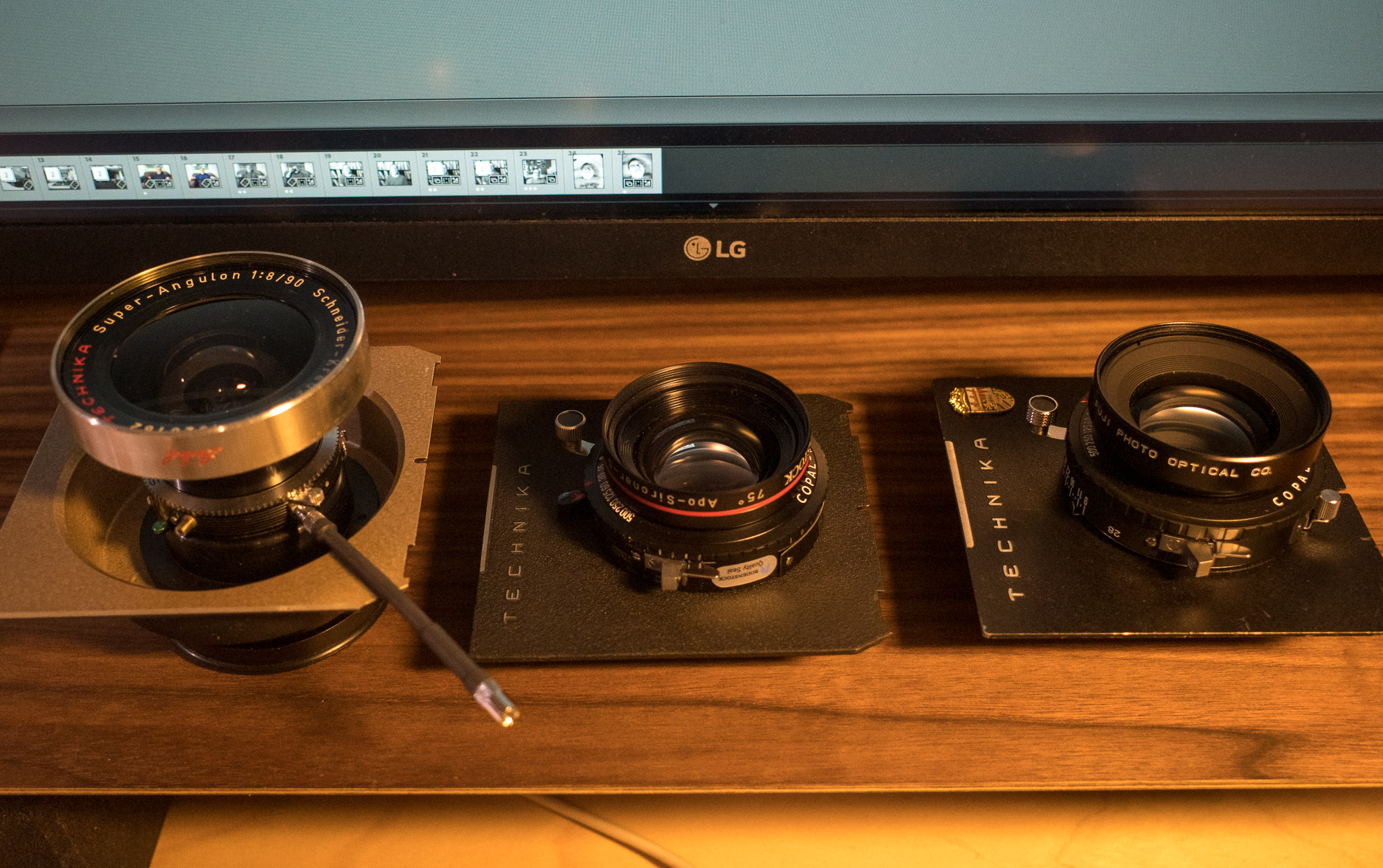
It came with three lenses: A 90mm Schneider-Kreuznach Super-Angulon f/8, A 135mm Rodenstock APO-Sironar-S f/5.6, and a 240mm Fujinon A f/9. All three lenses have lens-specific custom cams that allow for accurate focusing using the rangefinder. This means I can focus and shoot hand-held with any of them. And just look at that giant grip!

90mm, 135mm, and 240mm

I’ve only had the camera for a week, and shot maybe a dozen sheets so far. It’s a joy to use, and I hope to use it often. Here are a few photos I’ve made while getting used to using the camera.

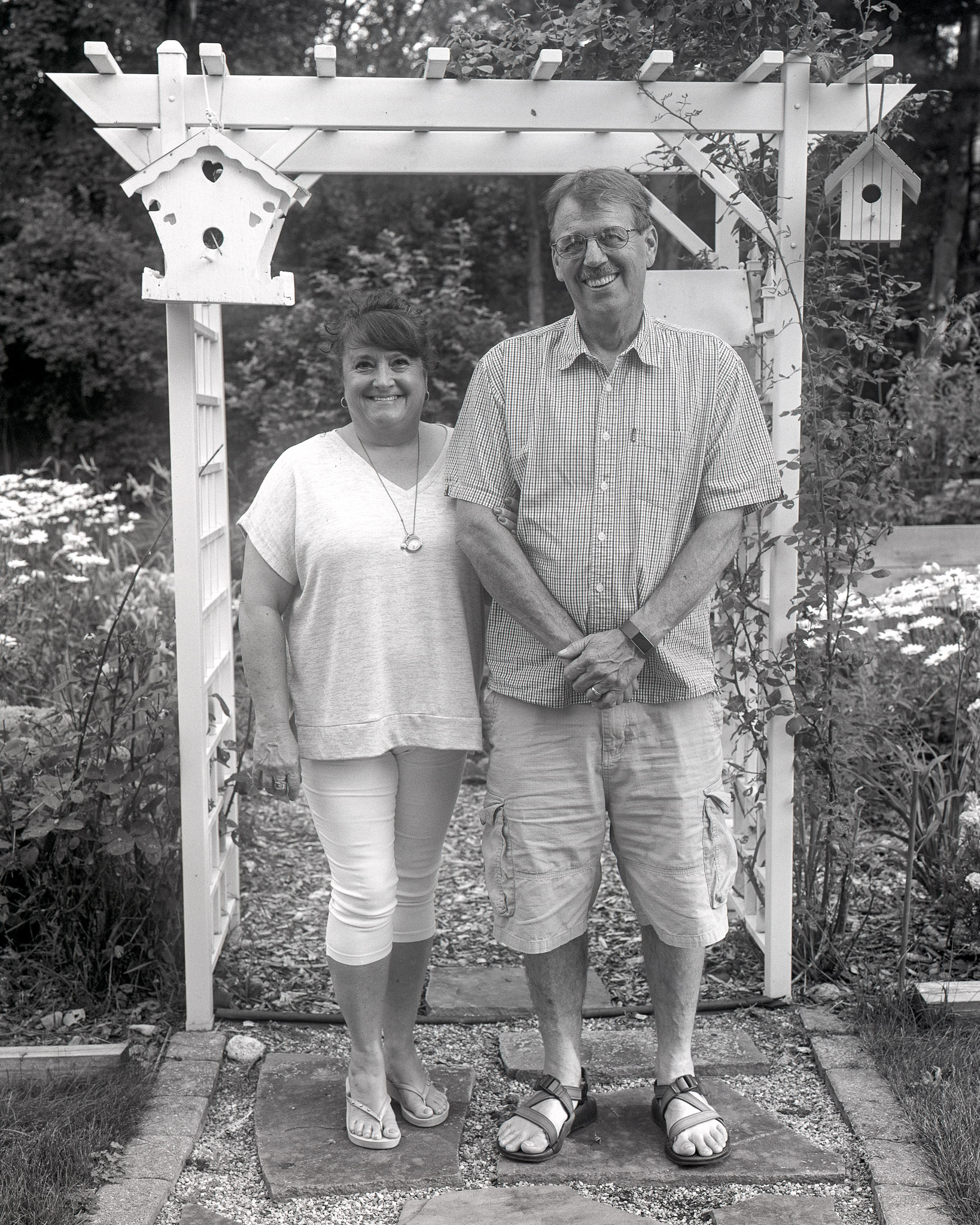
Linhof Master Technika | Rodenstock APO-Sironar-S | Ilford Delta 100 100Scanned with Epson V750Home developed in D-76 1+1 | 11min at 20C

Permalink #

A new Instagram account: JackBatyPhoto

First, I have to admit that I’m not a fan of Instagram. Viewing tiny little photos on tiny little phones fed to us between advertisements in an order defined by a giant anti-privacy, disinformation-spreading corporation is the worst way to enjoy photography.

But, Instagram is where photographers are and I kind of want to be there, too. I want to focus on only photography (rather than socializing with friends and family) so I’ve created a new account to do just that: JackBatyPhoto. So, go ahead and “smash that Follow button” or whatever it is we’re doing now.

Permalink #

Which Leica gear to keep?

After a year of buying really nice cameras and lenses, I’ve gotten to a point where I’m feeling the weight of having so much money tied up on photography gear. Some of it has to go. This post is me thinking it through.

I hate selling gear. Dealing with buyers and potential buyers isn’t fun. Shipping is a pain. There’s always a risk of damage, loss, or dissatisfaction. But mostly, the problem with selling is that I no longer have the things I’ve sold. Regret sucks.

Something I’ve learned over the years is “never sell a Leica”. Unfortunately, I’ve amassed too much Leica gear and I love it all, but it’s stressing me out.

The three systems in question are the film M bodies, the SL2-S, and the Q2 Monochrom.

I’d actually sold the Q2M to fund the MP but the buyer returned it. Instead of immediately re-listing it for sale, I started wondering if I’d regret it.

For a minute I thought I’d unload the entire SL2-S system instead. I have two Leica APO-Summicron-SL lenses, which were ungodly expensive. They’re way beyond my abilities. The SL system is the most significant (cost-wise) and probably “sparks the least joy” of all of them. But it’s so versatile and that 35mm APO Summicron is so absolutely outstanding that I am certain I’d regret not having it. The 75mm on the other hand is an odd focal length and by far the least used lens I own. Hmmm.

The MP is wildly unnecessary but is perfect and beautiful and sparks all sorts of joy every time I even think about it, so that’s not going anywhere. 90% of a new film Leica’s depreciation happens the minute I open the box, so there’s no benefit in selling it sooner.

So here’s what I’m thinking. I’ll sell the Q2M and the APO-Summicron-SL 75mm lens. That’s a significant amount of cash tied up in the least useful/versatile kit. And it means I still have the 35mm Summicron. For longer focal lengths (portraits, mostly), I have an Elmarit-M 90mm that focuses much more easily on the SL than the M bodies. I also have the SL Sigma 24-78 f/2.8 which is a fine lens and versatile for when someone asks me to shoot an event. (It happens occasionally, and I hate to say no).

What about the film Ms? I have the new MP, but I also have an M3, M4, and M6. I have an emotional attachment to the M3 and M4. The M6 is special because it’s one of the last 10 “classic” M6s made. It’s also had the viewfinder upgraded and unnecessary framelines masked out. It’s a damn fine copy and would fetch a crazy price right now, but I don’t think I can let it go. I’m definitely keeping the M3 because it’s, well, an M3. But also because of the .92x mag viewfinder, which is the only way I’m able to accurately focus the 90mm on an M.

That leaves the M4. I love it because it has the M2/M3-style film advance lever and frameline selector. It currently has a broken shutter, but I’m sending it to DAG for repair and a CLA. When it returns, I’ll list it for sale.

I’m hoping that selling the Q2M, M4, and 75mm APO-Summicron frees up enough cash to alleviate the guilt of having spent so much on “unnecessary” gear. I’m happy to also allow myself to keep the SL and 35mm. I won’t regret having them.

So if anyone is interested in any of those items, give me a holler.

Permalink #