Adding an RSS feed to my wiki

TiddlyWiki is a single static HTML file. It does not generate an RSS feed of new entries. It doesn’t generate anything.

I treat my wiki at wiki.baty.net more like a blog than a wiki, so not having an RSS feed feels like an omission. Most of the time I consider this to be a feature. I like that I can write any old nonsense and it doesn’t actively go out and bother anyone. It’s my little secret, that you can read if you want.

On the other hand, I find it annoying when I’m interested in someone else’s writing and they don’t provide any feeds. So, I’ve decided to make it easier to follow me. I suppose if you deliberately subscribe to the wiki’s feed, you want to be bothered by the stuff I write there.

My solution is based on this article. The short version is that I created a new tiddler named “RSS Feed” containing the following:

\define MyFilter(MyTag,domain)
[tag[$(MyTag)$]!sort[created]limit[10]]
\end

<?xml version="1.0" encoding="UTF-8" ?><br />
<rss version="2.0"><br />
<channel><br />
     <title>
{{$:/SiteTitle}}
</title><br />
     <link>{{$:/discoverfeed!!serverdomain}}</link><br />     <description>
{{$:/SiteSubtitle}}
</description><br />
     <lastBuildDate><$list filter="[!is[system]get[modified]!prefix[NaN]!sort[]limit[1]]" variable=modified><$list filter="[!is[system]modified<modified>]"><$view field="modified" format=date template="[UTC]ddd, 0DD mmm YYYY 0hh:0mm:0ss GMT"/></$list></$list></lastBuildDate><br />
<$set name="MyTag" value=Feed>
<$set name="domain" value={{$:/discoverfeed!!serverdomain}}>
<$list filter=<<MyFilter>>>
<item><br />     <title>
<$view field="title"/>
</title><br />
     <link><<domain>>#<$view field="title" format="urlencoded"/></link><br />
     <guid><<domain>>#<$view field="title" format="urlencoded"/></guid><br />
     <pubDate><$view field="modified" format=date template="[UTC]ddd, 0DD mmm YYYY 0hh:0mm:0ss GMT"/></pubDate><br />
     <description><![CDATA[<$view field="text" format=htmlwikified/>]]><br />     </description><br /></item><br />
</$list></$set></$set>
</channel><br /></rss><br />

This tiddler runs a filter finding the last 10 tiddlers tagged with Feed and renders them as RSS-formatted XML.

Extracting the rendered text from that tiddler out to an RSS file is done using my Makefile using the TiddlyWiki node.js module. The command is as follows:

tiddlywiki --load index.html --render "&#91;&#91;RSS Feed]]" "rss.xml" text/plain

This generates a file at ./output/rss.xml containing the rendered RSS text/xml. Later in the Makefile, I rsync rss.xml up to the server along with the rest of the wiki files. Here’s the complete Makefile:

SERVER_HOST=server01.baty.net
SERVER_DIR=/home/jbaty/apps/rudimentarylathe.wiki/public_html
PUBLIC_DIR=~/Sync/wikis/rudimentarylathe/
TARGET=server01.baty.net

.POSIX:
.PHONY: checkpoint deploy

build:
        tiddlywiki --load index.html --render "&#91;&#91;RSS Feed]]" "rss.xml" text/plain

checkpoint:
        git add .
        git diff-index --quiet HEAD || git commit -m "Publish checkpoint"

deploy: build checkpoint
        git push
        @echo "\033&#91;0;32mDeploying updates to $(TARGET)...\033&#91;0m"
        rsync -v -rz --checksum --delete --no-perms $(PUBLIC_DIR)index.html $(SERVER_HOST):$(SERVER_DIR)
        rsync -v -rz --checksum --delete --no-perms $(PUBLIC_DIR)output/rss.xml $(SERVER_HOST):$(SERVER_DIR)
        rsync -v -rz --checksum --delete --no-perms $(PUBLIC_DIR)files $(SERVER_HOST):$(SERVER_DIR)

All this means is that you can now subscribe to the daily posts at wiki.baty.net using the following URL: https://wiki.baty.net/rss.xml.

The odd thing is that I normally create each daily post first thing in the morning and update it throughout the day. I’m not sure how different RSS readers will handle this, but it’s a start.

I haven’t added the discovery links yet, but should. I also don’t think the RSS tiddler needs all those non-breaking spaces so I may play with that later.

Update March 11, 2022: Saq Imtiaz sent a link to his experimental plugin for generating RSS and JSON feeds. Worth a look!

Permalink #

Fiber-based silver gelatin prints are a wonderful PITA

I hate making fiber-based silver gelatin prints in the darkroom. But I love having them to hold and to hang.

Fiber-based papers have this deep, magical sheen, and the surface is smooth yet has a distinct, subtle texture that is missing from resin-coated (RC) papers.

Compared to RC papers, fiber-based paper takes twice as long to process. It requires additional washing and optional toning steps. It eats up fixer and takes more trays than I have comfortable room for. It must be washed for up to an hour. And then there’s the curling, so I have to press the prints under heavy books for a few days before I can do anything with them

Just look at this example. It’s ridiculous.

A recently-dried fiber darkroom print.

I gave up on fiber a few years ago, but have been having second thoughts. A fiber print feels so good in hand. Heavy, smooth, and solid, somehow. And there’s no escaping how great they look. I’ve been asking myself if maybe it’s worth the trouble after all. I made a few prints this week and yes, it is definitely worth the trouble.

A recent print of a favorite negative. On fiber.

Permalink #

Plain text can’t save you if you lose the files

Derek Sivers suggests, in a much-linked-to post, that all your stuff should be in plain text files, and I (almost) agree with him.

Most of my notes are in some form of plain text format, but not for the reasons Sivers lists. My notes are in plain text because I prefer editors that use plain text by default. I suggest you use the tools and formats that are most useful to you now. If that’s plain text, then great.

The fear of not being able to open or otherwise read files, someday in the future, is overblown. File formats last a long time. Email, PDF, even Word documents can be opened decades later. Mine can, anyway. But what about in 100 or 200 years? My response is, “Who cares?” I mean, c’mon. My digital notes are going to be tossed in a dumpster along with the rest of my shit by my family like 20 minutes after I die, anyway. Your notes may be more important to the world than mine.

The thing I worry about isn’t “lock-in” or lack of portability or any of those. What I worry about is losing the actual files. This happened to me recently. I try to keep methodical backups, but I was careless with a folder full of Markdown files that were used to render a blog and they are all gone. Hundreds of them. I thought I knew where they were and I thought I’d made backups and a combination of cleaning up and switching machines and poof! All gone. Fortunately, I have the rendered HTML files but my point is that, whatever their format, all files are useless if you lose them.

So, back up those Word docs and PDFs and Mindmaps and Powerpoints. And back up your plain text files, too. At least that way you stand a chance of having them “someday in the future”. You can worry about how to open them then.

Permalink #

I enjoy processing film

There are things that I dislike about shooting film, but processing isn’t one of them. I actually enjoy it.

I shoot a roll or two of film each week and process it in my bathroom darkroom. Developing black and white film is quite simple. I have gotten to a point where the process is muscle memory. I shoot mostly the same type of film (HP5 Plus) and develop it in HC-110. I know the dilutions and I know the time, temperature, and agitation schedule.

It takes me about 20 minutes to develop a roll of film. I have to pay attention for five minutes in the developer, one minute in stop bath, then five minutes in the fixer. After that, it’s a hands-off ten-minute wash, a quick dip in Photo-flo, and that’s it.

Standing at the sink during the processing steps is meditative. I can stand there and just let my mind wander. It’s usually silent, but sometimes I have music playing. And there’s nothing like seeing the images unfurl when taking the roll off the reel. Magic.

Scanning, on the other hand, is 🤬.

Permalink #

The Kodak Retina IIIC

My dad called me from Florida and said that one of his neighbors had died and left a bunch of camera stuff to be given away or sold. He mentioned there was “some old Kodak” and wondered if I was interested in it. I said “Sure, why not” and he said he’d send me a box with the camera and some other stuff that came in the box.

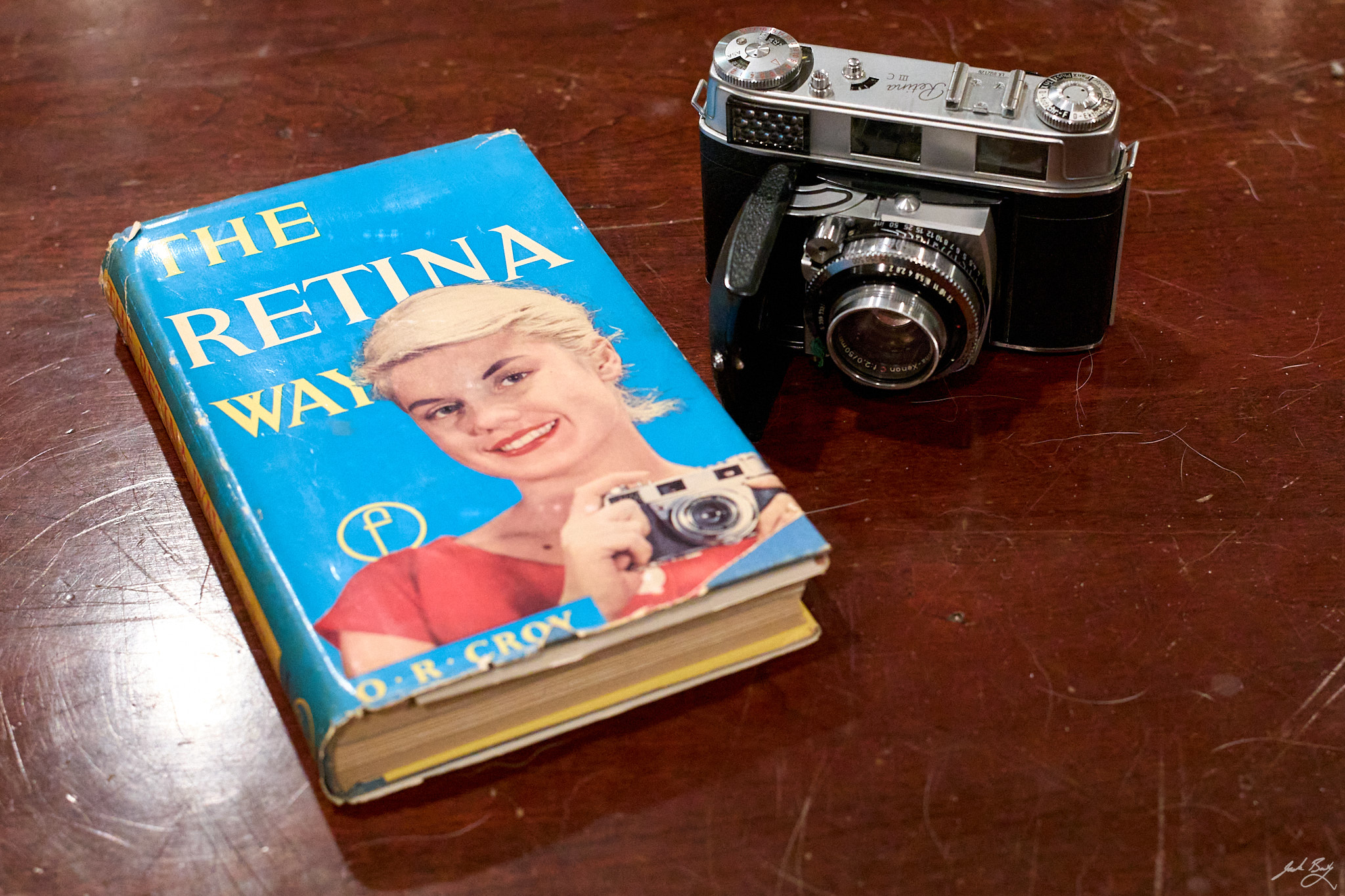
The Retina Way

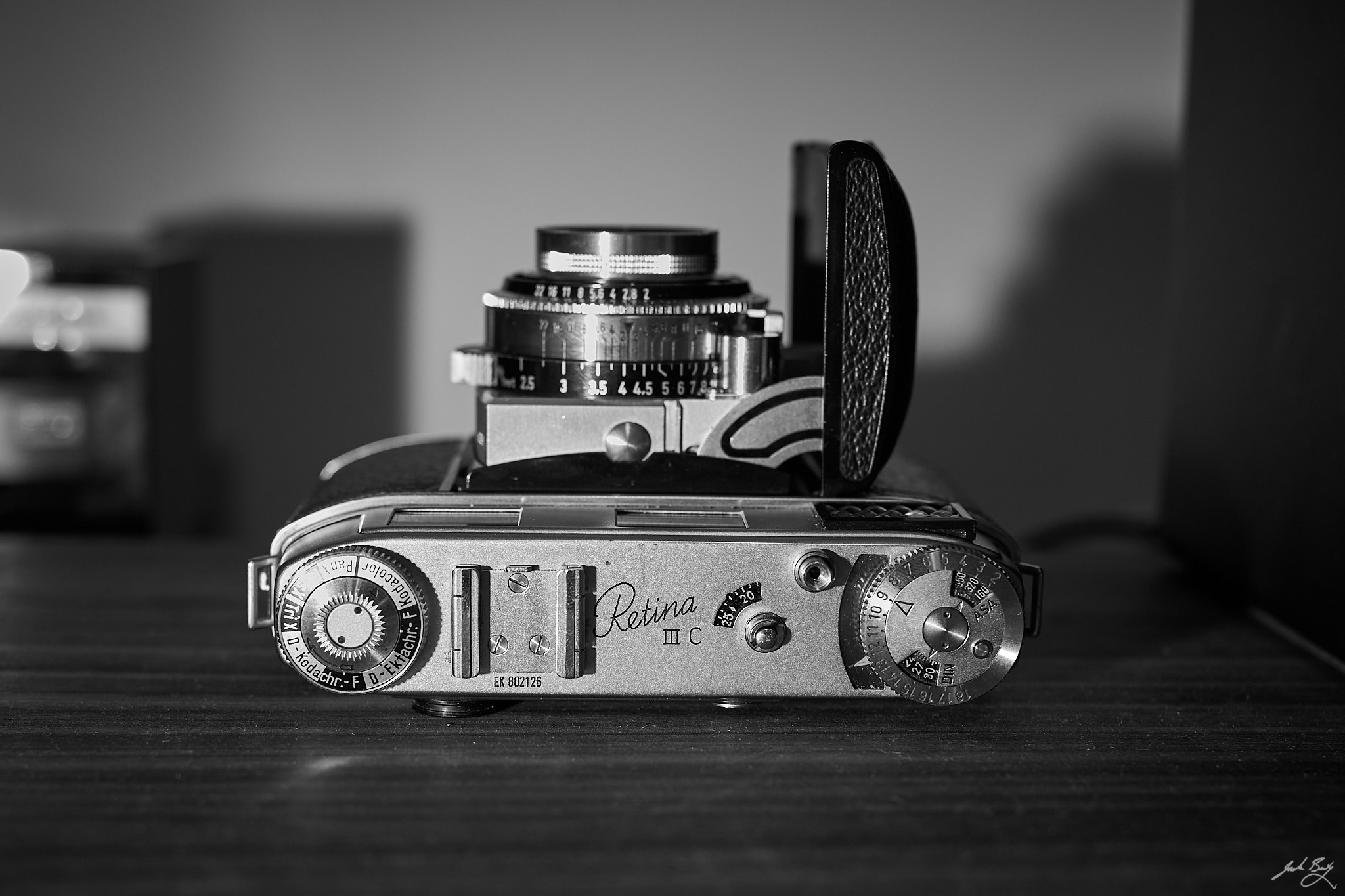
The box arrived yesterday and I was thrilled to find a working Kodak Retina IIIC inside. I didn’t know much about the Retinas except they were around for many years and were very high quality cameras, which isn’t something Kodak is known for.

The last of the Retinas, the “Big-C” IIIC was made from 1957-1960. I assume that mine was made somewhere late in that range, based on the serial number. It doesn’t have the absolute latest changes, so let’s guess 1959.

Kodak Retina IIIC

I was surprised by how nicely the camera is built. It’s dense and feels very solid. All the movements, from focusing to folding the lens, are smooth and dampened well. It’s not quite Leica-level build, but much closer to it than I expected, especially considering the price.

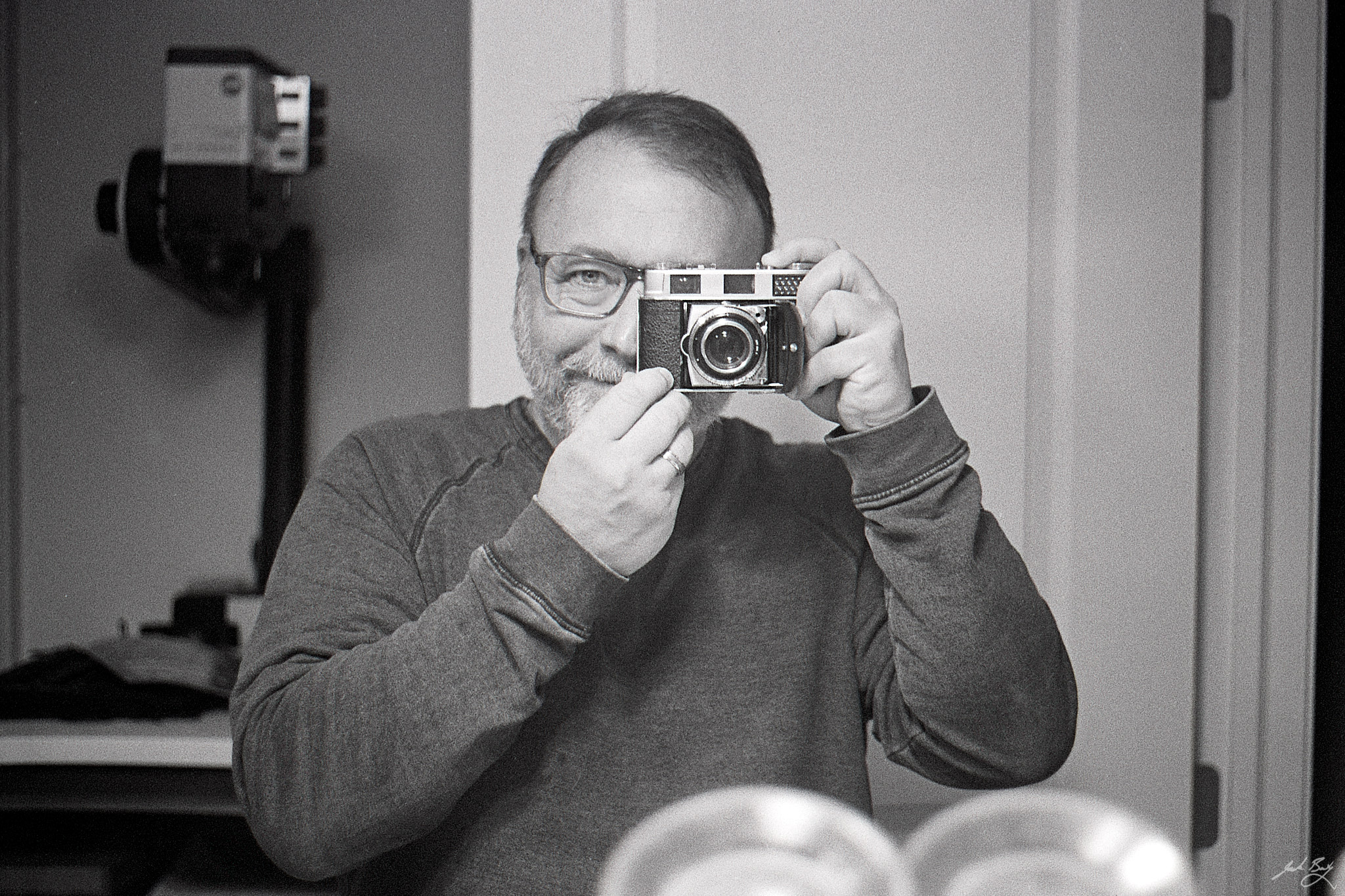
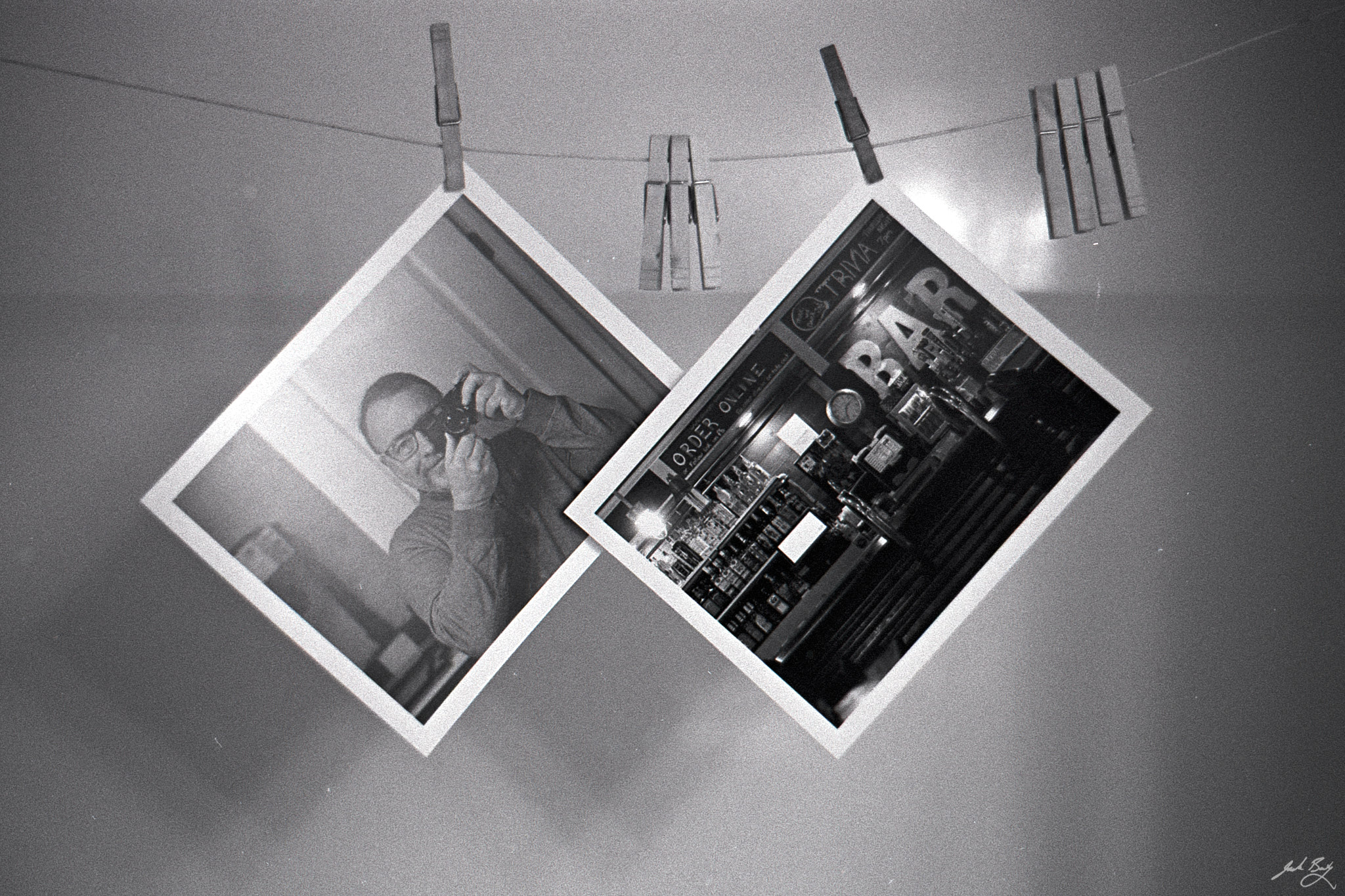
I put a roll through it immediately and everything appears to work perfectly. Not bad for a 60-plus-year-old camera. Here are a few snaps taken around the house from that test roll.

Self-portrait with Retina IIIC (Retina IIIC. HP5 Plus)
Prints hanging to dry (Retina IIIC. HP5 Plus)
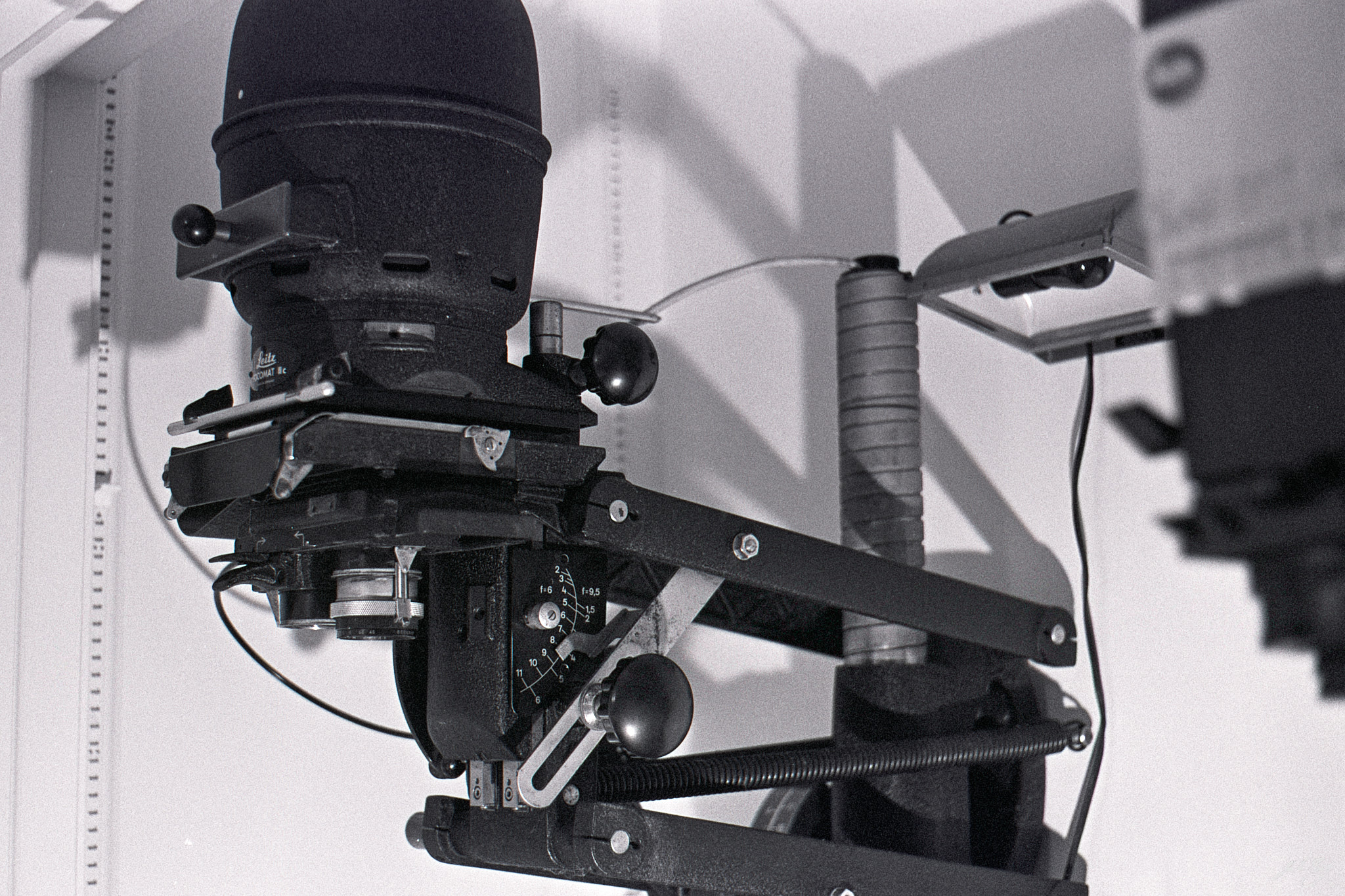
Focomat IIc (Retina IIIC. HP5 Plus)
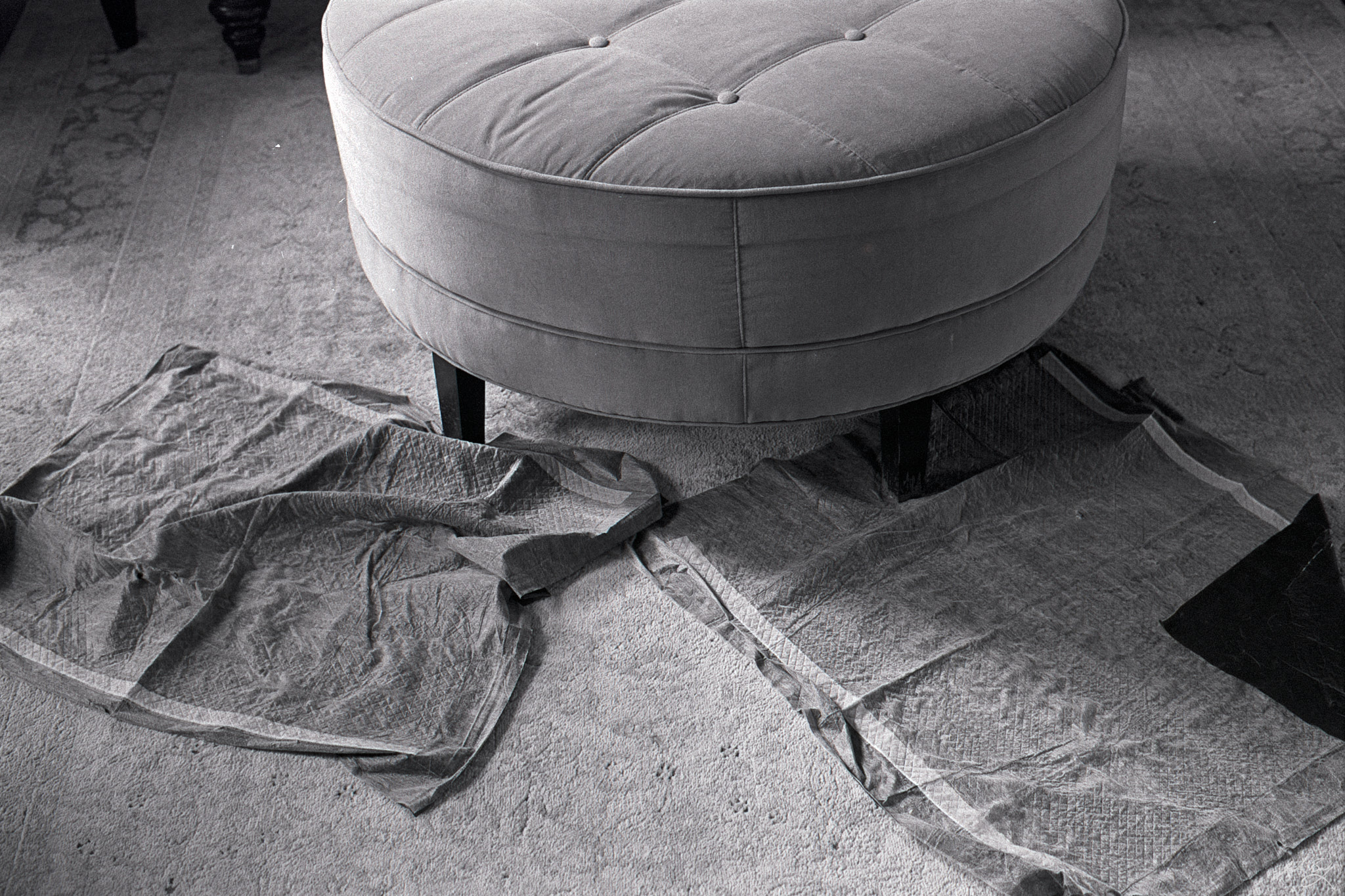
Pee pads for old dogs (Retina IIIC. HP5 Plus)
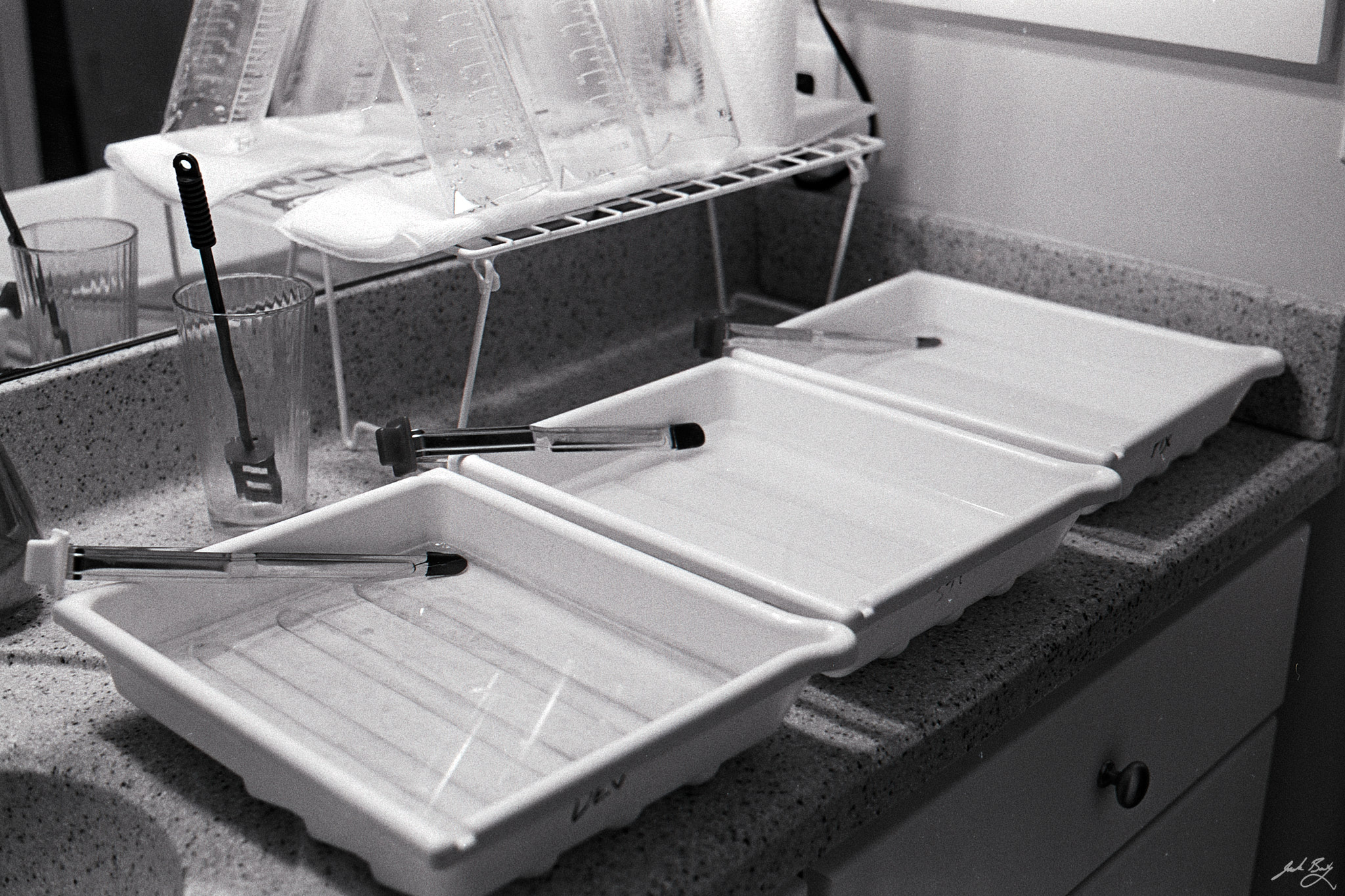
Developer trays (Retina IIIC. HP5 Plus)

One of the lauded features of the IIIC is the 50mm f/2 Schneider-Kreuznach Retina-Xenon lens. I haven’t shot enough to get a good feel, but even after one quick roll I can see that it’s no slouch.

For more details about the camera, there are a few good resources. I enjoyed this Retina IIIC review by Kurt Munger. For everything you need to know, Chris Sherlock has a ton of info on the Retina series.

I don’t know yet how often I’ll use this new camera, but it’s certainly not going to spend the rest of its days on a shelf.

Here’s the camera’s page on my wiki

Permalink #

The Daily Notes Dilemma

TL;DR: daily.baty.net.

You see, I have a nice wiki, and for a couple of years, I have written a new entry in it (nearly) every day. These “daily notes” have been interspersed and interlinked with the rest of the wiki’s content. It works, but I don’t love it.

Writing in TiddlyWiki is fine. It’s super easy, but it’s also a little clunky, which quickly becomes friction. And the experience for visitors is weird if you’re not familiar with TiddlyWiki. Also, there’s no RSS feed. I sometimes consider this a feature, because it’s nice writing freely and knowing it’s not “going anywhere”. On the other hand, if I were someone wanting to follow along with me, I’d want a damn RSS feed.

So, I periodically waffle between writing my daily posts on the wiki and on a “real” blog. One thing that has kept me in the wiki is that I can easily link things from my daily notes posts to the more permanent entries. This helps build a network of links. I love the idea of all this linking back and forth, but in practice, it’s not as useful as I’d hoped. TiddlyWiki works better when each distinct idea or thing is created as a separate “tiddler”. I’ll create a new tiddler about something, link to that something, and then transclude the tiddler in that day’s daily. And then I almost never actually take advantage of all that work. So why bother? I mean, it’s not as if I’m trying to build some sort of Zettlekasten here.

I love writing in Emacs and keeping everything formatted as Org-mode files. I like Hugo for blogging and I like the way the rendered site looks. TiddlyWiki is easier overall but Emacs/Org/Hugo is more fun for me and I believe it results in a nicer experience for visitors.

All that to say I’m once again back to using a “real” blog for my daily notes. I’ve committed enough to this that I’ve added a link in the navigation here. You can follow along at daily.baty.net.

An RSS feed for daily.baty.net is available both on its own and as part of my Everything Feed.

Permalink #

Highlighting in notebooks

One valid criticism of using paper for notes is that searching through notebooks is rather difficult. With my poor handwriting, scanning for certain information in a wash of squiggly lines can be painfully slow.

For a couple of months now I’ve been going back through my notes periodically and highlighting key words and phrases. I’ve found that if I emphasize the most relevant bit of each note, I can find most things fairly quickly. It also helps when simply perusing old notes. Usually, I want to skip anything “meta” like which pen I’m using or the regular “Why am I still using paper?” fluff. Zipping over the highlighted phrases makes quick work of it.

Someday this could also help with building an index. If I ever decide to bother, that is.

So yeah, highlighting my paper notes is useful and I recommend it. I wish I’d thought of it sooner.

Permalink #

TOP: The Leica M10, It’s Simple

There’s a shutter speed dial with “A” as an option. There’s a numbered ISO dial (so you can see where it’s set even when the camera’s off). There are apertures on a ring around the lens. You focus the camera and the focus stays where you put it until you change it.

All you really need.

Mike Johnston

This is why I love the Leica M so much. Everything is right there, all the time. I never futz with settings or customizing dials or wondering which sub-genre of focus modes I need and how I get them.

I also love that I can pop the tiny, jewel-like lens off my 2021 M10-R and slip it on my 1960 M3 and everything works exactly the same. It’s a beautiful, underappreciated thing.

Permalink #

You are allowed to use non-Leica lenses on your Leica Camera

All too often someone on a forum or blog will claim that the only reason to even have a Leica is to use Leica’s lenses. Hogwash! While certainly a fine reason, it’s nothing close to the only reason. The idea that one should never use non-Leica lenses on their Leica is nonsense.

I have a few very nice Leica M lenses. I love them and they are my favorites. But I also have some non-Leica lenses in both LTM and M mounts. They’re fun and interesting and unique. They offer a different look than the Leica lenses. Mine are old, and nowhere near as technically capable as the stuff Voigtlander has been putting out recently. I don’t want those, anyway. I already have all the sharpness and micro-contrast and “pop” I can handle. I put older lenses on my M because it gives the photos a different feel. It can be nostalgic. Sometimes an image works better when it’s a little softer and has a smidge less contrast.

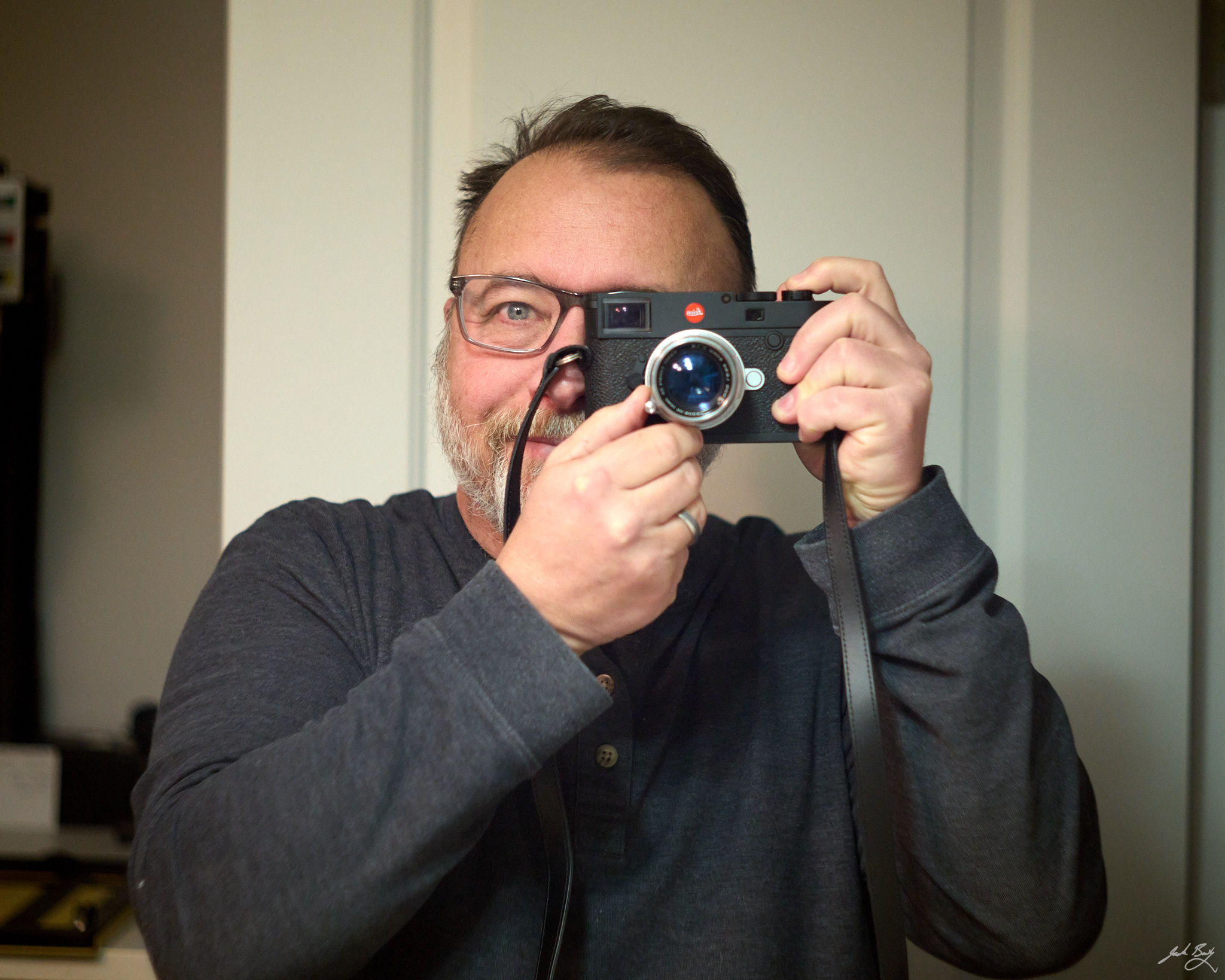
Self-portrait with M10-R wearing a Canon 50mm f/1.8 LTM
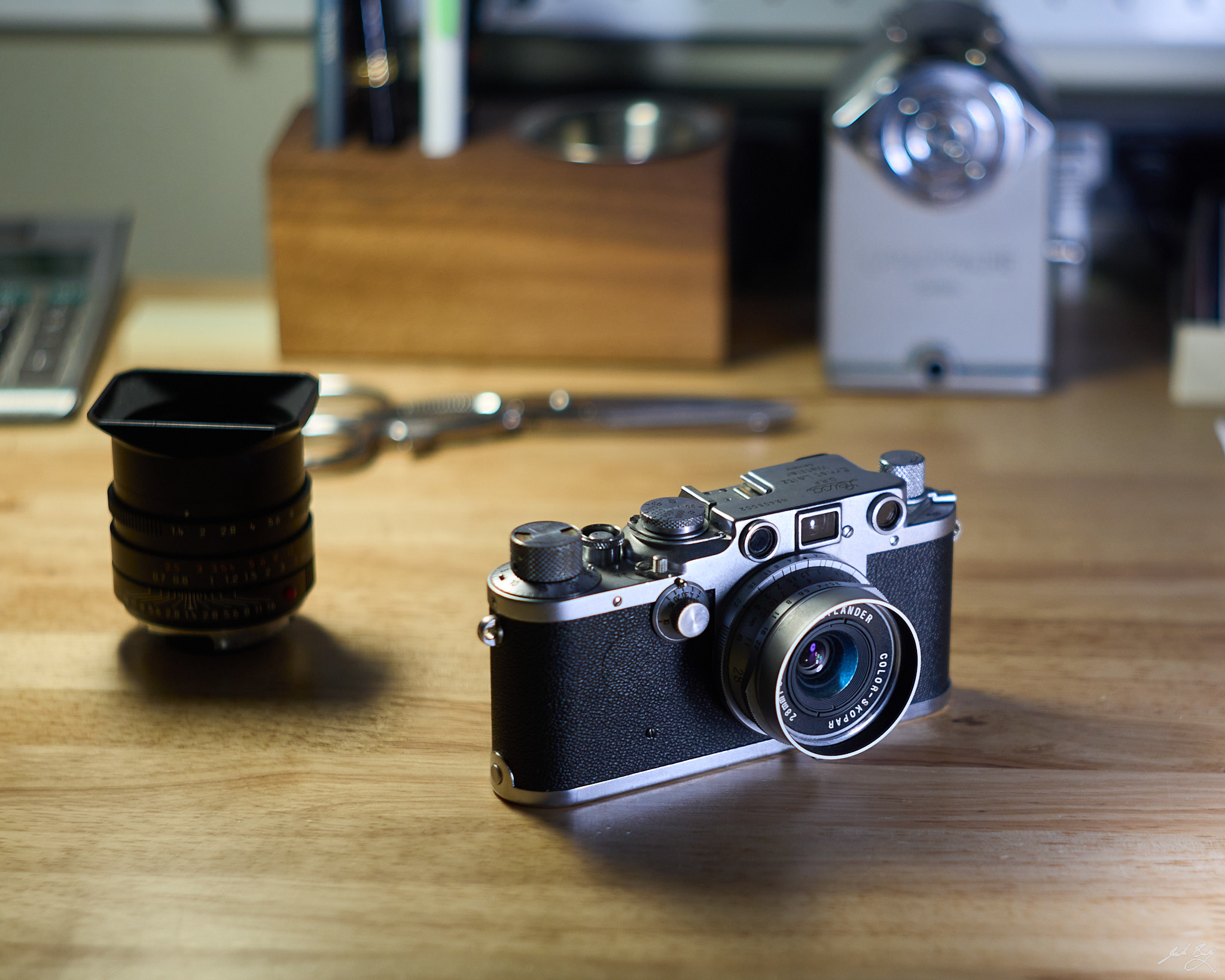
Leica IIIf with 28mm Voightlander Color Skopar f/3.5 LTM. (M10-R. Canon 50mm f/1.8)

Whether you also own Leica lenses or not, go ahead and slap whatever you want on your camera and have fun.

See also: Don’t listen to this guy. Use any lens you want with a Leica

Permalink #

Roll-058: (OM-2n/TMAX-100)

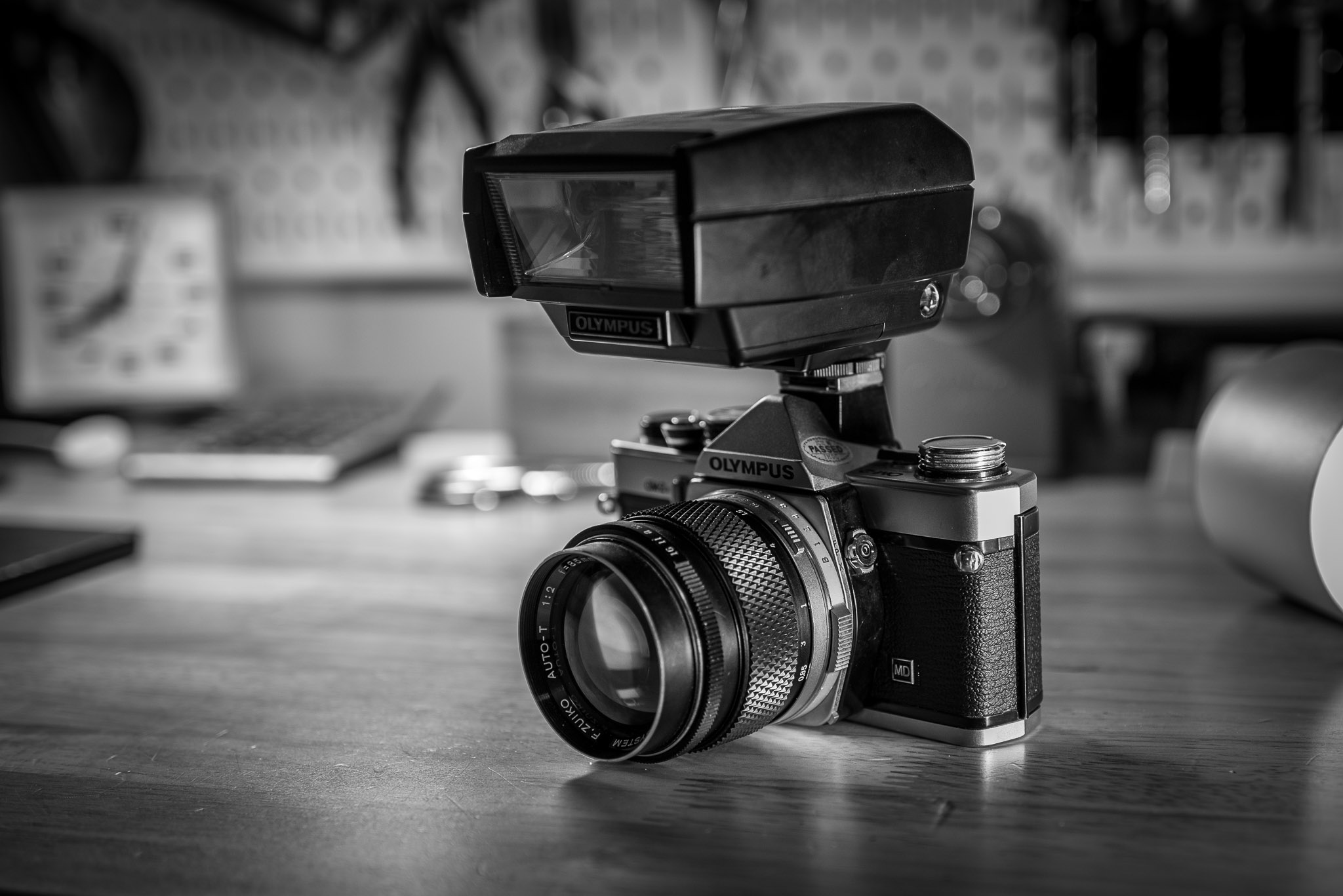
I ran a roll of TMAX-100 through the Olympus OM-2n. As always, I had the lovely 85mm Zuiko attached. This time, I also strapped on the flash.

Olympus OM-2n with flash. (Leica Q2 Monochrom)

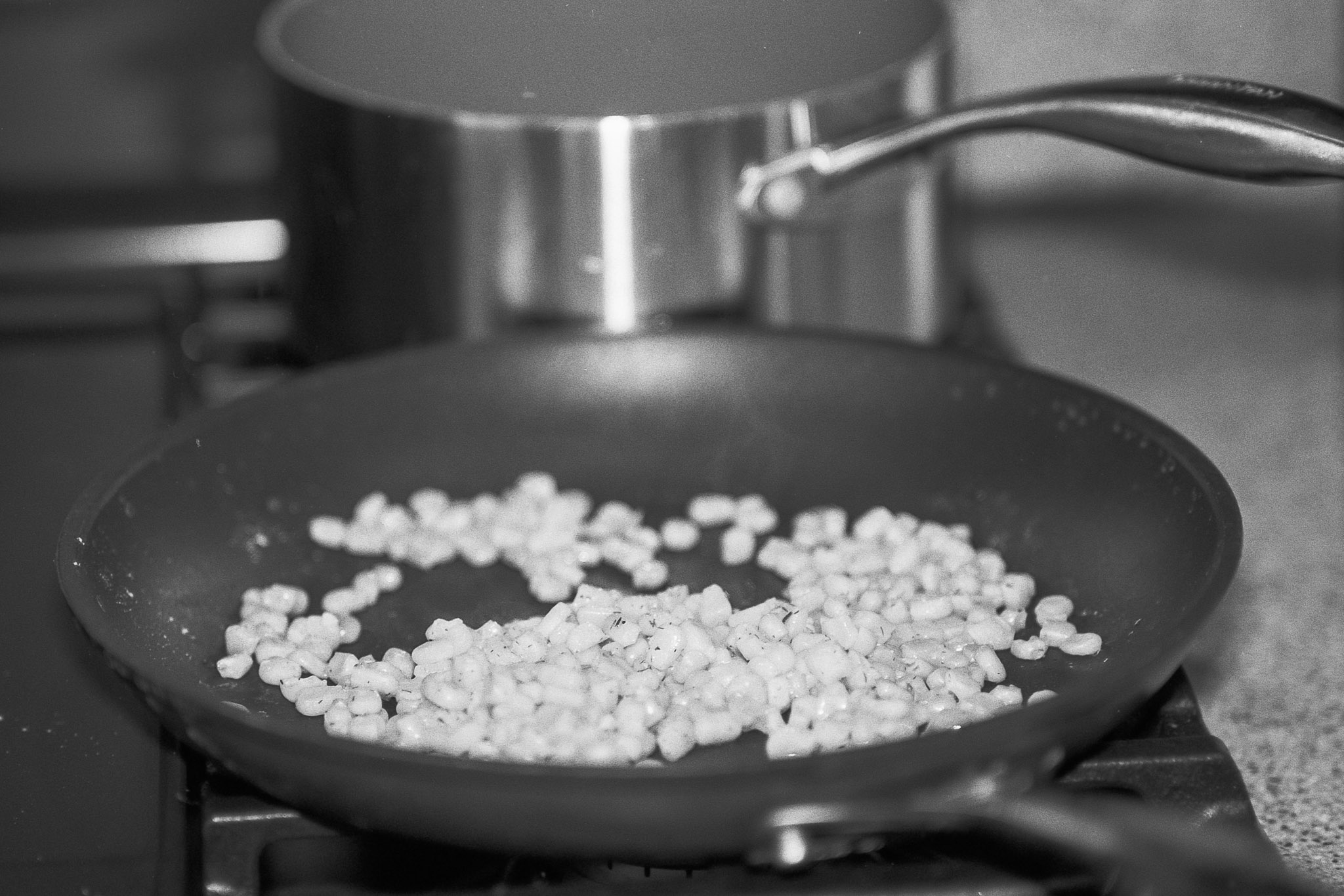
It was not a successful roll. Maybe three images were salvageable. Why did it have to be shots like this?

Making dinner. (Olympus OM-2n. Zuiko 85mm f/2. TMAX-100.)

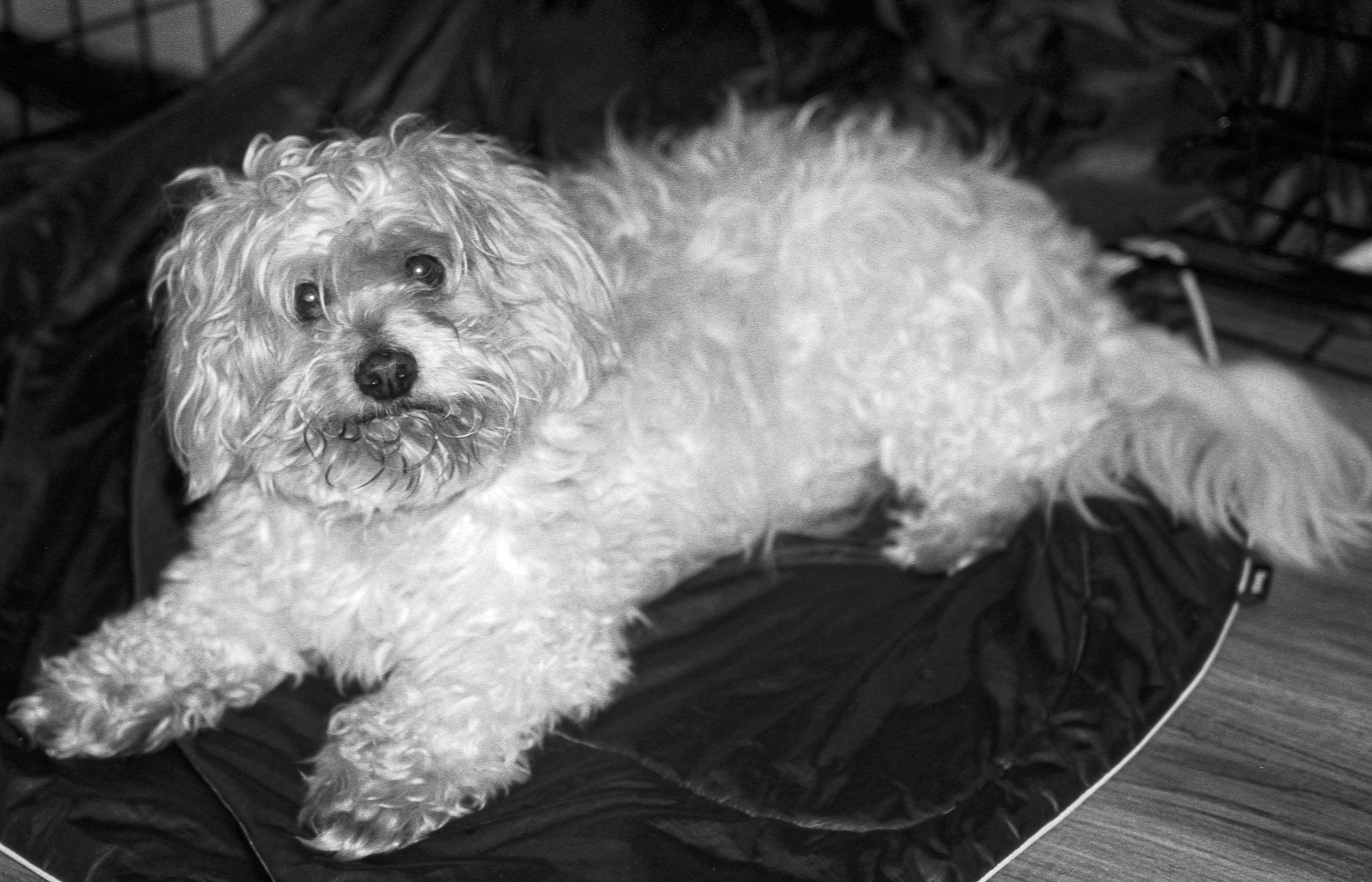
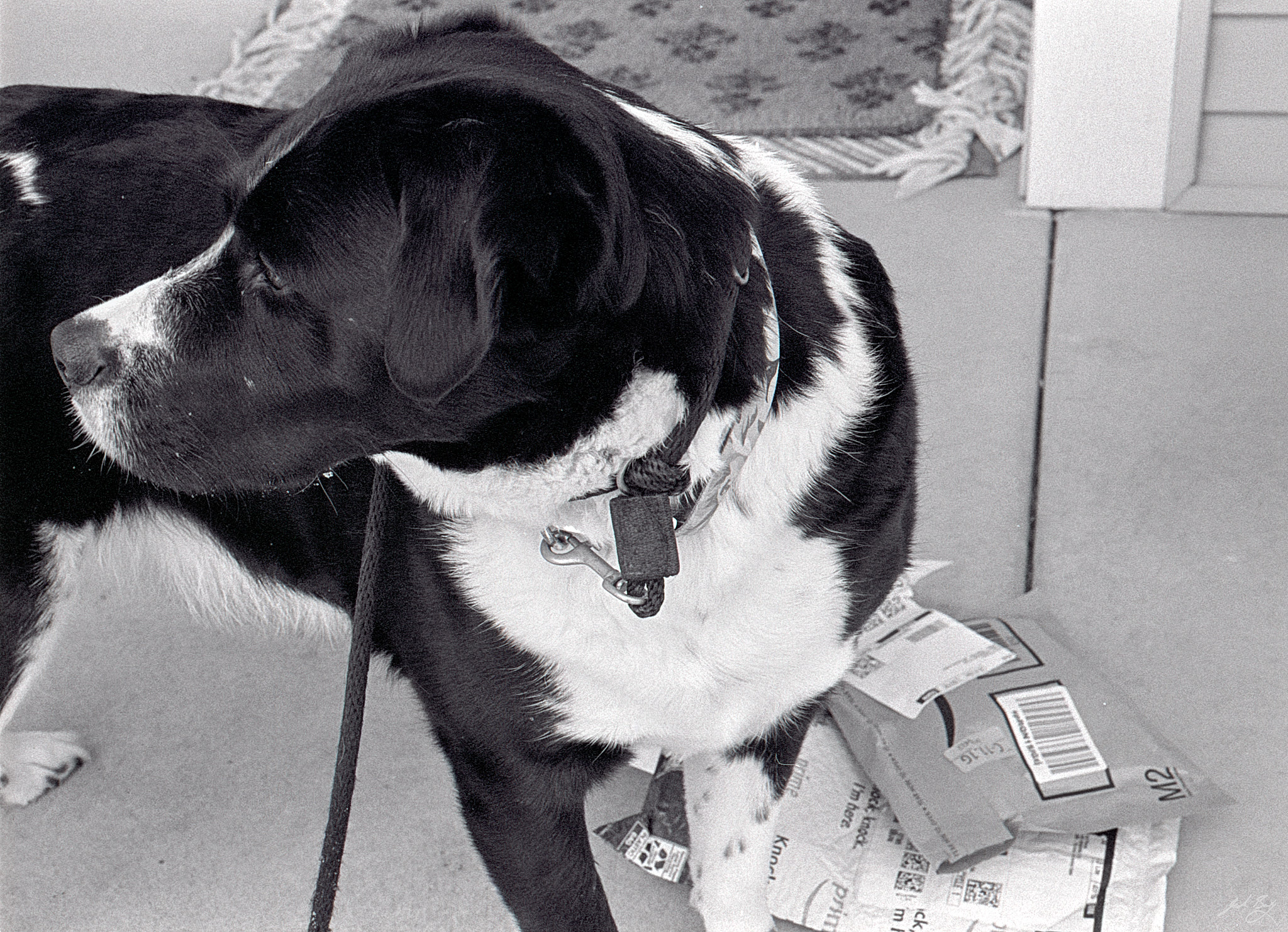
Or this one of Charlie, which was typically mis-focused. I may need to try a new focusing screen.

Charlie. (Olympus OM-2n. Zuiko 85mm f/2. TMAX-100.)
Permalink #

Domain Consolidation (Continued)

Remember when all I planned to do was to put all of my blogs under one domain and that was it? I’d still have all the same blogs, but they were going to live under a bunch of something.baty.net subdomains.

Well, I got carried away. I brought back baty.net as a blog (WordPress) and migrated all of my recent Write.as posts and imported everything from Copingmechanism.com. I am once again living at baty.net.

I’ll copy anything useful over from baty.blog and daily.baty.blog. I plan to shutter baty.blog but I may keep the daily blog around, just in case.

So let’s see, I now “only” have this blog at baty.net, a microblog at jack.micro.blog, and the wiki (aka Rudimentary Lathe) at rl.baty.net. It’s possible I may have just set a new personal record for having the fewest blogs at once.

Oh, and I moved my “Everything” RSS feed here too. Subscribe at baty.net/everything.

Permalink #

Domain Consolidation

I’ve been feeling a need to simplify things and I’ve decided that one of those things is my domain names. My days of hoarding domain names, just in case, are drawing to a close. I don’t want the hassle of managing a bunch of zones and I don’t need the fees.

To that end, I’m working toward moving everything to subdomains of baty.net.

I’ve already moved my wiki from rudimentarylathe.wiki to rl.baty.net. I considered wiki.baty.net and may still use that instead.

Next up is baty.blog. Not sure if I’ll use blog.baty.net for that or not, yet.

And of course the website you’re reading now, baty.net, is once again a blog (WordPress) rather than a static landing page. I plan to move my “everything” RSS feed here, so keep an eye out for baty.net/everything

There are several others to move, and I’ll be sure to leave permanent redirects up and running at least until the domains expire. That should give Google time to catch up.

The domains I’m not sure about are the hosted services. This Write.as blog, for example. Currently, I’m thinking I’ll leave them where they are, without custom domains. That makes things simpler. I lose the opportunity to “own” the URLs but, as we all know, I’m prone to breaking links. Not my greatest feature, but it’s proven true.

The idea is to have as few moving parts and dependencies as is reasonable.

Permalink #

Music: Stream or Buy?

Which is right for me, streaming or buying my music?

TL;DR: Both

Phil’s recent note about streaming vs “owning” caused me to review how I think about it. My attitude about “owning” music continues to evolve.

One advantage I may have is that I don’t think of streaming services as music that I “rent” and that can be ripped out from underneath me any time. To me, streaming services are $10/month commercial-free radios that let me play DJ. I never worry that, if they disappear, I would no longer have access to that music. The most I’d lose would be my playlists and an educated AI. That doesn’t concern me at all. I don’t make playlists. I almost always listen to albums, as god intended.

I use Roon for music. Roon is (far and away) my favorite way to browse and manage my music library. It can also hook into Tidal or Qobuz and magically combines my local library with one (or both) of those streaming services.

Roon doesn’t work outside my LAN, so when I’m not home I use Apple Music. It’s fine, and it comes with my Apple One subscription, so it’s likely I’ll keep it.

Speaking of subscriptions, Roon costs money. And the service I choose, Qobuz, also costs money. Subscription Fatigue is real, and I’ve been evaluating the things I’m paying for every month.

The good news is that I paid for a lifetime license to Roon years ago, so that’s no longer costing me anything. Qobuz is around $11/month. I like the service, but it might be the least “necessary”. What if I were to cancel? I’d have to rely on music I own, on my hard drive. I’ve decided that this is OK. Preferable, even.

My digital music collection is sparse, and it sucks. Mostly bad CD rips from 90s. Can’t get too much Chalk Farm, right? But then, in comes Bandcamp, and kind of changes the game. I can buy great new music in a way that gets me immediate, permanent FLAC copies that don’t cost too much. Also, the artists get an average of 82% of every purchase. Everybody wins.

This means that if I buy one or two albums a month on average from Bandcamp, I’m about even with what I was spending on Qobuz. And I “own” the music. And I get to use Roon.

I have two modes when it comes to music. The first is that I just want to have some music on. For that, I can stream Apple Music. The other mode is deliberate listening. I want this to be high-quality and under my control. Purchased music that I own and manage is perfect for that.

And don’t forget, for when I’m all-in, I have a nice vinyl collection.

So, I’ve settled into a comfortable combination of both streaming and owning my music.

Permalink #

Workflow: Capture One and Apple Photos

I’ve gone through many photographic workflows. Each time, I’m certain that I’ve figured out what works best for me. Finally! Then a few months later I switch back or come up with something new. I wish I would stop doing this, but I probably never will.

So, I have a new workflow ????

There is a part of me that really wants to let Adobe deal with everything. Wouldn’t it be great if I didn’t have to organize, store, back up, or otherwise manage tens of thousands of image files? I could just use Lightroom (desktop) and let the cloud take over the rest. Except I can’t. I have proven myself incapable of giving up control over the files. I have decades of images stored in nicely-organized, dated folders. I know where they are. I know how to back them up. It feels safe forever.

Also, I can’t stop returning to Capture One Pro. Lightroom Classic has everything I could ever need, workflow and management-wise, but I prefer actually editing in C1. And I prefer the results I get with Capture One.

I like to “burn” a finished JPEG of every image that I’ve spent any time editing. That way, if (when?) whatever processing software I’m using disappears, I’ll still have the finished image. I’ve treated these JPEGs in a couple of ways. I’d either send them to what I called a “Digital Print Archive” which was just dated folders. Or, I’d make the copy right “next to” the original. Either way, I ended up with two files to manage for each photo.

Previously, to handle all of this, I used a complex combination of Capture One and Photo Mechanic to cull, tag, and otherwise deal with my library and set of burned JPEGs. It was pretty powerful, but it was a pain to maintain.

I wanted to simplify things a bit, so I’m now using only Capture One and Apple Photos. I import, cull and edit photos in a Capture One “session”, then export the keepers directly to Apple Photos. Photos is where I make albums and such. It also gives me “faces” and syncs everywhere. Plus, all the photos I take with my phone are right there with everything else.

I’ve done something similar to this before, of course, but I’m trying it again.

Permalink #

Starting with a clean desk

My home office environment was getting out of hand, clutter-wise. They say that a messy desk is the sign of a creative mind. Maybe so, but I’m more of a tidy desk person.

I’ll sometimes notice that I’m easily provoked, frustrated, or otherwise feeling edgy. Then I’ll clean my office and I always feel better.

The worst thing for me is to set something on my desk because I don’t yet know where I’m going to put it. Then it just sits there, for weeks, nagging me out of the corner of my eye. Drives me nuts. Or, I’ll knock something over or cords will tangle or I’ll be unable to find something because it’s under something else. Aargh!

My workspace doesn’t need to be a minimalist, Instagram-worthy setup. It just needs to be organized and tidy. I cleaned my desk yesterday and have been in a better mood since. 👋

Permalink #

Visual Meditation

I’m not sure I’ll ever be capable of sustaining an ongoing “meditation practice”.

The idea of regular meditation is compelling, but after many attempts I’m starting to think it may never stick. This is likely because I’ve not practiced long or consistently enough, but my brain just refuses to stay quiet or focused.

Instead, I’ve been making daily drawings. Or, more precisely, “doodles”. I find that mindlessly drawing random or repeating patterns soothes me. It’s a relaxing form of perhaps, if not meditation, mental relaxation. And calling them doodles helps me to avoid the feeling that they are “bad” drawings. It doesn’t matter.

Drawing may not have the consciousness-altering effect of consistent meditation, but it helps clear my head and lets my mind breathe a little.

Permalink #

Holding a Leica M camera

I’ve used many wonderful film cameras from many different systems: From Nikon F to Hasselblad V to Linhof, Olympus OM, etc.

They are all great in their own ways, but none of them comes close to making me feel the way I feel when picking up a Leica M camera.

Sure, every film camera is essentially “a box for holding a lens and some film” but calling a Leica M “just another film camera” is to me like calling Jesus Christ “just another homeless dude”.

OK, that’s probably an exaggeration, but you get my point. The way a Leica M is built and shaped fits my hand and the way it works fits my brain like no other camera. And no other camera makes me want to just pick it up and hold it, even if there’s no film in it.

The only time that “The best camera is the one you have with you” is when the one you have with you is an M ????.

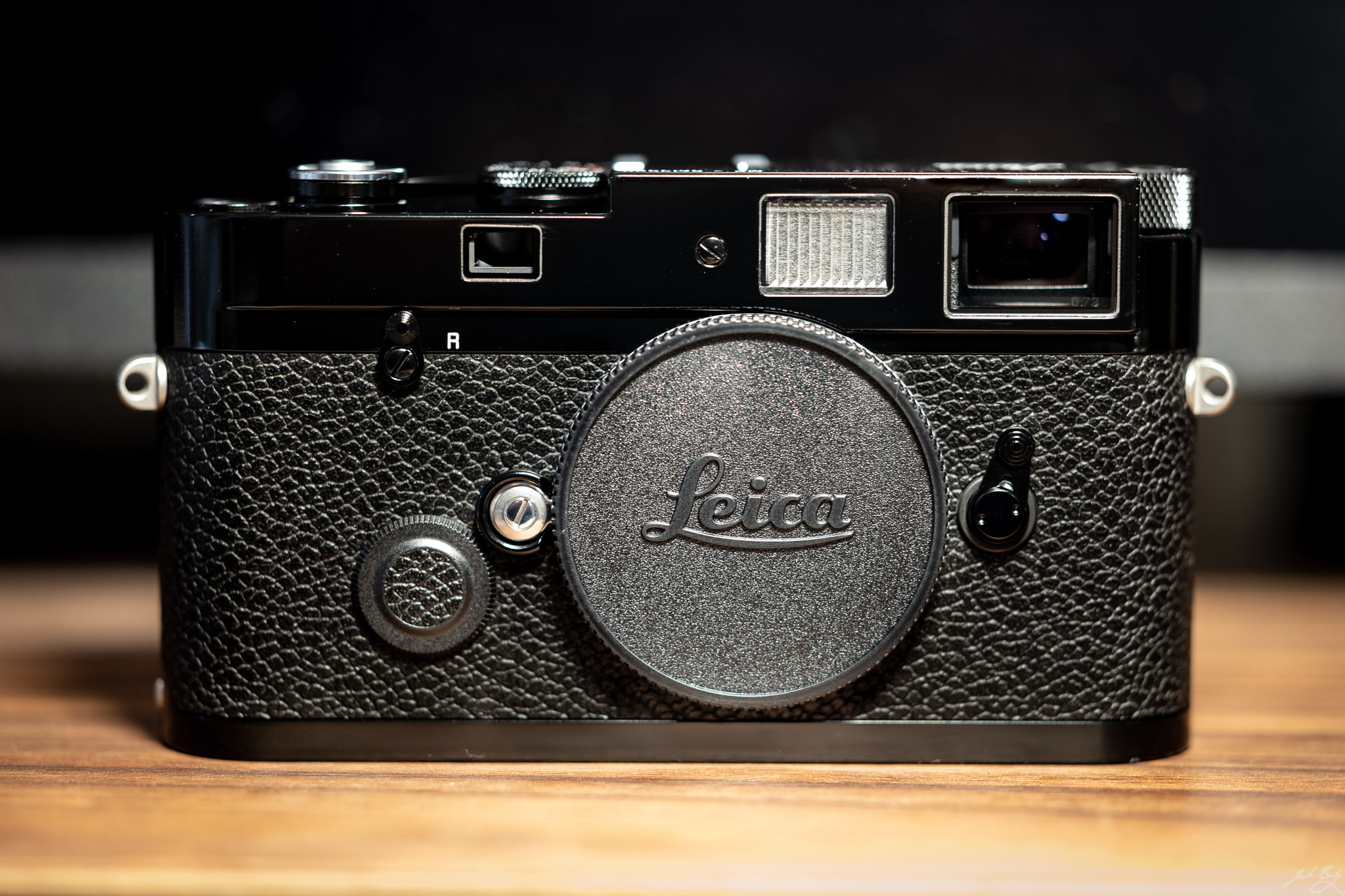
I mean, just look at this MP! Tell me you don’t want to pick it up and fondle it a little.

Leica MP (Black Paint)

Permalink #

Sold the Leica SL2-S and bought a Leica M10-R

The Leica SL series of cameras are special, but not unique. I had an original SL and then bought the SL2-S when it was released. It’s a capable, well-built, beautiful camera. But, if I’m being honest, it’s just another mirrorless camera system. And it was very expensive. Purchased today, my kit, consisting of the SL2-S and the Leica APO Summicron 35mm and 75mm lenses would run close to $16,000. Um, who do I think I am?

I thought I’d shoot more video with it but haven’t. I thought I’d do more portraits with it, but I haven’t. Hell, I thought I’d use it a lot, but I haven’t.

So, I sold it all.

Leica’s menu systems are wonderfully simple. The SL2-S feels like a tank. Its EVF is far and away the best I’ve ever looked through. The images are terrific. It feels good in my hands. On top of that, the APO-Summicron-SL 35mm lens is the greatest lens I’ve ever had the pleasure of using. I mean it. I’d often unload a card and actually say, “Wow!”.

All that great stuff is great stuff, but I still wasn’t using the camera enough, and I felt guilty having that much money in camera gear just idling in a camera bag. As I said, it’s really just a (very nice) mirrorless system. I could pick up a used Nikon Z or Canon R or Fuji kit for much less and get basically the same features and capabilities, if not the same experience.

The other factor that weighed on me was that I missed the M10-R. I know, I know, I just sold an M10-R to fund the Q2 Monochrom. Here’s what I said about that move only a month ago:

The M is a slow, manual-focus, deliberate camera. It’s not really suited for just having around taking snaps. It only focuses down to like three feet. Manual focus means that every shot requires two hands. It’s very very expensive, so letting it just dangle around my neck while not paying attention to it is a terrible idea.

The M10-R has left the building

All that is still true, but now I have the Q2M for “just dangling around my neck” when I’m out and about. What the M10-R offers is the Leica M shooting experience. It’s a beautiful, iconic, delightful rangefinder camera. The Leica M series of cameras fit perfectly in my hands and my brain, even if they’re “harder” to use.

Plus, I can now focus on one system and use the fantastic M lenses that I’ve loved for so long. And everything works exactly the same on my film Ms, which reduces a lot of mental overhead.

I’ll miss the SL, and maybe one day I’ll end up with an SL3 or whatever, but I have to admit that right now it’s good for my brain to only deal with one camera and lens system again.

Permalink #